



Favorite Tools, Tech, and Tactics at Red Fire Farm
Red Fire Farm, run by Ryan and Sarah Voiland, is a certified organic farm in the Connecticut River Valley of western Massachusetts. The couple has farmed for nearly 30 years, building two 100-acre sites devoted to vegetables, strawberries, and blueberries. They also manage seven acres of apples, peaches, and pears with minimal spray and no herbicides.
At the height of the season, the farm’s crew swells to 70, with about 30 employees staying on through the winter. Their produce reaches CSA members, local retailers, and wholesale buyers year-round — including the cold months.
In order for things to run efficiently at the farm, certain tools and tactics are employed. Here are a few of their favorites.
Uni-Trium
The Checchi & Magli Uni-Trium carousel transplanter has been a recent boon to our cabbage, broccoli, and sweet corn production, where we use 30″ row spacing on bare ground beds. Technically, it’s a “no-till” unit, though as an organic farm, we don’t practice true no-till since we need to cultivate to manage weeds without herbicides. I’ve found it handles fields with rocks or lots of cover crop residues near the surface very effectively. This machine is much faster than our water wheel transplanter and does a great job of watering in the plants as well.
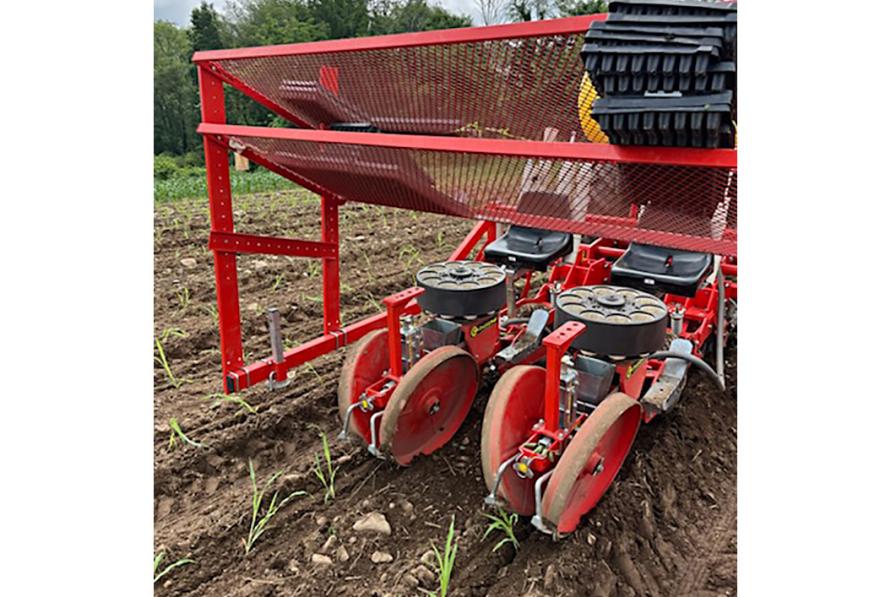
Photo courtesy of Red Fire Farm
Water Wheel Transplanter
The Rain-Flo Water Wheel transplanter is still our main workhorse. We have three units to keep up with our 100+ acres of crops during peak transplanting season. The spacing is highly adjustable, and with our spike wheels, we can plant rows at 6″, 8″, 12″, 18″, or 36″ apart. Depending on the crop, we do up to three rows per bed at 15″ apart, two rows at 30″ apart, or a single row down the center of the bed. The machine is simple to operate and does a great job of watering in the seedlings. We use it on both bare ground beds and plastic-mulched beds.
Buckeye Bed Former
Our Buckeye bed former was custom assembled to make the beds exactly the size we want. We’ve tried many other bed formers over the years, and this one has proven to be the best for our use. We now have two of these units. It creates a flat, even bed that is slightly raised, and we often use it to go over the beds weekly before seeding or transplanting to “stabilize” them. These repeated passes help kill flushes of weeds at the surface, so by the time we transplant, there are fewer weed seeds competing with our crops. We also make sure to always do a pass within 24 hours of seeding or transplanting, so no weeds get a head start.
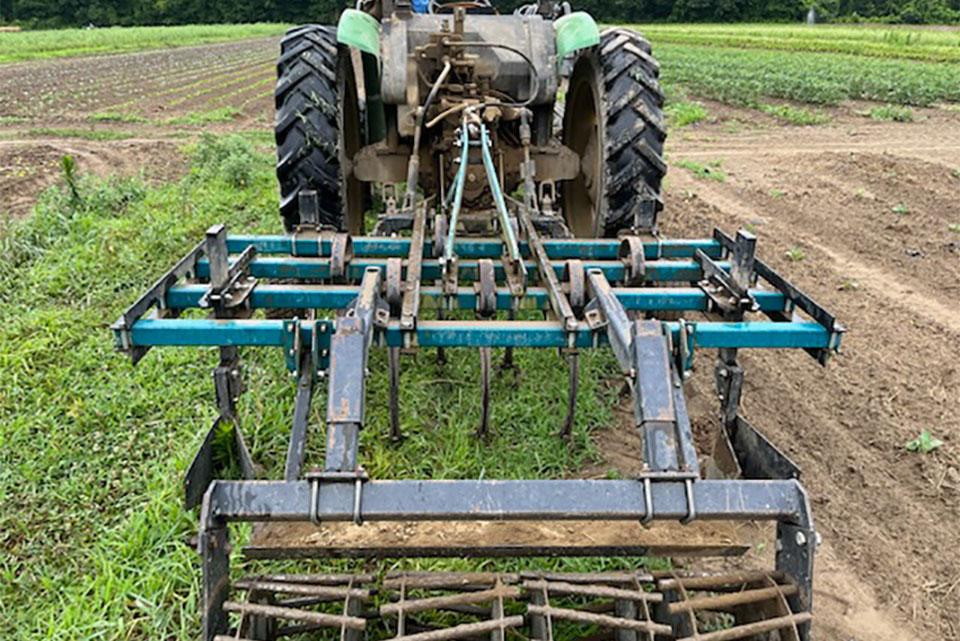
Photo courtesy of Red Fire Farm
Rain-Flo Challenger 1800 Lifter
The Rain-Flo Challenger 1800 Lifter is sold as a machine for lifting finished black plastic mulch so it can be cleaned up. While it works well for that, we also use it to lift beds for harvesting root crops like garlic, bunch carrots, parsnips, and new potatoes. It has proven far more effective for us than a traditional lifting bar. The disks on the sides cut through trash and weeds that might be in the tire track areas at the ends of the beds, while the heavy-duty blades cut under the crops and loosen them, making hand harvesting much easier.
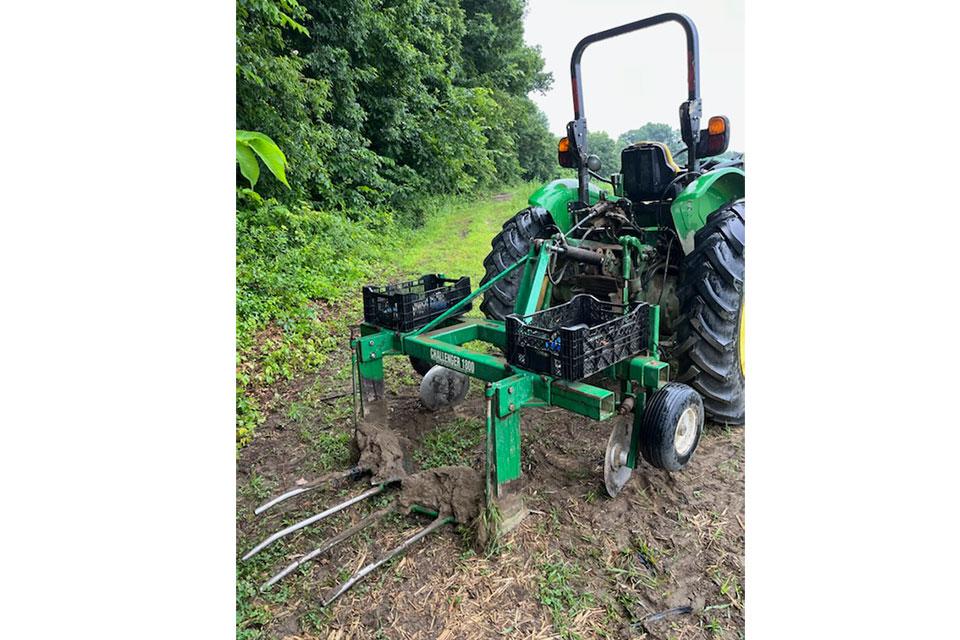
Photo courtesy of Red Fire Farm
MatterMac Vacuum Seeder
This is probably my favorite machine on the farm! I handle all the direct seeding myself, so I’ve become intimately familiar with its details and can get exactly the crop stand density I want. It cuts through less-than-perfect beds easily and places seeds accurately with the proper spacing. Changing plates and sprockets for different spacings is quick, and cleaning the seed hoppers is simple thanks to the built-in suction hose. I still use a Planet Jr. seeder toolbar for our high-density five-row beds, but it’s prone to plugging and jamming, which makes me constantly jump off the tractor to fix it. By comparison, seeding three-row crops with the MatterMac is a breeze!
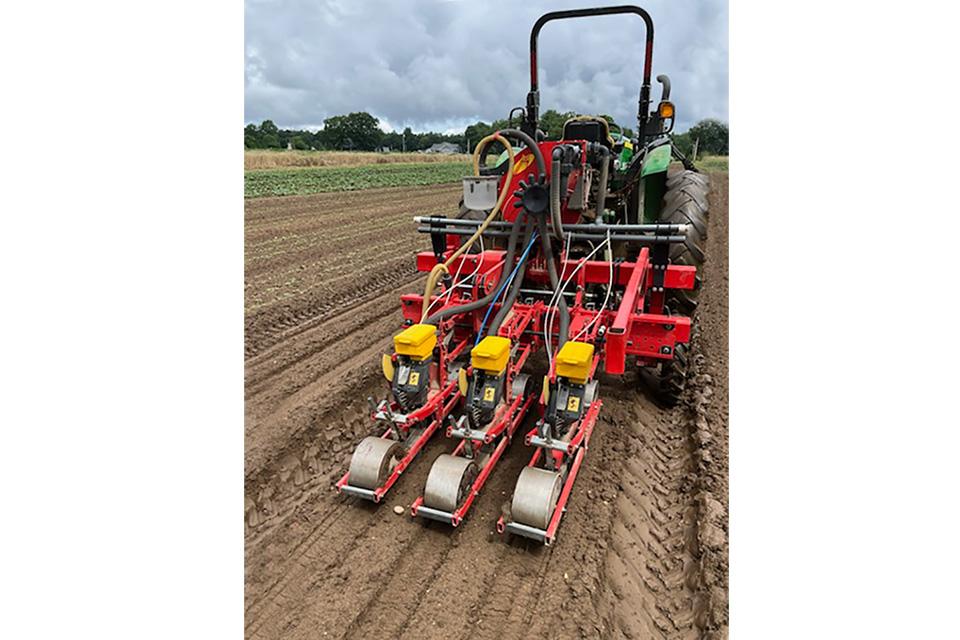
Photo courtesy of Red Fire Farm
High Tunnels
High tunnels for in-ground production serve a different purpose than our seedling propagation greenhouse with permanent rolling benches.
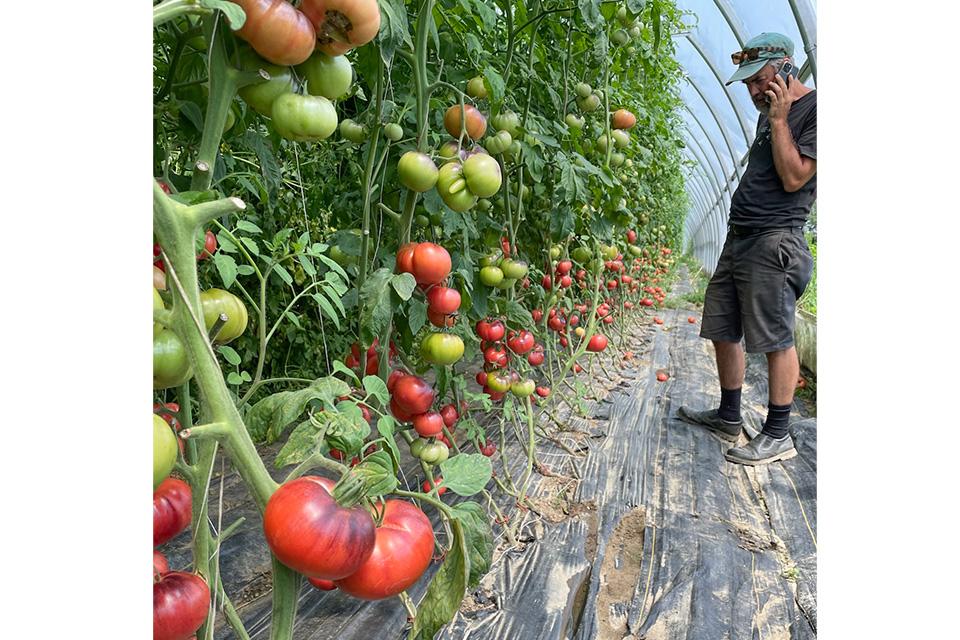
Photo courtesy of Red Fire Farm
We have about an acre of high tunnels, which are essential for winter-hardy greens and early or late warm-season crops like tomatoes. I prefer wide tunnels—34 to 35’—that are tall for good ventilation and have doors large enough for tractors and field equipment for primary tillage.
Our Westbrook greenhouse with rolling benches is highly efficient for growing seedling trays. The benches roll, leaving just one aisle per quadrant to maximize space, with winter heat provided by hot water under the benches. Roof vents and microprinklers reduce hand watering, creating an optimal space for seedlings. Later in the season, we use the greenhouse for curing onions, which helps us get mature onions out of the wet, often weedy fields as quickly as possible.
Vicon Spinner
This machine can accurately broadcast cover crop seeds as well as dry granular organic fertilizers, such as dehydrated chicken manure and potassium sulfate. The spout can also be adjusted to band fertilizers, which is especially useful in our blueberry, apple, and peach orchards. In this photo, I was frost-seeding clover on snowy fields in February. It worked great, and we now have a wonderful stand of red clover on that field!
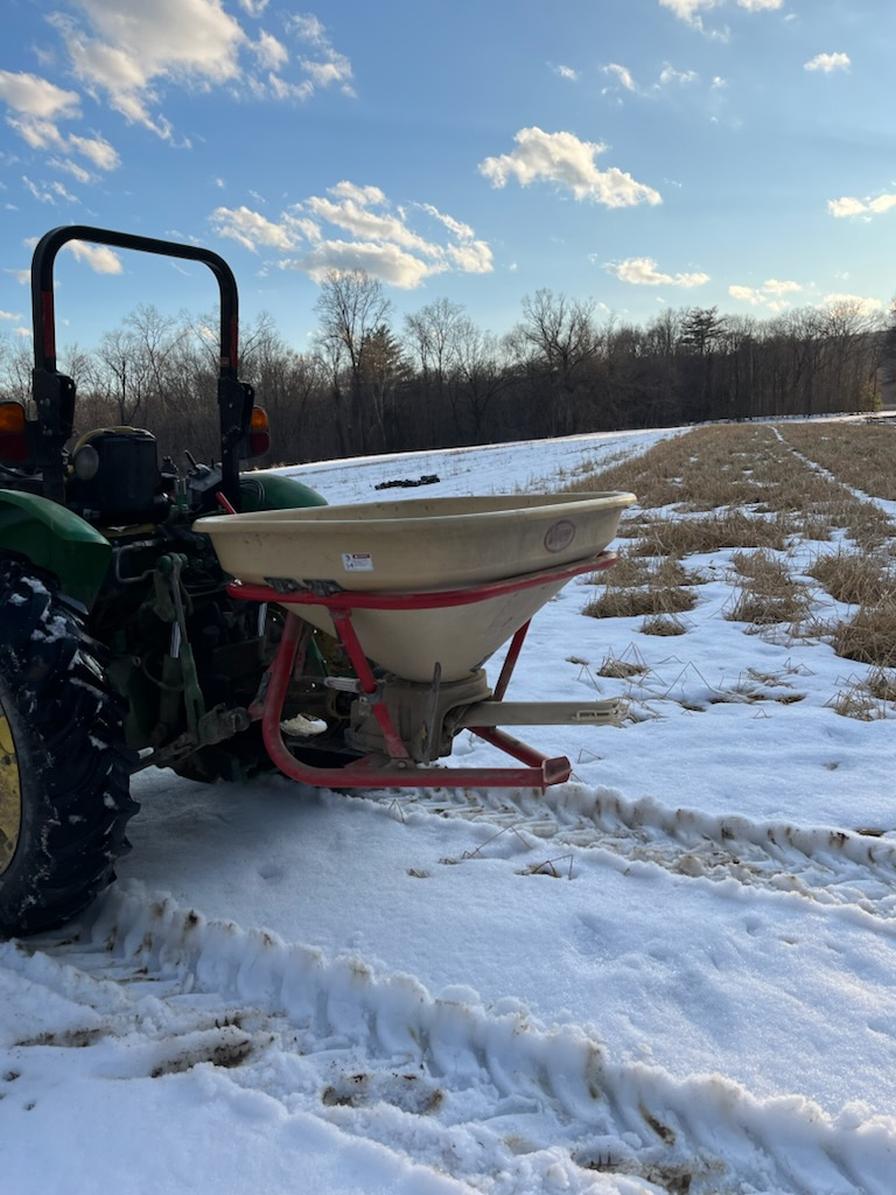
Photo courtesy of Red Fire Farm
Click here to see more installments of American Vegetable Grower’s “Kick the Tires” series.

Subscribe Today For
