



Highlights From the BioSolutions 2025 Conference and Expo
 March 13, 2025
 Hundreds of specialty crop industry stakeholders gathered in Fresno for the 10th Annual BioSolutions Conference and Expo to network with peers and gain intel available nowhere else on sustainable farming practices.
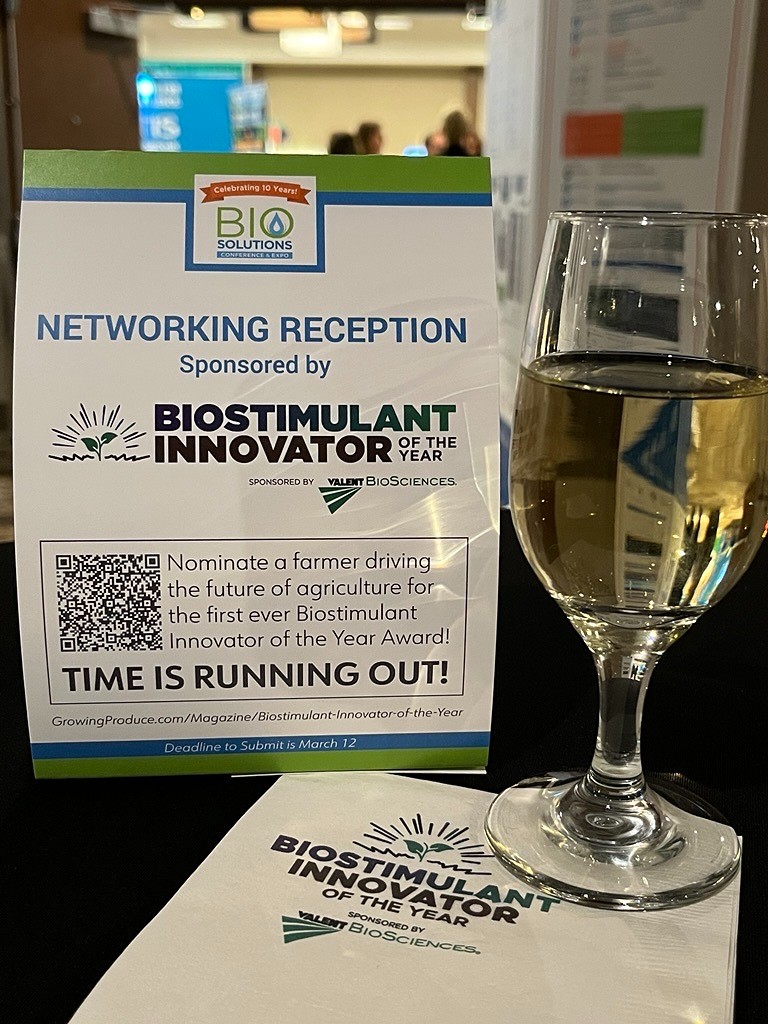
Photo courtesy of Meister Media Worldwide
It was a vibrant week, packed with new ideas and education. Thank you to our Title Sponsor, Certis Biologicals, who helped make the event happen. Thanks also to our partners, Almond Alliance, California Fresh Fruit Association, the Fresno County Farm Bureau, and to Valent’s BioSciences – BioStimulant Innovator of the Year program, which sponsored our networking reception.
The event kicked off with the highly anticipated Pre-Conference Tour. Guided by California State University, attendees explored Kearney Agricultural Research and Extension (KARE), Wylie Farms, and DORVAL Winery, gaining insights into their daily operations and sustainability efforts with biological products. Learn more about the Pre-Conference Tour.
The event began celebrating BioSolutions Conference and Expo 10-year anniversary showing their premier video, A Decade in Motion. Here’s what Chairman and CEO of Meister Media Worldwide, Gary Fitzgerald, had to say: Congratulations to the BioSolutions Conference and Expo celebrating 10-years of innovation and progress. From the early days of the biosolutions industry convening the visionaries, thought leaders, and those early adapters advancing biosolutions on the farm, this event has been a wonderful contribution to the industry. Cheers and congrats to another 10-years of innovation and growth.
“Biologicals Pulse Check: How Farmers Perceive and Use Bios in Specialty Ag” – Cameron Camfield, Founder and CEO, Stratovation Group
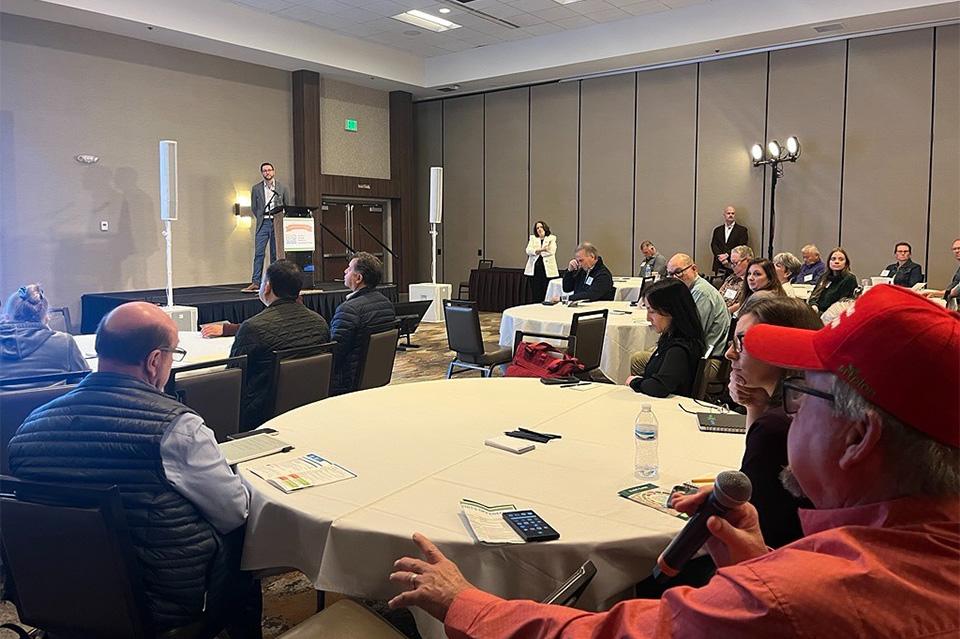
Photo courtesy of Meister Media Worldwide
Camfield shared the results of a biological survey he conducted of specialty crop growers this past year. Here are a few of the highlights:
• “The two most trusted groups in specialty crops are Extension agents and other farmers.”
• “[Growers] are generally positive about biologicals — a long way from the ‘snake oil’ days.”
• “75% [of growers] could not provide a reason to buy biologicals — even though 65% currently use them!”
• “The top reason to use biologicals — 70% said to increase crop quality.”
• “Of those who don’t use biologicals, 75% said they were not worth the cost.”
• “Of those who never use them, over 90% would use them if they increased either yield or quality.”
Keynote Address: “Blue Diamond Growers: Advancing Climate-Smart Agriculture” – Dr. Dan Sonke, Head of Sustainability, Blue Diamond Growers
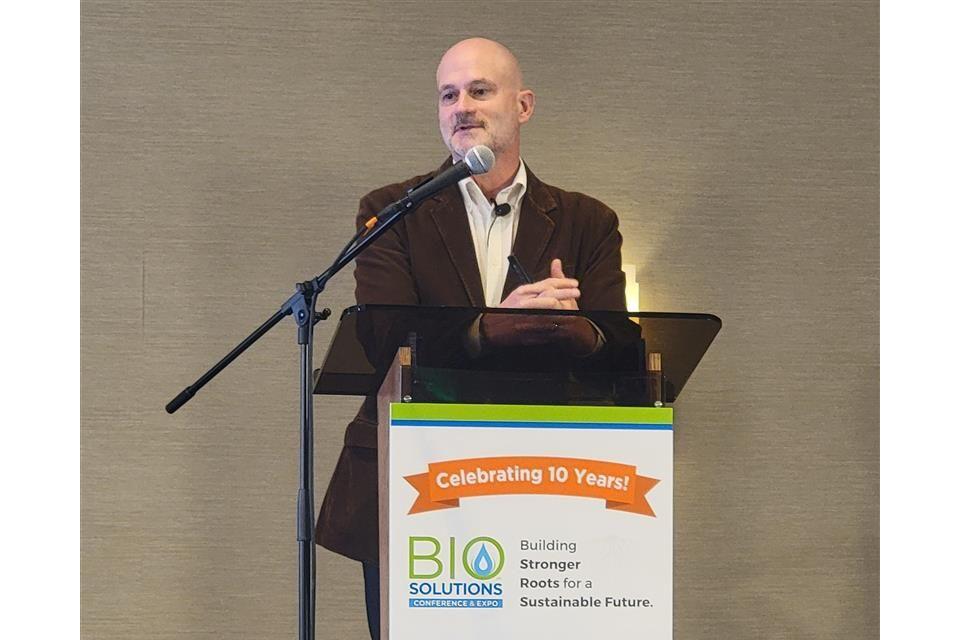
Photo courtesy of Meister Media Worldwide
Blue Diamond Growers’ Head of Sustainability, Dr. Dan Sonke, told the audience that sustainability is key to future success with thousands of farms that make up Blue Diamond cooperative.
The average Blue Diamond member farm grows almonds on less than 100 acres, so any sustainable program to work for all sizes of operations. There are a range of practices the member farms are using, from cover crops to hedgerows, to water conservation, to whole orchard recycling.
And these operations are seeing results. Sustainable practices boost pollination and help them use water wisely. And since those farms, combined, add up to the largest almond producer in the world, any efforts they make have an outsized impact.
At this time, 15% of member acreage earned Bee-Friendly Farming certification. That requires at least 3% of the farms’ land set aside for bee forage, it offers clean water, offers permanent nesting sites from native pollinators, and minimizing exposure to pesticides.
Between 1990 and 2010s, California almond growers reduced water use by 33%.
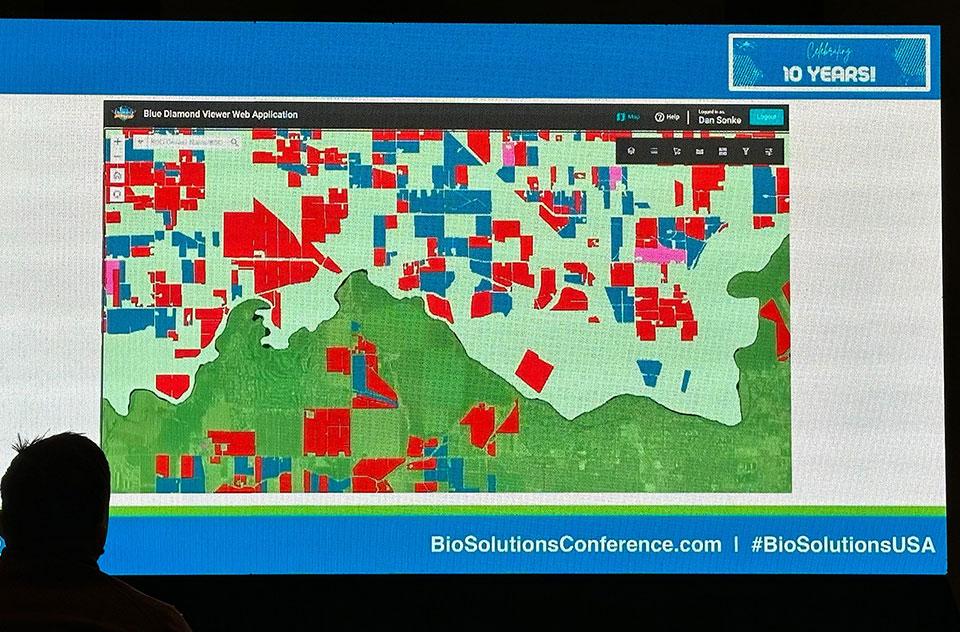
Photo courtesy of Meister Media Worldwide
Emerging BioSolutions
Application Update: Advanced Tools for the Release of Macro BCAs. Kelly Vance, U.S. Sales Manager, BioBee USA, discusses the best practices for applying biological products on a larger scale. He included strategies for implementing biocontrol, understanding advanced release systems, and selecting the right application methods tailored to your specific crop needs. Delve into the latest distribution systems of macro biologicals such as blowers, sachets, “pods”, blister packs, as well as air and ground-based drones.
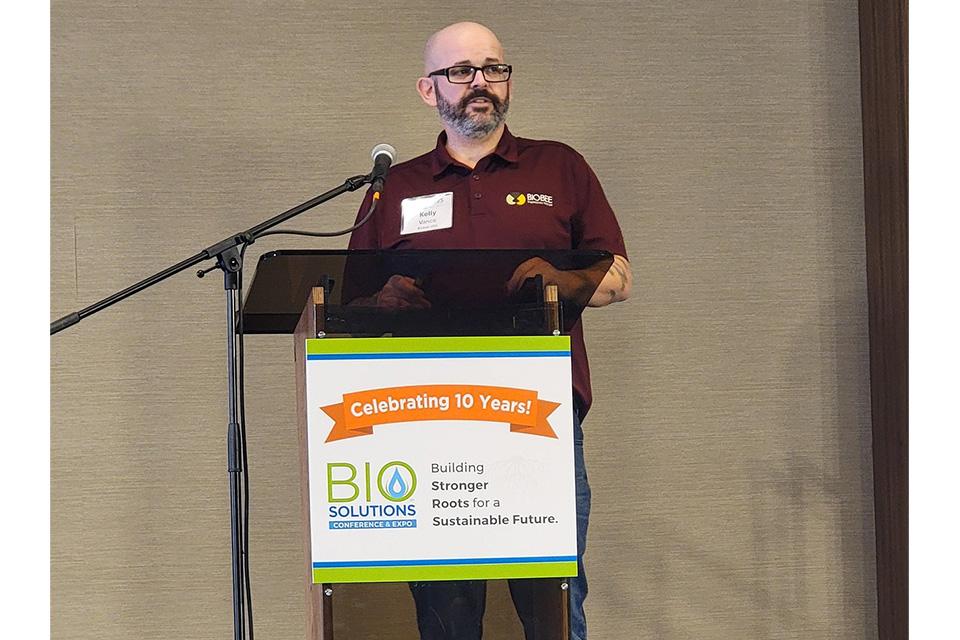
Photo courtesy of Meister Media Worldwide
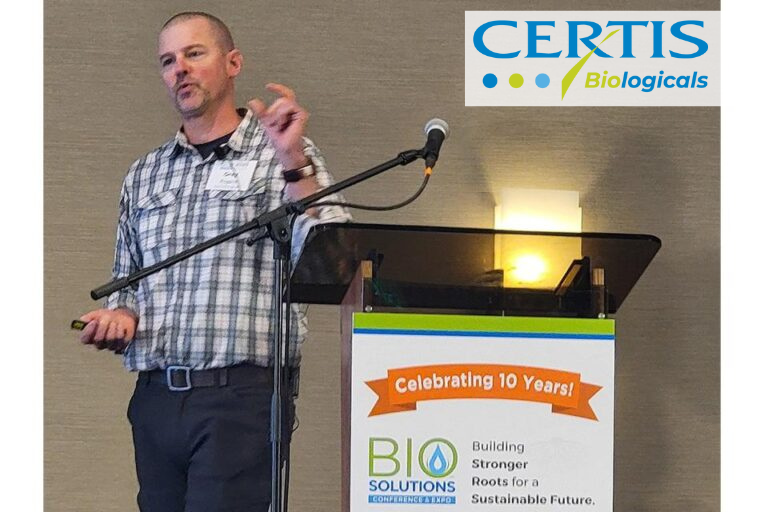
Maximizing Crop Immunity: Best Practices for Activating Systemic Acquired Resistance. Certis Biologicals’ Technical Marketing Manager Greg Rogers guided growers through the key strategies for maximizing Systemic Acquired Resistance (SAR) in crops, focusing on the timing of applications, selecting the right products, and optimizing tank mix partners. Attendees will learn how to trigger the immune response for enhanced crop protection and understand best IPM practices with SAR products to improve resilience against pests and diseases.
Unlocking the Power of Plasma-Activated Water for Stronger, Healthier Crops. Dr. Christian Nansen, University of California Davis Professor of Entomology and Nematology, introduced the audience to an exciting new concept, plasma-activated water (PAW). His work is showing PAW enhances seed germination, seedling vigor, and crop resistance to arthropod pests. He showed slides on PAW’s effects on crop health, its potential to reduce reliance on synthetic fertilizers, and its ability to improve the performance of pesticides and biopesticides.
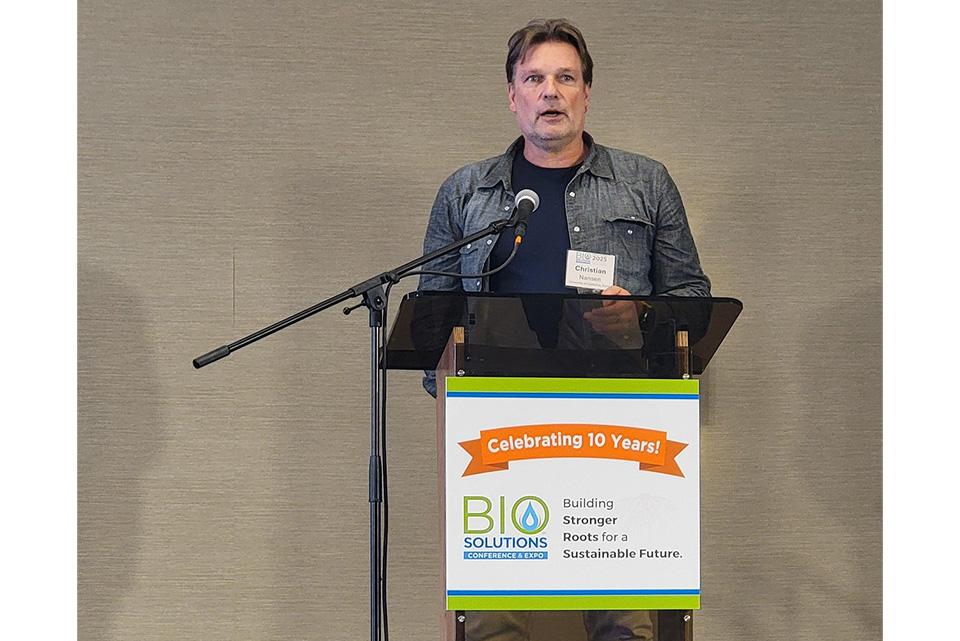
Photo courtesy of Meister Media Worldwide
Advancing Biofertilizers with Xanthobacter autotrophicus to Reduce Synthetic Inputs. Kula Bio’s VP of Research and Development, Dr. Frederic Kendirgi, introduced us to the unique mode of action of Xanthobacter autotrophicus, a microorganism revolutionizing biofertilizer technology. He mentioned it enhances nitrogen fixation, reduces dependency on synthetic fertilizers, and supports plant health through cutting-edge nutrient conversion processes.
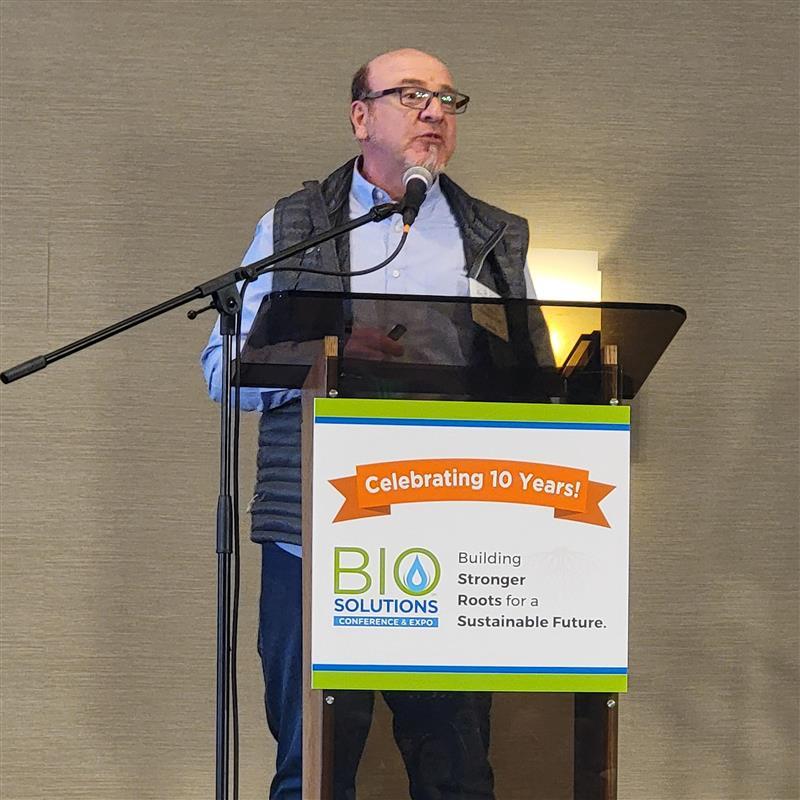
Photo courtesy of Meister Media Worldwide
Keynote Presentation: “Decoding Regenerative Certifications: Navigating the Path to Sustainable Farming” – Taylor Farms, Salinas CA Employees John McKeon, Director of Organic Integrity and Compliance; Wyatt Maysey, Director of Sustainability; Anthony Bella, Agronomist.
The crew from Taylor Farms John McKeon, Director of Organic Integrity and Compliance; Anthony Bella, Agronomist; and Wyatt Maysey, Director of Sustainability; discuss how they are making sense of the confusing path to earning the label of a regenerative farm. When you sell to different customers, each can have their own standards to follow, sometimes contradicting one another.
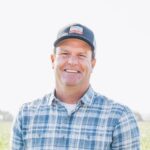
John McKeon
“There are a lot of certifiers, and there’s no clear front runner as to which will become the gold standard,” McKeon said.
Maysey agreed: “Be prepared, you will have to meet the requirements of whichever certifier the buyer chooses.”
The first challenge is that certifiers are working with all types of growers.
“One difficulty is we certainly shouldn’t have the same certification standards as a perennial crop grower,” Bella said.
Next complicating factor? How certifiers rate farms.
“There is also a difference in that some certifiers are based on practices, others on outcomes,” Bella said.
Two common regenerative practices aren’t realistic for vegetable growers like Taylor Farms: animal integration (which would violate food safety rules) and soil disturbance, including tilling.

Wyatt Maysey
That said, there’s room for improvement in both areas. Reverse mulching, laser weeding, and drone release of beneficials significantly reduce soil disturbance. And applying animal derivatives can benefit fertility.
So how can farms begin to prepare for expected demands from retail customers?
The team laid out their own strategy:
1. Gauge what practices and measures are realistic for your operation.
2. Establish a data collection foundation to vet practices and measurementmeasure impacts.
a. For example, Practice A shows an impact on SOM (soil organic matter) and available nitrogen, but it will have XYZ cost implications.
b. Expect the cost of measuring these new metrics to be 30% more than current metrics.
3. Evaluate your ability to pilot the program.
a. Can you allocate land to needed practices?
b. Who will manage this?
c. Is there a budget?
d. What level of risk are you willing to take?

Anthony Bella
Bella has learned measuring progress goes a lot smoother if you can reduce the number of variables in the certification process.
“We send all soil samples to the same lab to take that variability out of the equation,” he said.
With government programs in question, Taylor Farms has turned to NGOs to boost sustainability efforts.
“We’re working with the Xerces Society in planting perennials outside the field to attract pollinators,” Bella said.
Thank you to all attendees, speakers, exhibitors, and sponsors for making this year’s event a success and for celebrating 10-years with us. We look forward to seeing you next year! Stay Connected! Click here for updates, and follow us on Facebook, LinkedIn, and X.
Subscribe Today For
