



Top 100 Grower Offers Idea To Help With Drought
 August 1, 2012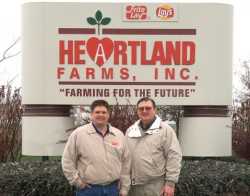
Governor Walker announced last week a new “Farmer-to-Farmer Network,” an effort designed to help provide feed to struggling farmers. It was one of the ideas provided by Heartland Farms CEO Richard Pavelski at a recent meeting the governor convened to brainstorm ideas to help during the drought.
An American Vegetable Grower Top 100 Grower, Heartland Farms raises 15,000 acres of vegetables including potatoes, sweet corn, pea,s and beans on irrigated land, much of which is being harvested now. Those fields typically sit dormant until fall, when a cover crop is planted to prevent erosion. But instead, Pavelski said he and other vegetable growers will plant forage crops.
“The infrastructure is here in central Wisconsin,” Pavelski said. “We have the land, we have the irrigation systems in place, and we have the ability to grow forage crops. The opportunity is here if we move quickly. We have to move up that planting date because we’ve got about 70 to 75 days of growing season yet and we can grow well over 100,000 tons of forage.”
Pavelski said he would plant about a thousand acres of rye and oats. He believes that by spreading the word through the Wisconsin Potato & Vegetable Growers Association, the growers in central Wisconsin can plant 20,000-30,000 acres of forage crops. He said the forage crops need to be planted by about August 10. The effort is to try to prevent many livestock farmers from selling off herds because they can’t afford to feed them.
“A key concern for many farmers faced with losing their crops, is how they will feed their animals,” Walker said. “The Farmer-to-Farmer Network is a way to bring everyone to the table, so the farmers who have the ability to provide feed, know what they need to do, and those who need help, know where to get it.”
Under Farmer-to-Farmer, Governor Walker is encouraging farmers in Wisconsin and the region that are less affected by the dry conditions to replant crops and make them available for feed by posting on the University of Wisconsin Extension website http://farmertofarmer.uwex.edu/. The Farmer to Farmer Hay, Forage and Corn List puts Wisconsin farmers in touch with one another for the purpose of buying and/or selling corn and forage. The Farmer to Farmer list is free to both buyers and sellers. Users can list or search for hay, alfalfa haylage, corn silage, high moisture corn, corn grain, or other forages (i.e., oats, peas, or sorghum-sundangrass).
“We will have a home for that tonnage, I’m convinced of that,” said Ben Brancel, Wisconsin Secretary of Agriculture, Trade and Consumer Protection. “We are hearing stories of people that are going to Nebraska looking for feed, or South Dakota where they’ve found some and been denied by others.”
Brancel said most cattle marketing is up, including at the Milwaukee Stockyards, which has seen an increase of around 100 head a day. The Equity Cooperative Livestock Sales Association in Baraboo says sales of calves, cows, and other livestock increased 150% last week. Brancel says cattle sales have a ripple effect with fewer cows to produce milk and cheese, along with a reduced need for supplies and equipment from other businesses.
The state is looking for more farmers to step up. Pavelski said his family at Heartland Farms is proud to help out. “The real heroes here are the employees and management at Heartland Farms,” Pavelski said. “They have been working seven days a week for several months in this heat and drought to take care of our crops. Many of them are dog tired. They have had little time with their families, and yet when I asked them to step up to the plate one more time, to go the extra mile, not a complaint was heard. The only response was, ‘Let’s get it done.’”
“That’s one thing about farming, we kind of have a brotherhood,” said Pavelski. “There’ll be a time when we need help, too.”
Pavelski added that the forage crops would be made available at cost.
Subscribe Today For
