



Smart Tech
What’s New in the World of Next-Gen Auto Weeders


Autonomous weeders have evolved from trial-phase prototypes into indispensable equipment for vegetable growers. The latest versions of auto weeders combine pinpoint targeting, increased speed, and wider crop adaptability, integrating effortlessly with farm management systems to help cut inputs, lower labor costs, and preserve crop quality.
“This isn’t just about reducing chemical use — it’s about improving effectiveness while protecting the crop,” says Gabe Sibley, Founder & CEO of Verdant Robotics.
Driving Smarter Automation
The challenges growers face has directly shaped the evolution of next-gen auto weeders, pushed innovation and expanded the limits of agricultural technology. Labor shortages remain a major constraint, with manual weeding becoming increasingly expensive and unreliable, making automation essential. At the same time, growers are under pressure to reduce inputs without sacrificing yield or quality, making precision application — delivering resources only where and when they’re needed — a practical solution.
Usability is now a key benchmark for adoption. Systems must integrate seamlessly into existing workflows, be intuitive to operate, and require minimal training so crews can get up to speed without disrupting daily operations. As Sibley notes, technology must fit into existing workflows — not complicate them.
Latest Field Results
Recent updates have brought measurable results: significant reductions in input use and labor costs, leading to improved efficiency and sustainability across operations.
Precision in agriculture isn’t just about accuracy — it’s about consistently hitting the target under varying conditions, ensuring reliable results throughout the growing season. Today’s top systems adapt to real-world variability, whether treating dime-sized seedlings or fully mature crops, and maintain consistent performance across crop types, growth stages, and field conditions.
Operational flexibility means growers can work in diverse environments and weather conditions, maximizing machine uptime. For specialty crop producers facing labor shortages and rising input costs, these systems now deliver both agronomic and financial value, making them indispensable.
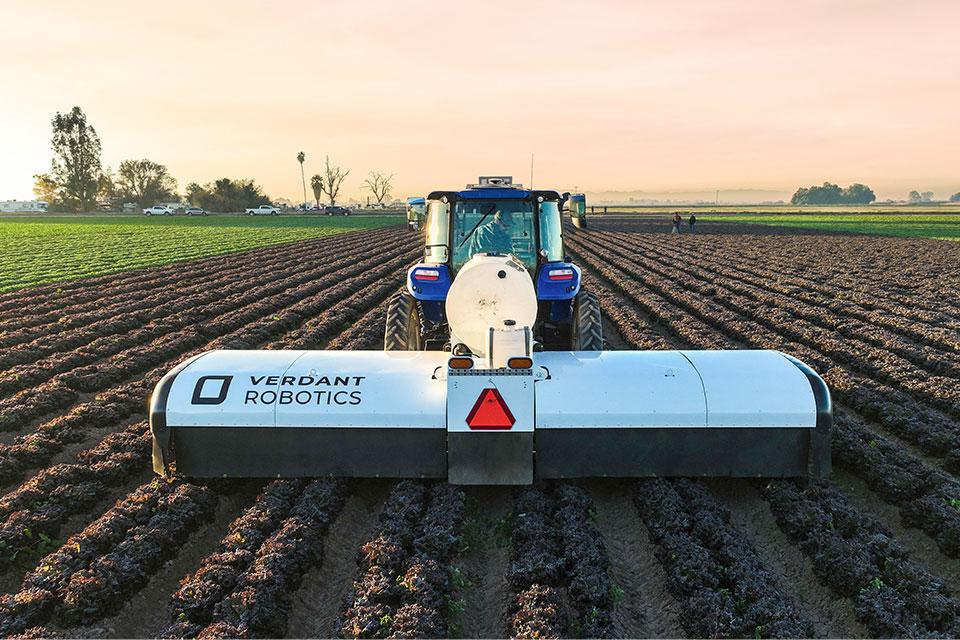
Verdant Robotics’ SharpShooter auto weeder at work in the field.
Photo courtesy of Verdant Robotics
Proven Performance Across Crops
Autonomous weeders are proving especially valuable in high-value crops such as organic vegetables that traditionally rely on hand-weeding, as well as in conventional, organic, and no-till systems.
Verdant Robotics’ SharpShooter, for example, maintains precision across various bed widths, row spacings, and plant sizes — from thinning lettuce in spring to weeding carrots in midsummer — without sacrificing speed. This versatility helps growers optimize machine use throughout the season and across multiple crop types.
Expanding Capabilities for the Season Ahead
“Recent advancements have increased field speed by more than 40%, allowing growers to cover more acres in less time while maintaining millimeter-level precision,” Sibley shares.
Systems that can handle multiple tasks — from precision weeding and thinning to targeted delivery of beneficials — offer greater value and flexibility to meet evolving field demands.
The next step is enhanced connectivity between machine actions and agronomic outcomes. By capturing more data on plant health, input placement, and environmental conditions, autonomous weeders will help growers make more informed decisions, boosting both productivity and sustainability.

For more Smart Tech topics, click here.
Subscribe Today For
