




Effective Nematode Control Starts With Sampling, Species Identification
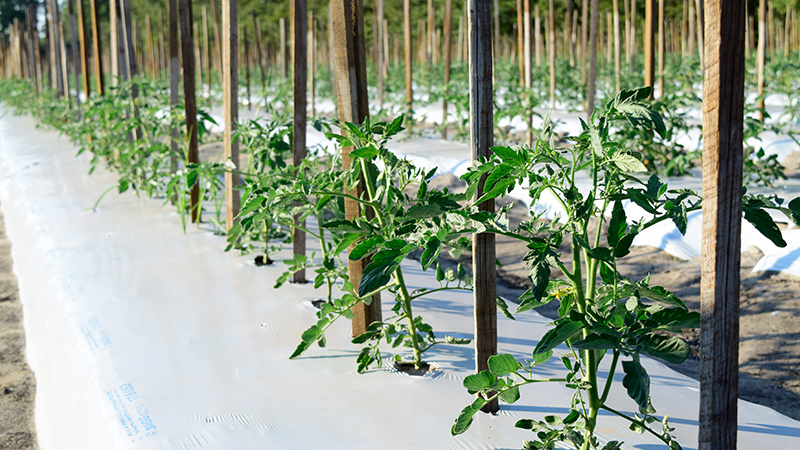
Protecting fruiting vegetables − like these tomatoes growing in plasticulture production − from plant-parasitic nematodes starts with soil sampling and selecting Salibro® nematicide with Reklemel™ active as your crop protection solution.
There is no other way to say it. Plant-parasitic nematodes are thieves. They rob plants of vigor and growth potential ultimately reducing marketable yield of fruiting vegetables. Their damage to plant root systems can stunt plant growth, leaving it vulnerable to other disease-causing organisms in the soil and cost fruit and vegetable growers significant profit loss if they do not address these microscopic thieves with a proactive control plan.
Like a police investigator working to identify the culprit(s) of a crime, the specific species of plant-parasitic nematodes should be identified through soil sampling before effective control action can be developed and implemented. According to Intiaz Chowdhury, University of Georgia assistant professor of vegetable and cotton nematology, there are optimum and less optimum times to pull soil samples, but the most important thing to do is — sample.
“There are many types of nematodes and the damage each one causes varies with region and host plant,” Chowdhury says. “Root-knot nematodes are the most devastating species presenting the greatest threat to fruiting vegetable production. But sampling is critical and should be a precursor to any effective nematode control effort.”
When to Sample
According to Chowdhury, the best time to pull soil samples is at the end of the cropping cycle or immediately after harvest, because that is when the nematode population has most likely reproduced to its highest level. The higher the population, the higher the potential threat for damage will be on the next crop.
“In sampling, we are looking for juvenile nematodes,” Chowdhury says. “Nematode populations are usually the highest when fruiting vegetables or row crops have been in the ground, and nematodes are reproducing, searching for developing host plant roots.”
Research shows that plant-parasitic nematodes are more likely to seriously damage new roots from younger host plants, like those in their early growth stages after transplanting or after vegetable seeds germinate and the primary root, or radicle, develops.
“Nematode egg hatching is stimulated by chemical exudates secreted by developing root systems. Juveniles then follow a chemical gradient created by the exudates to find a host. This process can be quick,” Chowdhury says.
If a grower’s busy harvest schedule precludes pulling soil samples around harvest, the next best time to sample is just before putting the next crop in the ground.
“There is usually a time gap between when one crop is harvested and the next crop is planted — especially in vegetable production,” Chowdhury says. “Sampling at this point will offer a relative estimation of the nematode population.”
Chowdhury admits, if sampling post-harvest or pre-planting is not possible, midseason sampling is still helpful, but it is important to note that little can be done to effect control of the current nematode population because crop protection products are a preventive solution to the next crop, not a curative solution to the nematode population impacting the current crop.
Although the life cycle of a root-knot nematode is only about 28 days, Chowdhury emphasizes populations can escalate quickly if left untreated.
Many fruiting vegetable production growers are recognizing the value of and adding Salibro® nematicide with Reklemel™ active to their nematode control programs because of the selective control of plant-parasitic nematodes and the exceptional compatibility with beneficial nematodes, soil fungi and soil bacteria. Combining Salibro nematicide with Vydate® L insecticide/nematicide will strengthen your overall program approach to nematode control.
“Plant-parasitic nematodes are a serious threat to the production sector of agriculture,” says Jared Walls, market development specialist, Corteva Agriscience. “In 2023, we introduced Reklemel active, a new nematicide to help protect a wide variety of food and row crops from plant-parasitic nematode damage without disrupting the healthy balance of beneficial organisms in the soil.”
Reklemel active received a Reduced Risk designation from the U.S. Environmental Protection Agency (EPA) for the ability to selectively target plant-parasitic nematodes, the lower use rates than older nematicides, and the highly favorable environmental and toxicological profile as compared with alternatives.
For more information on how to control plant-parasitic nematodes with Salibro nematicide, visit Corteva.us/Salibro.
™ ® Trademarks of Corteva Agriscience and its affiliated companies. Vydate® L is a Restricted Use Pesticide. Reklemel™ is a registered active ingredient. Salibro® and Vydate L are not registered for sale or use in all states. Contact your state pesticide regulatory agency to determine if a product is registered for sale or use in your state. Always read and follow label directions. ©2024 Corteva. 021366 BR (07/24) CAAG4SBRO057