



How To Better Manage Soilborne Pathogens in Vegetable Production
When crops show signs of stress, it isn’t always clear whether the cause is disease or an abiotic issue like nutrition or water management. Knowing how soilborne pathogens behave — and when to rely on diagnostics — can help growers respond effectively and avoid unnecessary inputs.
Effectively Distinguish Soilborne Pathogen Issues
Identifying disease symptoms from abiotic stress related to nutrients, irrigation, or weather can be challenging, but observing symptom patterns across the field often provides important clues.
“Plant disease symptoms usually occur in a scattered or more random distribution, and abiotic factors often follow a pattern,” Jill Pollok, Extension Specialist at University of Delaware.
With nutrient or irrigation issues, symptoms often appear across large sections of the field or along entire rows. Disease-related problems, by contrast, tend to show up in scattered areas without a clear pattern, although low-lying or wet areas are more likely to experience soilborne disease pressure.
“Symptom-wise, diseases often cause dark lesions on stems and roots, and discoloration in the vascular system,” Pollok says. “It can be hard to know if you’re dealing with a disease or not, and that’s why we have diagnostic clinics.”
How Soilborne Pathogens Spread and Persist
Soilborne pathogens are most commonly spread through the movement of contaminated soil, water, and plant material on equipment, tools, or infected transplants. In the case of Pythium, poor drainage and irrigation runoff can further accelerate disease spread.
These pathogens can persist in the soil for many years by surviving on plant debris, roots, or as durable survival structures, even in the absence of host plants. This long-term survival is why crop rotation is such a critical management tool — planting non-susceptible crops helps disrupt the disease cycle over time.
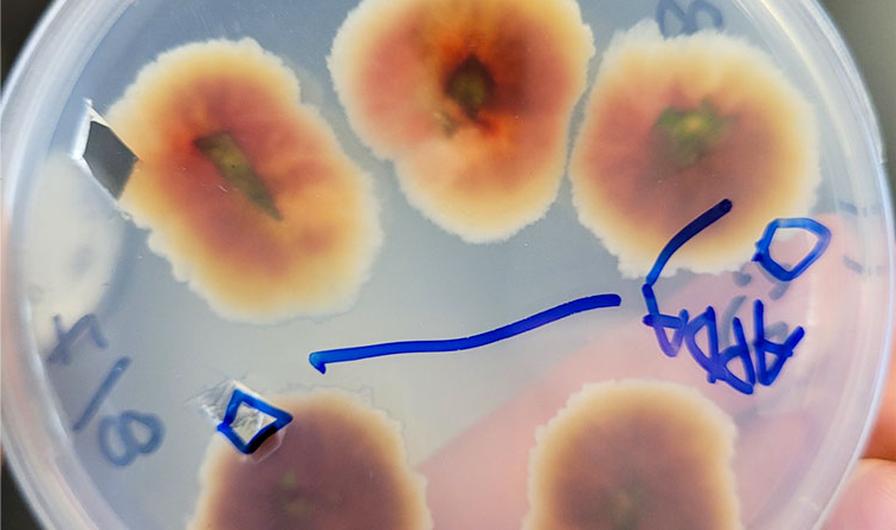
Petri culture of Fusarium.
Photo: Jill Pollok, The University of Delaware Plant Diagnostic Clinic
Using Rotation and Cultural Practices to Manage Disease
Crop rotation is one of the most effective tools for managing soilborne pathogens. When susceptible crops are avoided, pathogen levels in the soil naturally decline over time.
Many resistant varieties are also available.
“If you know you have a pathogen in a field or high tunnel, finding a resistant variety can also break the disease cycle,” Pollok says.
Practicing good sanitation — such as removing questionable transplants before planting, regularly cleaning tools and equipment, promptly disposing of diseased plants, and avoiding over-irrigation — can significantly reduce disease risk.
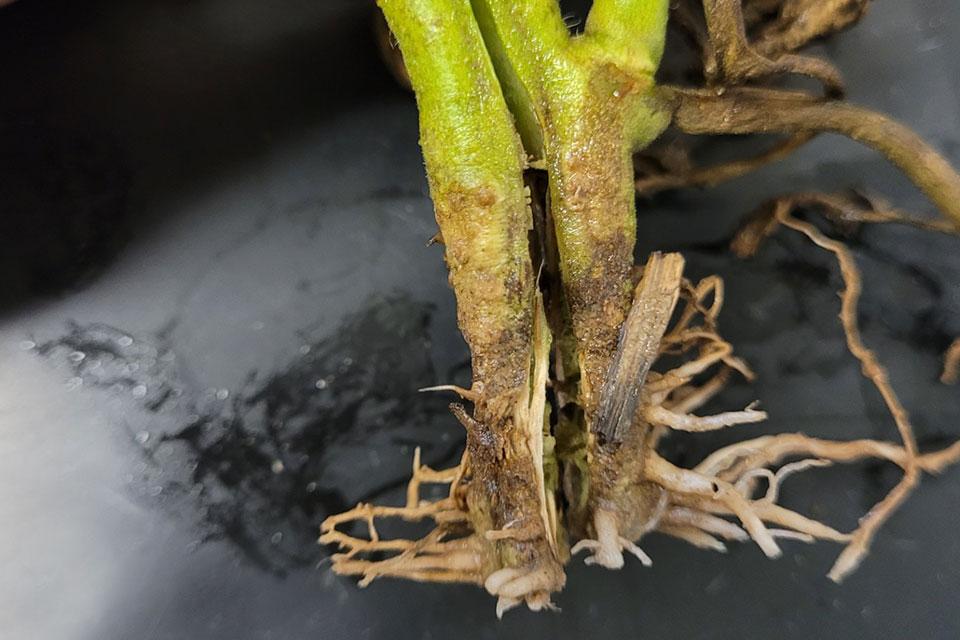
Symptoms of Fusarium wilt of tomato.
Photo: Jill Pollok, The University of Delaware Plant Diagnostic Clinic
Accurate Diagnostics Guide Effective Disease Control
Accurately identifying the pathogen present is critical for effective management. Because many fungicides target specific organisms, proper diagnosis helps ensure the right product is used — saving time and money by avoiding unnecessary or ineffective applications.
“Fungicides that manage Fusarium or Rhizoctonia may not work on Pythium as it’s an oomycete, which is not a true fungus,” Pollok says.
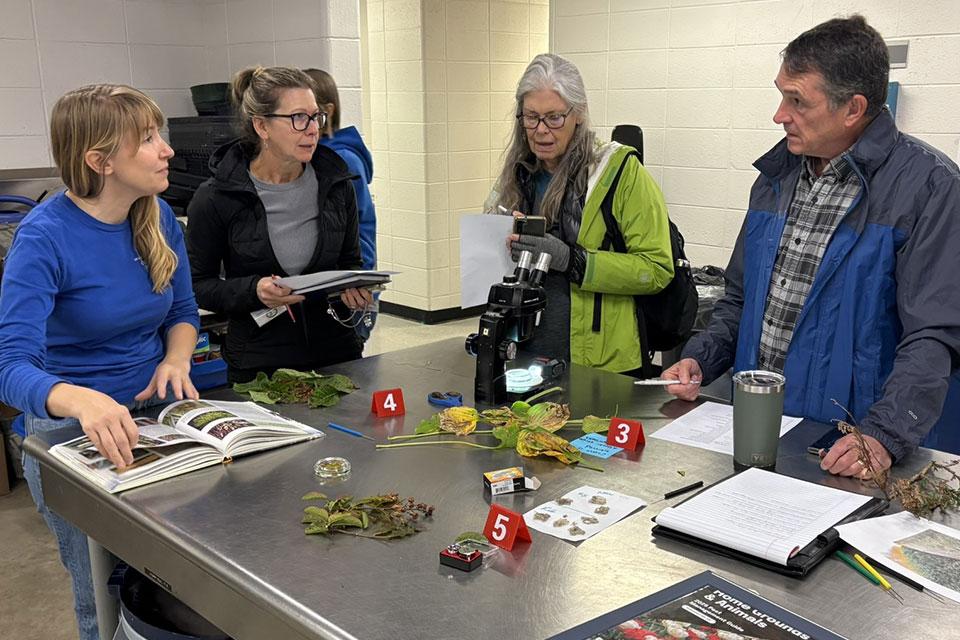
Plant health diagnosticians gather at an outreach event.
Photo: Jill Pollok, The University of Delaware Plant Diagnostic Clinic
The Benefits of Plant Diagnostic Labs
A plant diagnostic lab identifies plant health problems by analyzing samples for diseases, insects, and environmental or cultural stress factors.
“I encourage growers to contact their local Cooperative Extension office to learn about diagnostic labs in their state and how to submit samples. Our goals are to provide accurate, science-based diagnoses and management recommendations,” Pollok says.
The National Plant Diagnostic Network (NPDN) has compiled a list of diagnostic labs in the U.S. and can be found here at npdn.org/lab_directory.
Subscribe Today For
