
Smart Tech
Five Farms, One Message: Innovation Is Driving the Future of Tree Fruit
 February 20, 2026
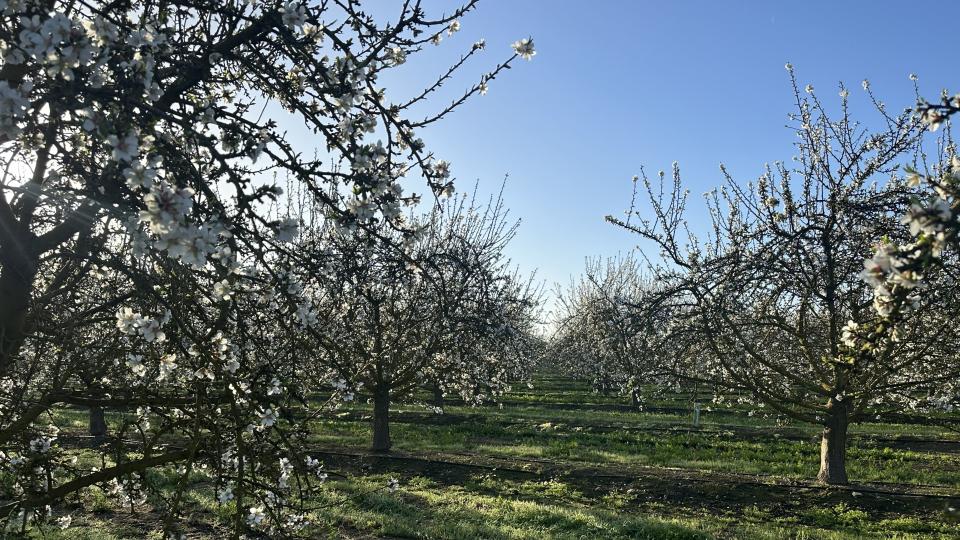
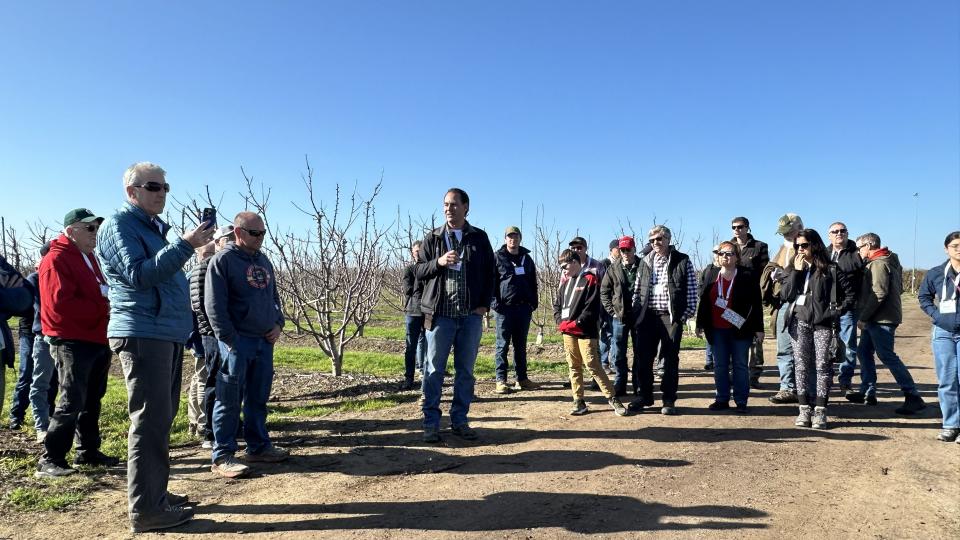
The 69th annual post-tour of the International Fruit Tree Association (IFTA) conference showcased five forward-thinking operations demonstrating how California growers are adapting orchard systems and crop strategies to meet modern production challenges. Tour stops highlighted innovative approaches ranging from low-chill apple production capable of achieving strong color, flavor, and texture despite early July heat, to growers reimagining traditional systems through high-density plantings, trellised peaches and cherries, mechanization, and data-driven experimentation. Collectively, the visits reflected an industry focused on improving labor efficiency, enhancing fruit quality, and building resilient production models for the future.
View all
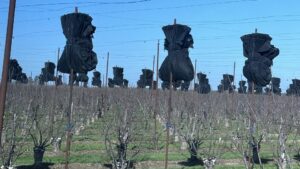
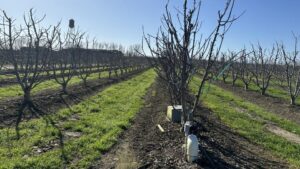
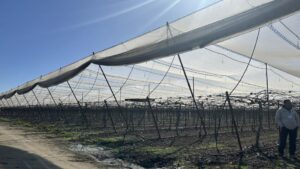
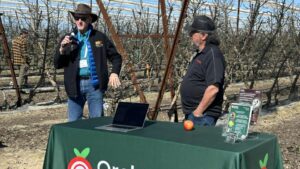
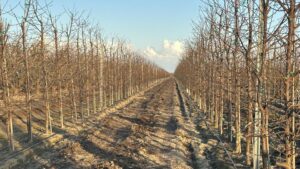
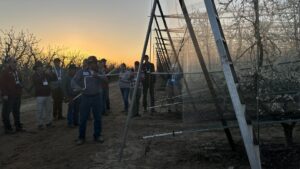
Sangha Farms: Automation and Experimentation
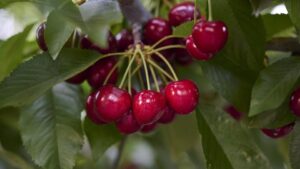
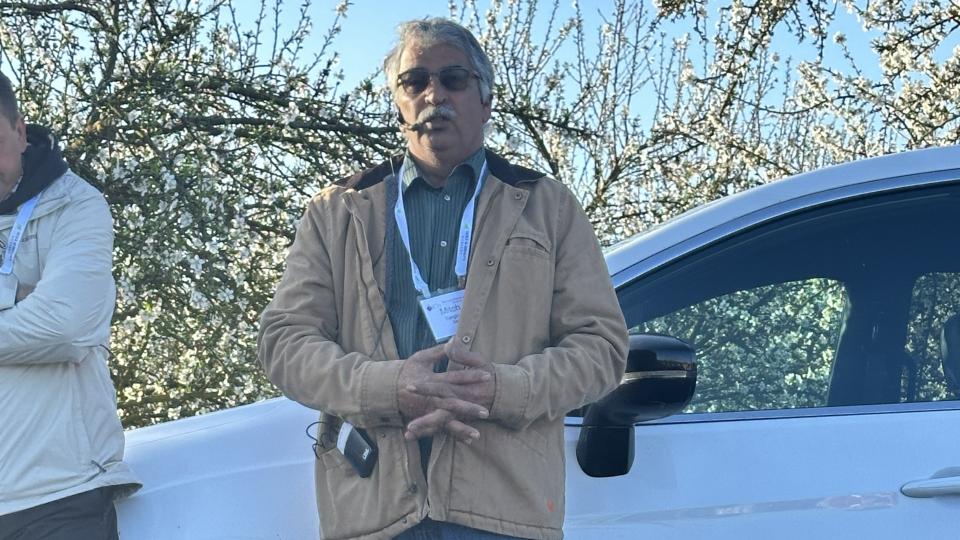
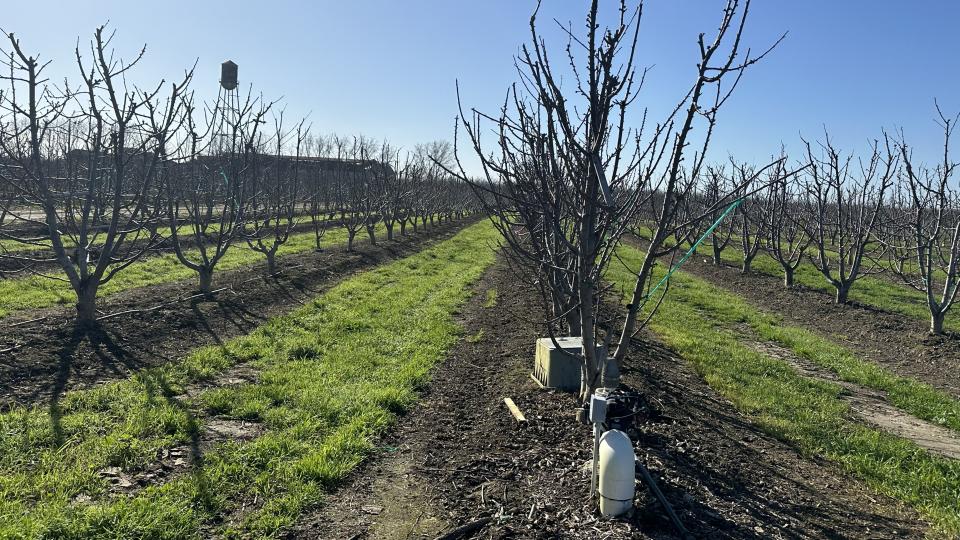
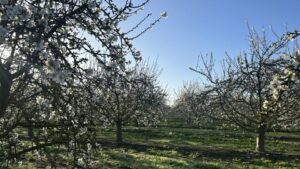
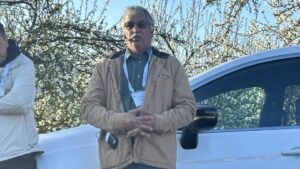
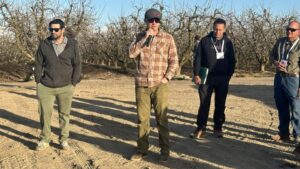
The first stop on the tour was Sangha Farms, owned and managed by third-generation grower Mitch Sangha in Del Rey, CA. Originally established by his grandfather with a focus on raisin grapes and cling peaches, the operation has steadily evolved in response to shifting markets and rising production costs. Like many Central Valley farms, Sangha diversified away from raisins as demand declined, expanding into permanent crops that offer improved economic stability and reduced labor dependence. Today, the farm includes approximately 50 acres of sweet cherries and roughly 200 acres of almonds, reflecting a broader transition toward higher-value and more mechanization-friendly crops.
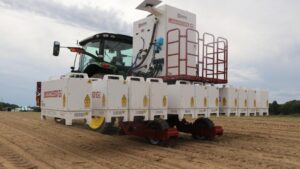
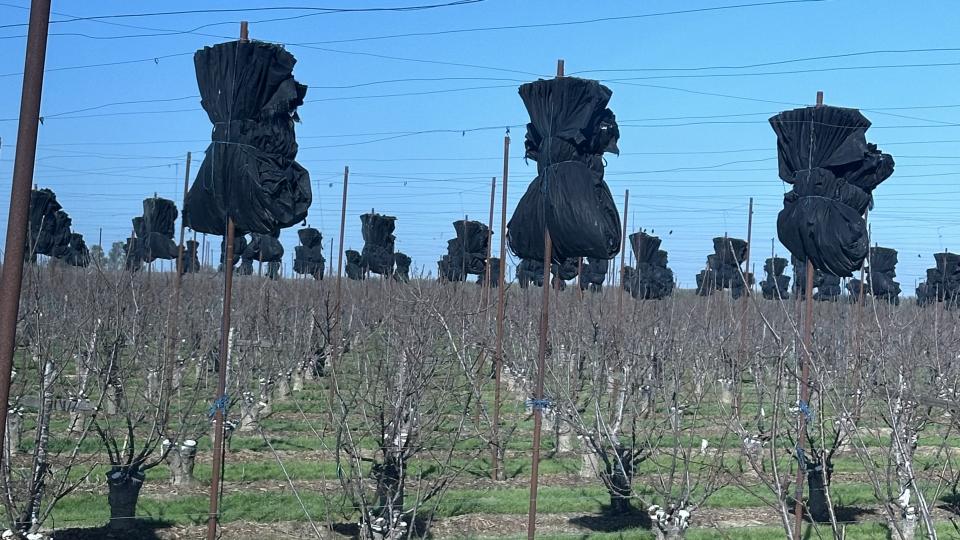
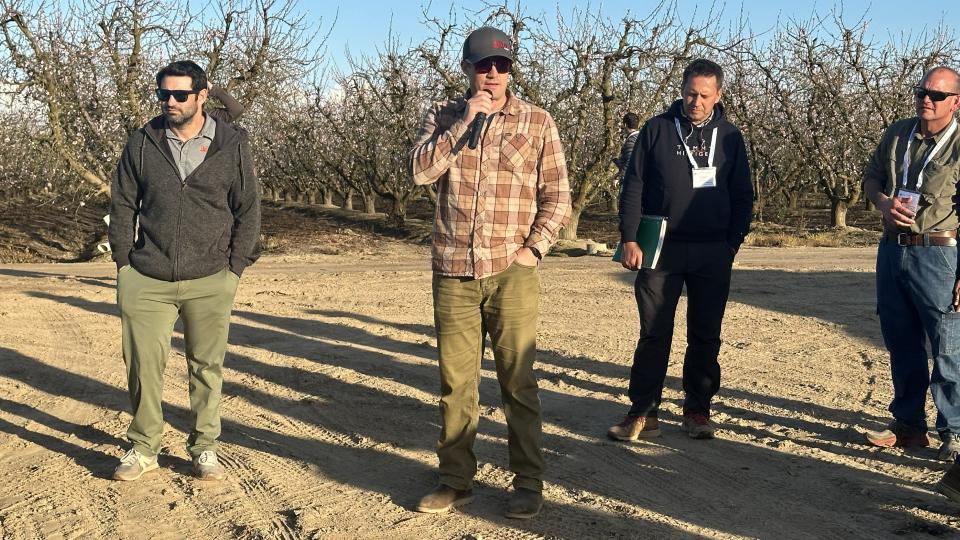
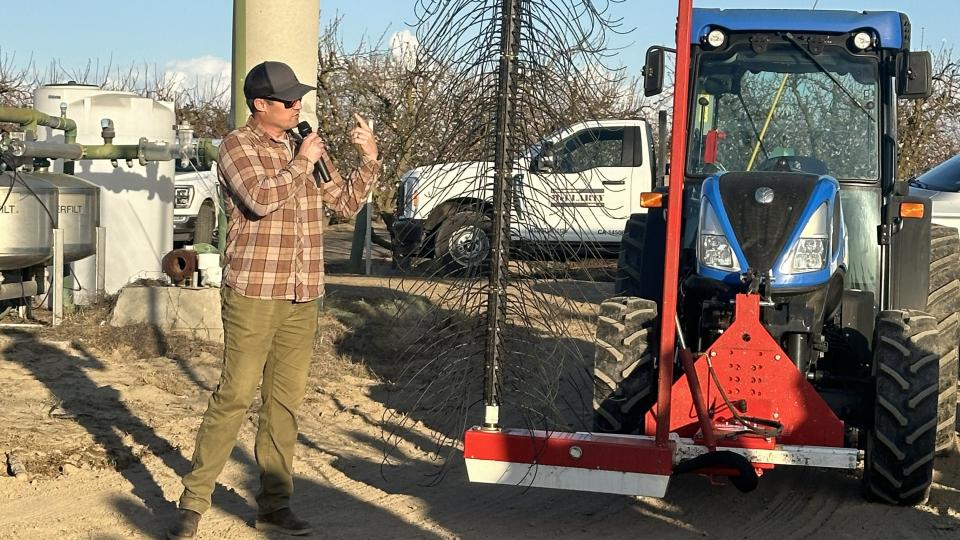
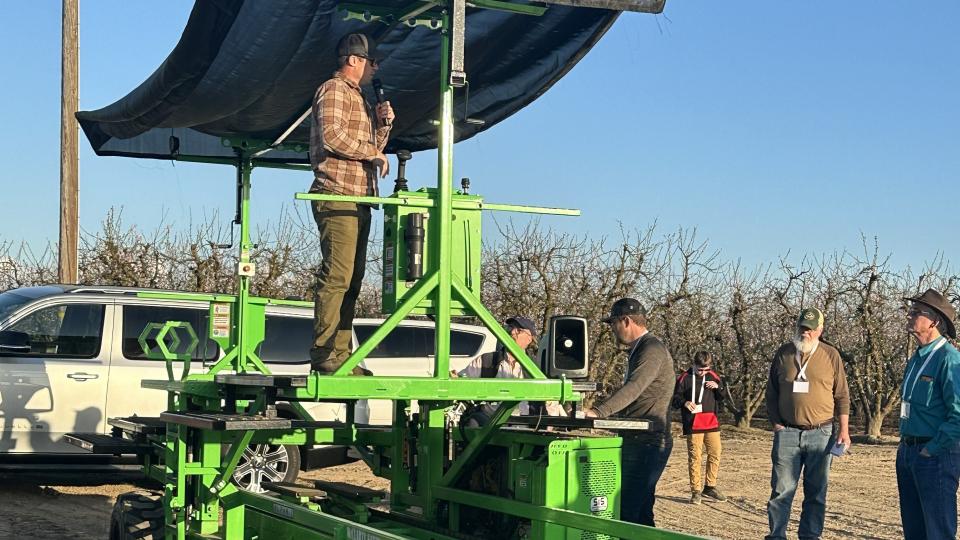
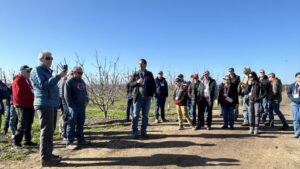
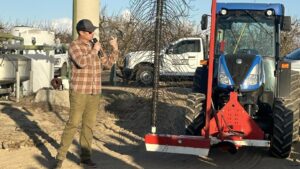
Innovation and efficiency are central to Sangha Farms’ current strategy. In collaboration with Blue White Robotics, the farm is exploring the use of autonomous tractors aimed at lowering operational costs while addressing ongoing labor challenges. During the visit, Sangha also discussed ongoing dormancy-breaking research and other progressive production practices being evaluated within his orchard systems. Emphasizing the importance of collaboration, he encouraged growers to openly exchange results and experiences. “Growers need to start testing and sharing what works with each other—it would help the whole industry,” Sangha stressed, underscoring the peer-learning spirit that defines IFTA study tours.
Kings Orchards: Quality Management and Family-scale Economics
The next stop brought the group to Kings Orchards in Kings County, a family-operated stone fruit and nut operation managed by third-generation grower John Warmerdam and his family. The farm produces peaches, nectarines, plums, cherries, and walnuts, representing a diversified fresh-market program typical of California’s remaining independent stone fruit growers. The Warmerdam family farms approximately 350 acres and operates its own packing facility, allowing greater control over fruit handling, quality, and marketing decisions throughout the season.
Warmerdam shared a practical grower perspective on California stone fruit production, discussing ongoing challenges including labor availability, rising production costs, orchard redevelopment decisions, and the pressure to deliver consistent eating quality to consumers. A key focus of the operation has been participation in a preconditioning or ripening program designed to improve flavor and consumer satisfaction by carefully managing fruit maturity before cold storage and shipment — an approach Warmerdam noted has significantly improved repeat retail business and long-term marketing relationships.
The stop offered insight into how a mid-sized, family-run operation balances tradition with innovation, emphasizing careful variety management, postharvest handling, and market alignment as essential strategies for remaining competitive in today’s evolving California tree fruit landscape.
Family Tree Farms: Variety Innovation and Global Supply
Another stop on the tour highlighted the scale and global reach of Family Tree Farms, which encompasses approximately 5,000 acres in California’s Central Valley. The operation traces its roots back to founder David Jackson’s family, whose farming history began during the Great Depression. What started in 2001 as a smaller stone fruit enterprise has expanded significantly and now includes citrus, cherries, pistachios, almonds, apples, kiwis, and berries, which were added to the program in 2006. In addition to its California production, the company operates farms in Mexico, Peru, and South Africa, allowing for extended seasonal supply and year-round market presence.
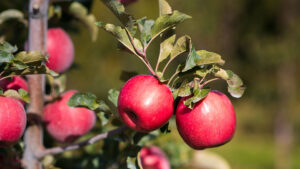
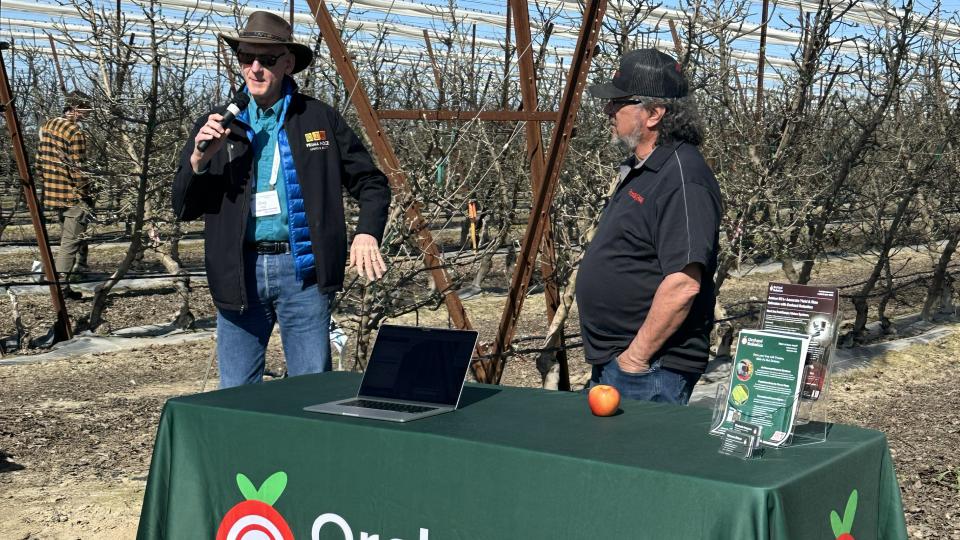
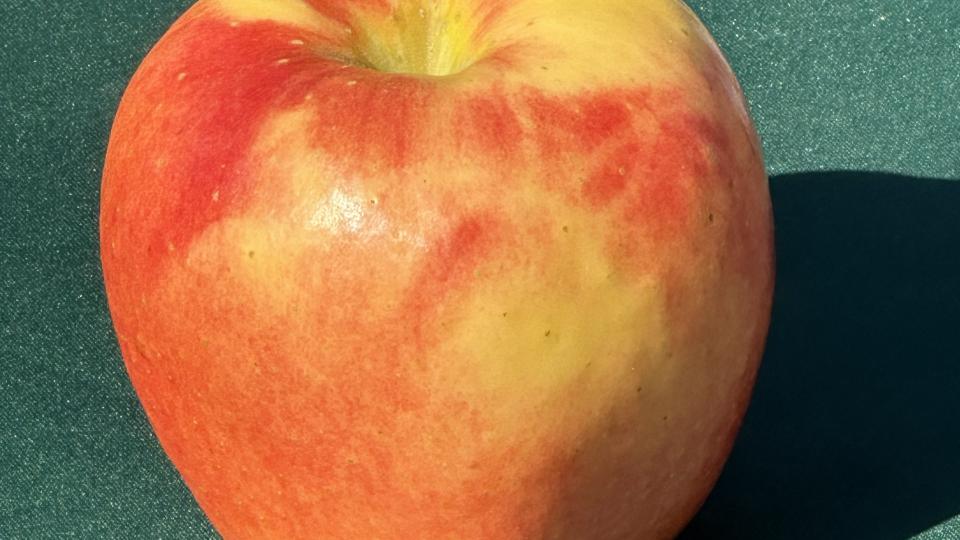
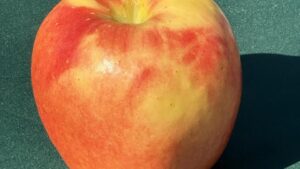
A defining feature of Family Tree Farms is its strong emphasis on variety development and flavor-driven selection. The company dedicates approximately 10 acres to a research and evaluation center where more than 1,000 all-natural, non-GMO selections are trialed. Weekly tastings evaluate more than 20 varieties sourced from internal breeding efforts and global partners, with only a small percentage ultimately advancing to commercial production based on flavor, appearance, and texture. During the visit, attendees observed low-chill apple plantings, including the company’s proprietary ‘Sugar Burst’ apple, illustrating how breeding, sensory evaluation, and market feedback are integrated to guide future orchard decisions.
The Grapery: System Redesign and Labor Efficiency
The tour continued at The Grapery, headquartered in Shafter, CA, with production spanning the southern San Joaquin Valley. Founded in 1996 by Jack Pandol, the company is widely recognized for its premium table grape program serving both domestic and international markets. While grapes remain the core of the business, The Grapery is actively exploring diversification opportunities and new orchard systems designed to improve long-term production efficiency.
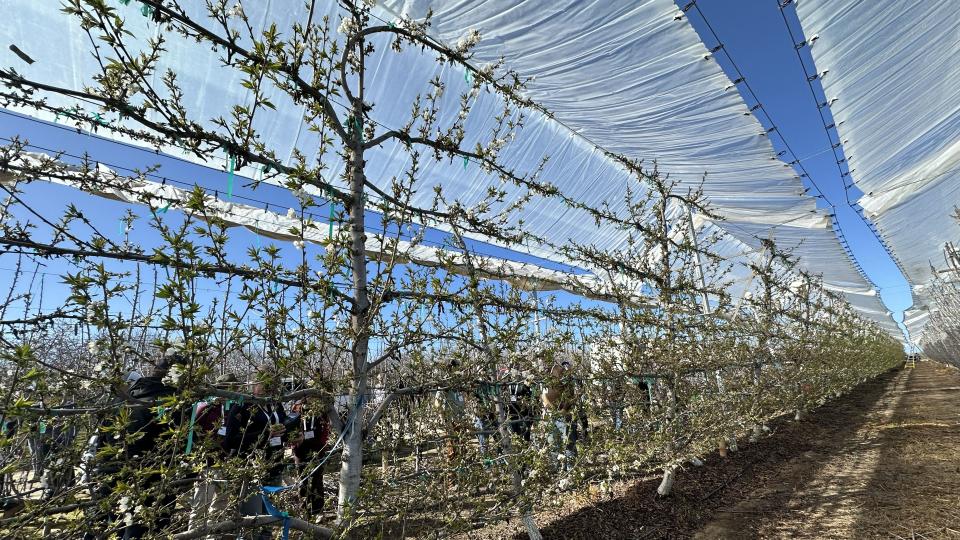
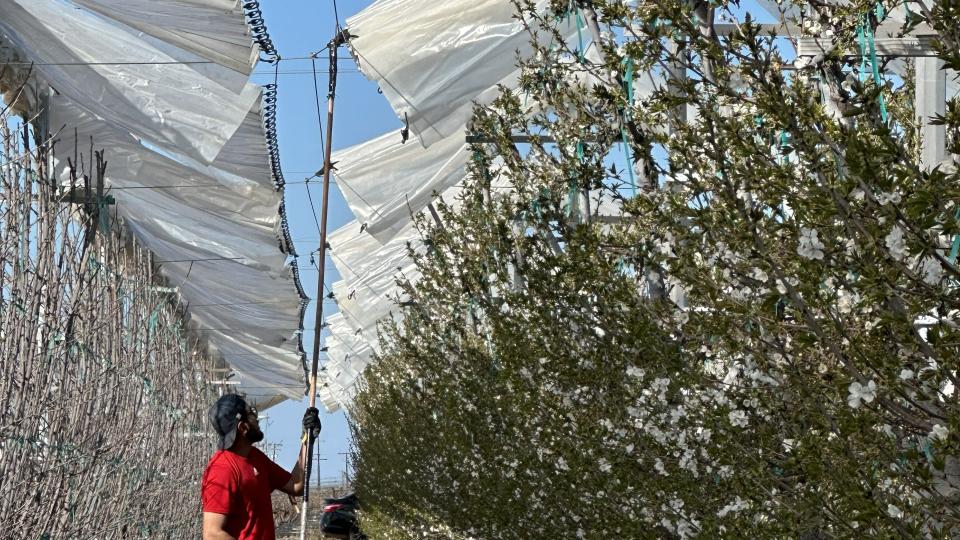
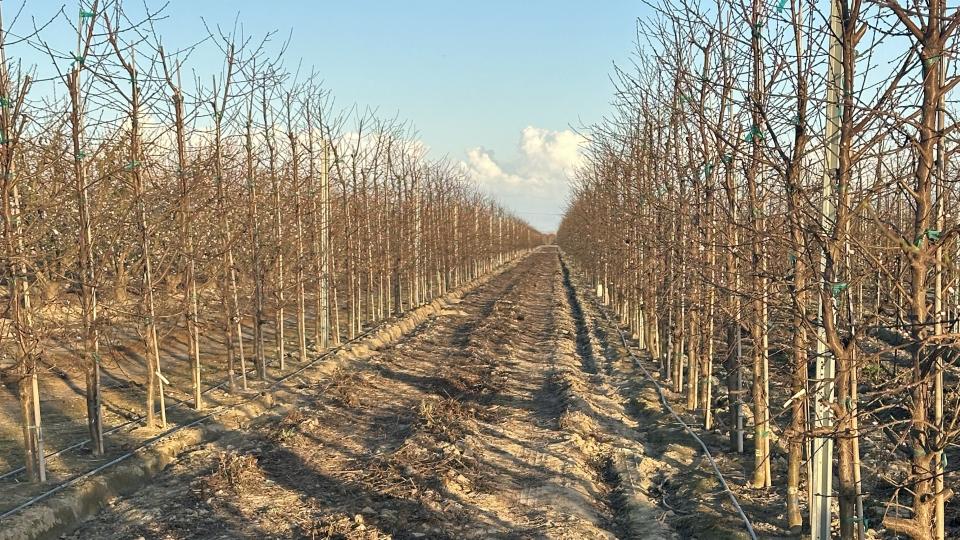
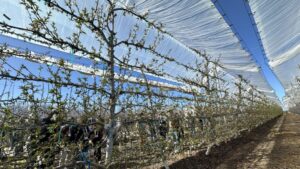
Featured during the visit was a trial block of trellised cherry production systems, an approach the company is evaluating for its potential to improve labor efficiency, simplify canopy management, and enhance overall orchard performance under California growing conditions. The planting included two low-chill cherry varieties suited to warmer production regions, reflecting ongoing efforts to adapt traditionally cooler-climate crops to the Central Valley environment. Company representatives noted that the project remains a learning process, with management practices still evolving as the trees mature. According to the team, growing cherries on trellises could represent a significant shift for future production by enabling more efficient harvest practices and reducing labor costs — a key priority as growers seek sustainable solutions amid rising expenses and workforce challenges.
HMC Farms: Orchard System Redesign and Mechanization
The tour concluded at HMC Farms, a multi-generational operation that has been farming in California’s Central Valley since 1887. Today, leadership includes Jon McLarty and Drew Ketelsen, representing the latest generation guiding the company through a period of significant production innovation. Known primarily for its large-scale stone fruit and table grape operations, HMC Farms has focused heavily on rethinking orchard design to address rising labor costs and improve operational efficiency.
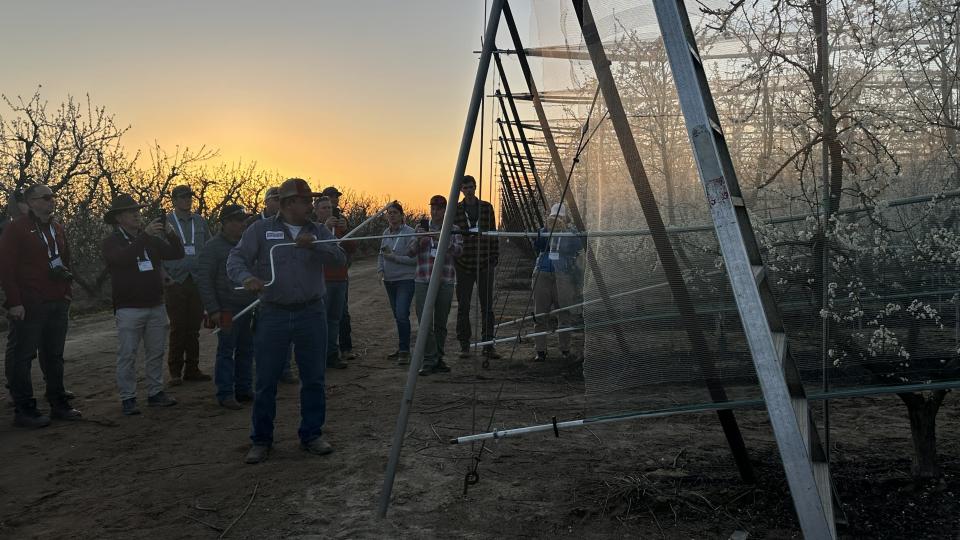
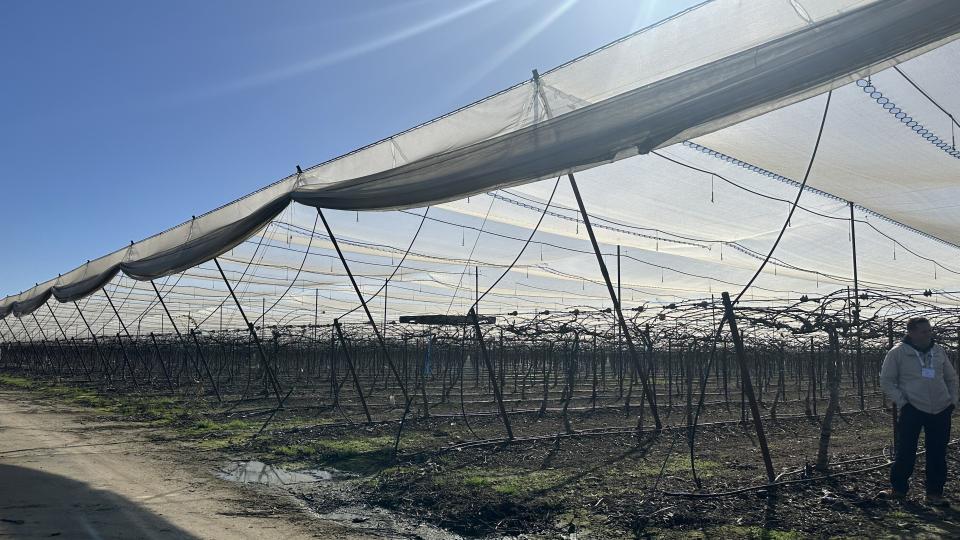
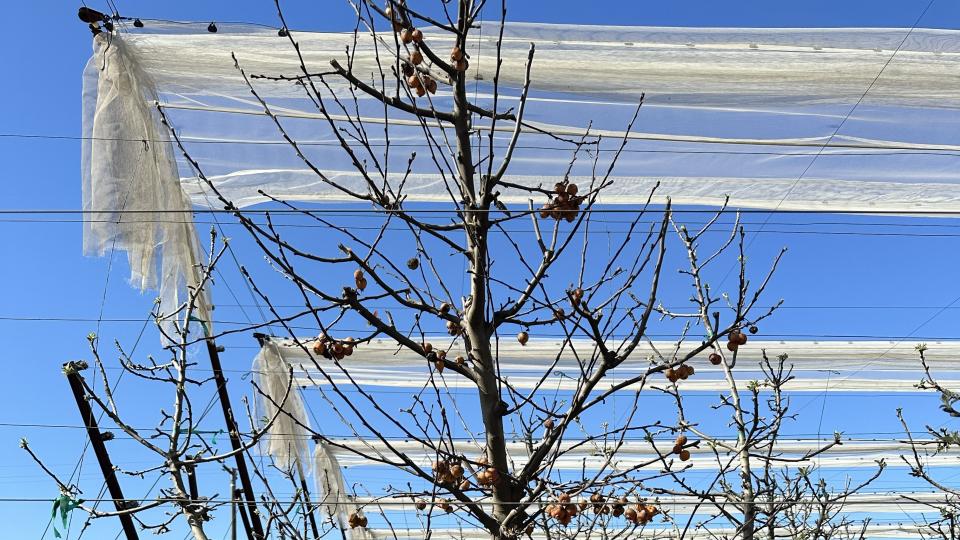
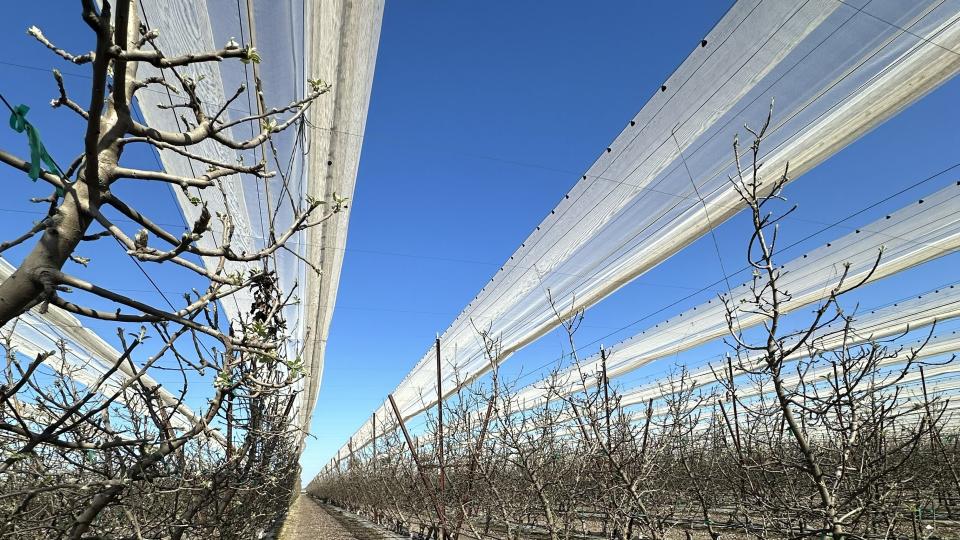
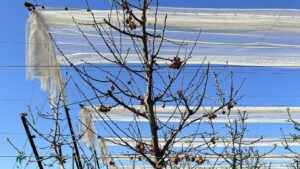
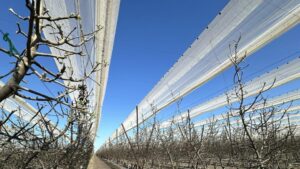
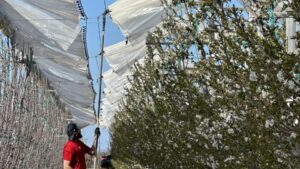
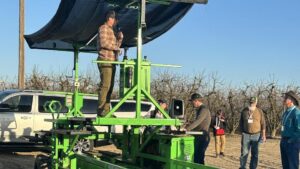
A highlight of the visit was the farm’s transition toward high-density, narrow training systems for peaches and other stone fruit, designed to support greater mechanization and more efficient labor use. These modern orchard architectures allow for improved light interception, simplified canopy management, and compatibility with emerging mechanical technologies. Attendees observed a newly implemented mechanical thinning machine being used in peach blocks, demonstrating how automation is increasingly integrated into traditional crops. In addition, HMC Farms showcased a hail-protection netting system imported from the Netherlands, illustrating how global technologies are being adapted to mitigate weather risk and protect crop quality. The stop provided a forward-looking perspective on how orchard system redesign may shape the future of California stone fruit production.
Industry Reinvention
Together, the tour stops illustrated an industry actively reinventing itself in response to labor constraints, market pressures, and changing production environments. From autonomous equipment trials at Sangha Farms to flavor-focused variety development at Family Tree Farms, practical quality strategies at Kings Orchards, and trellised cherry experimentation at The Grapery, each operation demonstrated a different pathway toward long-term sustainability. The visit to HMC Farms ultimately underscored how orchard system redesign and mechanization may serve as the foundation for the next generation of tree fruit production. Across farms of varying size and structure, a common message emerged: innovation is no longer optional but essential, and progress increasingly depends on growers willing to test new ideas and openly share results with one another, a principle that lies at the heart of the post-IFTA tour experience.

For more Smart Tech topics, click here.
Subscribe Today For