



Smart Tech
The State of Smart Tech Adoption in Vegetable Production

Vegetable growers continue to explore smart tech as a way to improve efficiency, reduce labor challenges, and make better use of resources. Yet despite growing interest in digital tools, smart tech adoption remains uneven across the industry, with cost, uncertainty, and operational fit still preventing many farms from taking the plunge.
Results from the American Vegetable Grower’s 2026 State of the Vegetable Industry survey reveal which technologies are gaining traction, what’s motivating growers to invest, and the key obstacles standing in the way.
What’s Driving Investment
While improving operational efficiency and saving time was the leading factor overall, the motivations behind smart technology investment varied by farm size. Among growers farming 99 acres or less, improving operational efficiency was the top driver, followed by improving profitability and reducing labor dependence.
Growers managing 100 to 999 acres also prioritized efficiency but placed greater emphasis on profitability and using better data to support decision-making. For farms with 1,000 acres or more, the focus shifted toward profitability, operational efficiency, and reducing input costs, reflecting the greater scale and complexity of managing large-acreage operations.
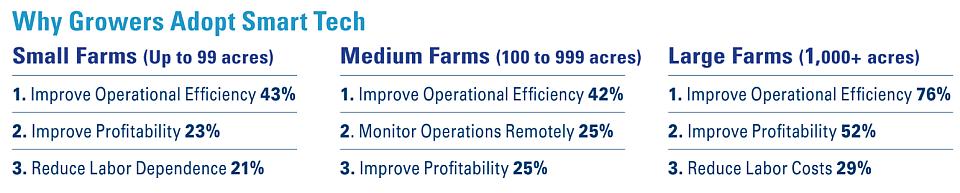
Across all farm sizes, growers consistently viewed smart technology as a tool to improve efficiency, strengthen financial performance, and make more informed management decisions.
Most Popular Tools
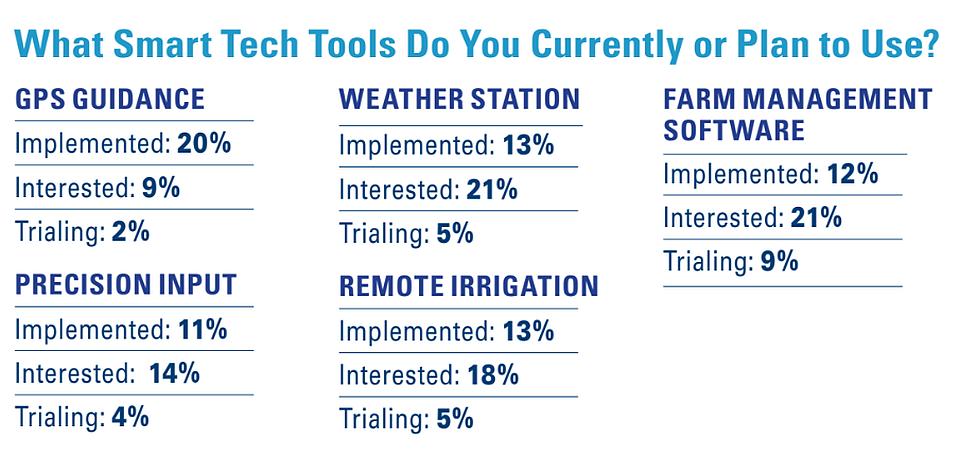
The four most widely implemented technologies were GPS guidance/auto-steer systems (20.2%), weather stations and microclimate sensors (12.9%), remote irrigation control (12.6%), and farm management software (12.3%). These tools outperform more emerging technologies such as AI-driven decision support, robotics, and drones, suggesting growers continue to prioritize proven solutions that improve operational efficiency, support decision-making, and optimize inputs.
What’s Holding Growers Back
While the specific challenges varied by operation size, cost emerged as the most significant obstacle to smart technology adoption across the industry. Growers farming 99 acres or less were most likely to cite high upfront costs, concerns that available solutions were not a good fit for the scale of their operations, and uncertainty about return on investment.
Among farms ranging from 100 to 999 acres, cost remained the leading barrier, but growers also reported challenges related to implementation complexity and finding the time to research and deploy new technologies.
For operations with 1,000 acres or more, upfront costs and ROI concerns remained important, though issues such as internet connectivity, service support, and access to repairs became more prominent.
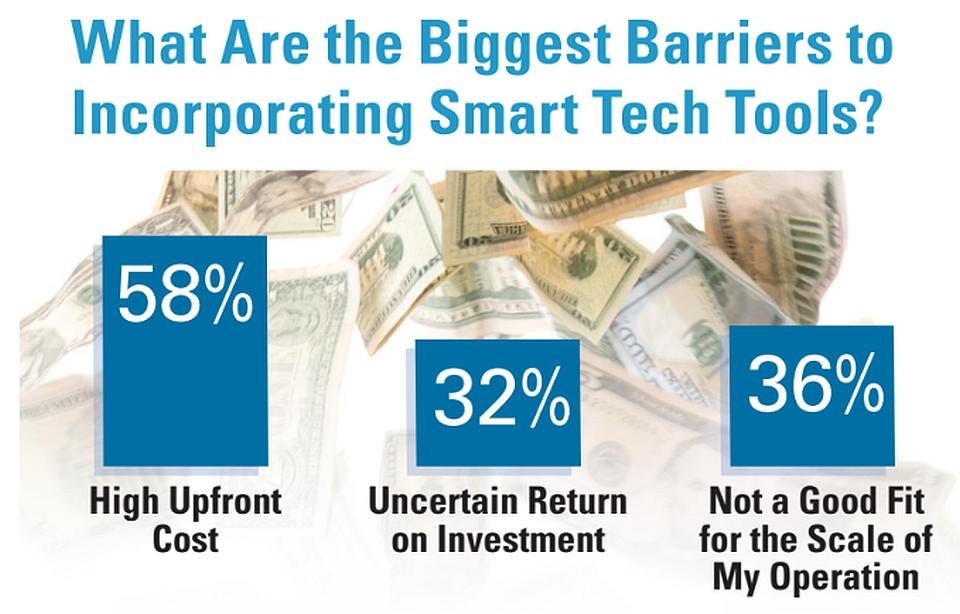
Overall, the survey suggests that while interest in smart technology continues to grow, growers need clear economic value and practical implementation pathways before making the investment.
Stay tuned for more findings from the 2026 State of the Vegetable Industry survey.

For more Smart Tech topics, click here.
Subscribe Today For
