


Ag Executive Perspective With Chuck Broughton of Rovensa Next
 August 16, 2026
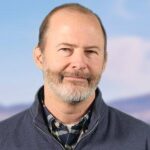
Chuck Broughton
Rovensa Next is unlike any other three-year-old company, unless you know of another company founded in 2023 that boasts more than 2,200 employees across more than 90 countries, three dozen R&D facilities and 13 global production facilities. That’s what you get when you combine 12 legacy companies into what Rovensa claims is “the world’s largest biosolutions company for sustainable agriculture.” Tradecorp, Oro Agri, Agro-K, Agrichem, and Cosmocel are just some of the individual organizations that have been rolled up into their enterprise formed because “agriculture needs to accelerate its green transition.” We sat down with Chuck Broughton, head of North America for Rovensa Next, for an update on the company’s progress and to learn about hurdles its tackling to boost adoption of biological products.
How would you characterize the success and progress of the business expansion over the last few years?
Chuck Broughton: We’ve brought a number of companies into the North American business. We have the legacy Oro-Agri, Agro-K, Cosmocel businesses and and now the Novonesis partnership. Our progress is not always going to be linear. We had to start just by introducing ourselves to the North American market because a lot of people didn’t even know who Rovensa Next was when we bought Oro-Agri.
Now, we’ve moved on to talking about the problems we can solve and ensuring we have the right people on our team. I’d add that the type of salespeople we want to hire are those who have credibility with the retailer in their area. They’re seen as an expert. And our expansion can be tough for them because when I ask them to bring on an entirely new portfolio they have an understandable hesitation because they don’t want to look like they don’t know as much about the new portfolio as they do about their legacy portfolio. If I was selling Agro-K and I had crop nutrition down pat, now we’ve got Novnesis so I have to start thinking about biocontrols and what an inoculant with a biostimulant does and how that fits into a farmer’s program or a retailer’s seed treatment process. So we’ve developed a robust internal training program to support our sales team- this will be key to our success.
So, is the vision or the plan to ultimately take all of the products to market through one Rovensa sales team?
Broughton: That’s my vision. And the reason for that is I’ve seen so many times where companies have had separate salesforces, selling different portfolio’s and doubling up at the same retailer. They do that for a few years and then revert to a “one team” approach. We are unified from the beginning so, we have the opportunity to show up completely differently to a retailer. We’re showing up as not just one element of a biological program – we have the whole suite.
How satisfied are you with the portfolio right now? Are there gaps that you see that you want to address?
Broughton: We have a great suite of products to bring to that grower, but. I don’t think a grower wakes up in the morning and says, “Hey, I’ve got a problem and I want a biological solution to that problem.” I think he wakes up and says, “I’ve got a problem. What are my options?” And if I look at the solution categories in our portfolio, biocontrol is the one has most of my attention to right now. Bioherbicides and bionematicides are two of the fastest-growing segments in that category, and that’s where we see the most room to expand and build out a broader set of options for growers.
How does Rovensa look at the globe and what is the ultimate goal for the U.S. market versus some of the international markets where you’re also having success?
Broughton: We see enormous opportunity in North America. The United States is the largest biological market in the world, so there is no question the company looks at North America as the future leader across the globe. Right now, we sit in third place behind Brazil and Mexico. That makes sense. Mexico’s market is heavily specialty crop focused, and Brazil has so much scale that it is no surprise those two markets are large for us, and they are going to stay big across the board. But I think there is more long-term potential in North America because of the way we go to market here.
When you look at biologicals attitudes, how would you compare and contrast the attitudes of growers versus retailers? Are there significant differences there?
Broughton: I’ll go back to something I said earlier: A grower doesn’t wake up wanting a biological product. They want their problem solved. Meanwhile, a retailer is charged with helping to solve that grower’s problem in the context of their own business, right? So the real question becomes whether we can design products and formulations that fit how that retailer goes to market. If a product isn’t convenient for them, or doesn’t have an obvious fit for their business, we’re out of the picture before the conversation even starts.
The grower may love the idea of using one of our products to solve a problem. But it might not be workable for their retailer’s business at all. For example, we have a lot of foliar products, but a retailer in California might not have a robust custom application business to apply those products. So, we look at that retailer and try to thread the needle (or solve the puzzle).
So we look at that retailer and figure out where our product actually fits: how they go to market, what’s practical for their operation, and now, with Novonesis in the mix, what inventorying live biological product means for them. Our product has to make sense for the retailer’s portfolio, and all of that factors into the decision.
That’s really what changes how a retailer looks at biologicals versus a grower.
It’s also what excites me about this whole portfolio, and part of why I want my team able to sell across all of it. The breadth, depth and flexibility of our line means a grower or retailer can solve more of what they’re dealing with through one source instead of stitching together several suppliers, and the products hold up in the field when they’re used. That combination, real breadth and products that work, is what lets us have a real conversation. You don’t have to buy into every category we sell to be our ideal customer, and that flexibility is part of what differentiates Rovensa Next.”
What about attitudes as it relates to biologicals? To what extent do you still have to fight that fight that these products have faced for so long? Or, are the growers and retailers both on board with biologicals as a reliable option?
Broughton: I’ve been selling biologicals since 1996. I was selling a BT on cabbage and cranberries. And I was still selling chemicals at the time. But I realized biologicals are different and they have to be treated differently. And, you know, was called a “snake oil salesman” for several years, but that attitude started to change when the big players, the Syngentas, the DuPonts, now the Cortevas, the Bayers, and BASFs of the world started getting into biologicals. That changed a lot of attitudes.
But we still have a lot of education to do. Growers understand why one active ingredient is different than another active ingredient, but explaining why one active ingredient is different from a biological is a very different conversation. That’s like talking to someone how a pen is different than a ball. And you have to walk through that because a grower wants to understand how the product works. The story for a chemical fungicide is very cut and dried. Telling that story for a biofungicide is much more nuanced and takes more time, and nobody seems to have any time anymore, until they realize that we can solve their problem.
But it sounds like you’ve seen growers and the retailers both get more comfortable with biologicals than they were even 10 years ago.
Broughton: Definitely. And that’s because we focus on solutions. For example, we have a great white mold program, and have had some really nice promoters in Nebraska talk about the success they’ve had with its performance. Other growers and other retailers have contacted us because they want to learn about our solution to a problem they also have. We don’t start off by saying it’s a biological solution. We say, “Yeah, we can help you with white mold and here is how we can solve the problem at planting and at fungicide timing – a complete solution, not just product X for problem Y.” That’s what they want to know about. They don’t care if it’s biological or not. What they care about is getting rid of their problem with a solution that works.
Do you have a sense of how attitudes within the U.S. compare to attitudes globally about biological products?
Broughton: I think the U.S. market has been slower to embrace the biological options because of the sheer volume of choices they have both in terms of synthetic products and biological products. Compare our situation to the Canadian market where I think growers are more accepting and are even more willing to be early adopters by trying new products because they don’t have as many options.
What are the primary obstacles that remain in terms of greater adoption for biological products?
Broughton: I think it comes down to a mentality shift. For example, think about how easy it is to sell nitrogen fertilizer. The grower picks up the phone, calls his retailer, orders nitrogen, and hangs up the phone. It’s that simple.
When you’re trying to position a biological product that can replace a synthetic product, it’s an entirely different conversation. You have to explain how it works in the field. You have to explain to the grower how to use the product in their current system, what to watch for, what they need to do and what they need to avoid. Selling the biological solution just takes more time. That doesn’t mean the product is any less effective. It just takes longer to have that conversation, and nobody seems to have the time for it anymore. Now add this conversation complexity to the pressures that an ag retailer faces every day. They have synthetic chemical solutions that take might 5 minutes to explain. A biological solution can be just as effective, but it takes real time out of that rep’s day. We need to simplify the conversation, and that’s the biggest obstacle I see to adoption right now.
A biological is not an ag chemical. Retailers have to treat them differently, and growers have to use them differently – whether that’s a field operation or a greenhouse running fertigation and precision dosing on a tight schedule. Our mission as a supplier of these products is designing a program that fits seamlessly into what that growers are already doing. I had a grower tell me years ago, “It’s convenience, its cost, or its efficacy. If you can’t deliver on those three big things, you’re not providing value.”
Is there anything else you would like growers or retailers to understand better about Rovensa maybe they do today?
Broughton: I hope the industry understands the name and what we represent. There are so many options for everyone today. We’re trying to look different than our competitors, and we’re working to become a magnet for companies that have a great idea or a great product. There are fantastic products that might not have the access to the market that we have . And we see that a bit in the specialty markets.
Pay attention to us because we have a lot of solutions to the problems that you’re facing.
“Executive Perspectives” is an editorial series in which we visit with leaders from across the agriculture industry to learn the challenges they see facing growers from their respective part of the business and their recommendations to help growers succeed. This interview has been edited for style, length, and clarity.
Subscribe Today For
