



How Emeritus Vineyards Grows Opportunities with Diversification and Dry Farming
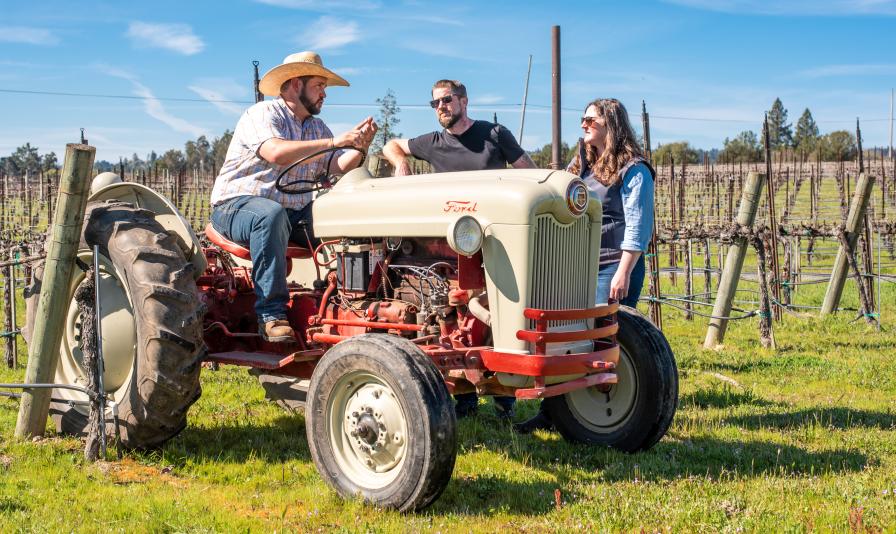
From left: Riggs Lokka, vineyard manager; Keith Hammond, winemaker; and Mari Jones, President at Emeritus Vineyards in Sebastopol, CA.
Photo: CA Grown
It is the gift of the farm kid to grow up with industry fluency, especially if led by an entrepreneurial parent. This happened for Mari Jones of Emeritus Vineyards in Sebastopol, CA.
“I kept giving my dad what I would consider to be helpful advice from afar,” Jones said. “He said, ‘If you want to do that, you have to come do it yourself.’”
So, she did.
A short-term plan to boost winery sales turned into a lasting commitment and a deep love of the farm. Today, she leads as President alongside vineyard manager Riggs Lokka, also a second-generation member at Emeritus.
Their fathers worked together for 40 years, and this duo is on year six together. Their success is rooted in an ability to adapt, respond to shifting market dynamics, protect vineyard health, and strengthen their commitment to the broader Russian River Valley community.
Navigating a Tough Industry
Many California growers pulled vines in recent years to curb losses amid the market downturn. For Jones, inheriting the vineyard also meant inheriting an established reputation.
“That’s really helped sustain our operations even in this market contraction,” she said.
Emeritus is also insulated in part by a diversified business model. In addition to producing its own wines, the company sells a meaningful share of its fruit to winery partners, ensuring the quality and consistency of its grapes.
Finding solutions that worked for both the vineyard and its partners required flexibility. In some cases, it meant using different farming inputs and restructuring contracts. In others, it meant identifying new markets or reconsidering how certain blocks could create additional value.
“Anything that goes into our bottle is still made with the utmost care,” Jones said, “but we’re also now experimenting with ways to monetize grapes that we hadn’t before.”
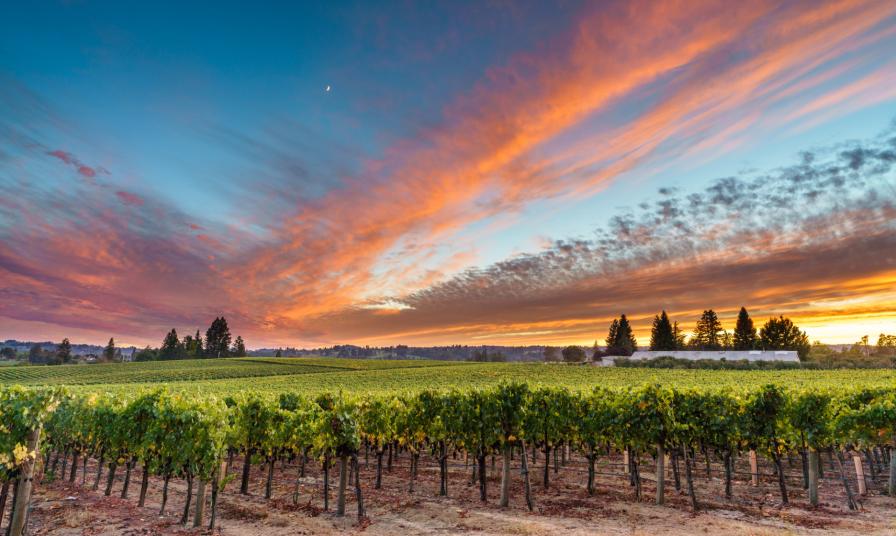
The sprawling Emeritus Hallberg Ranch.
Photo: Scot Hampton
No Water, No Problem
Dry farming in drought-stricken places such as California still seems counterintuitive. But it isn’t necessarily a water conservation practice so much as a strategy for quality and enhanced fruit flavor.
Dry farming is possible only in select regions, and it’s particularly challenging in California because rain falls when vines are dormant. In 2007, Emeritus began a four-year transition to wean vines off irrigation.
The result was a significant difference in wine quality and flavor, as well as the health, productivity, seasonality, and resilience of the vines.
Take September heat events, for example, that can alter harvest plans.
“We find that the vines don’t collapse. They don’t spike up in sugar, and the acid doesn’t fall out overnight. The vines are able to hold their own,” Jones said.
Emeritus begins harvest anywhere from seven to 10 days prior to its neighbors, with phenolic development occurring at lower Brix levels. For Pinot Noir, that can be an important advantage, allowing the grapes to retain more acidity while developing the flavor and structural qualities needed for the wine.
The berries and clusters are smaller, producing the concentration and intensity of flavor desired for a fine wine. Strong yields and intense thinning ensure quality and longevity, and all these practices have lent themselves to consistency from vintage to vintage.
“It’s like a paradox: you’d think that without the water being added, you’d get wilder swings,” Jones said. “It’s been a really interesting transition to witness because the change in the profile of the wines has really been profound.”
Vineyard – and Block – Designate
“I think when it’s done to the highest power, the best degree that it can be—the Platonic ideal of Pinot Noir—it’s always going to be reflective of the place where it’s grown,” Jones said.
The power in highlighting the provenance of wines is a central belief to the company’s focus on vineyard- and block-designate wines. In Sonoma County’s Russian River Valley, most growers produce a single-vineyard wine, at least in some small production, even if their large-scale productions are AVA blends. American Viticultural Area, or AVA, indicates that at least 85% of the grapes used in the wine were grown within that legally defined geographic region.
“We’re all flying the Russian River Valley banner. It behooves us to do that because then wineries are going to want to make Russian River Valley wines. Not one company or one vineyard or winery can fly that flag alone and make an impact in the market,” Jones said.
Emeritus released its first single block wine in 2008, added a second in 2009, and a third in 2017.
A Collaborative Future
Camaraderie and collaboration have become essential anchors for California’s wine industry. As growers confront market pressures, Jones finds tremendous value in working together to keep individual operations connected to the health of the broader whole.
That may mean finding creative solutions with winery clients, grafting new varietals, or finding new opportunities for grapes. It also means recognizing that no vineyard succeeds entirely on its own. For Jones, it’s about more than preserving what has defined the vineyard; it’s about building a sustainable future for Emeritus while keeping the business and community strong.
“It’s one of the great superpowers of the wine industry and the vineyard industry in particular,” Jones said. “I’m such a believer in our community.”
Unfined and Unfiltered
Sustainability and quality are ongoing commitments at Emeritus Vineyards, where the wines are shaped by soil, climate, and people. Among its many vineyard and environmental practices, the wine is completely unfined and unfiltered, allowing the winery to make vegetarian and vegan claims on the bottle.
“We definitely take the holistic approach, and people are a huge part of it,” Jones said. “The work is never done. There’s always something more we can learn.”
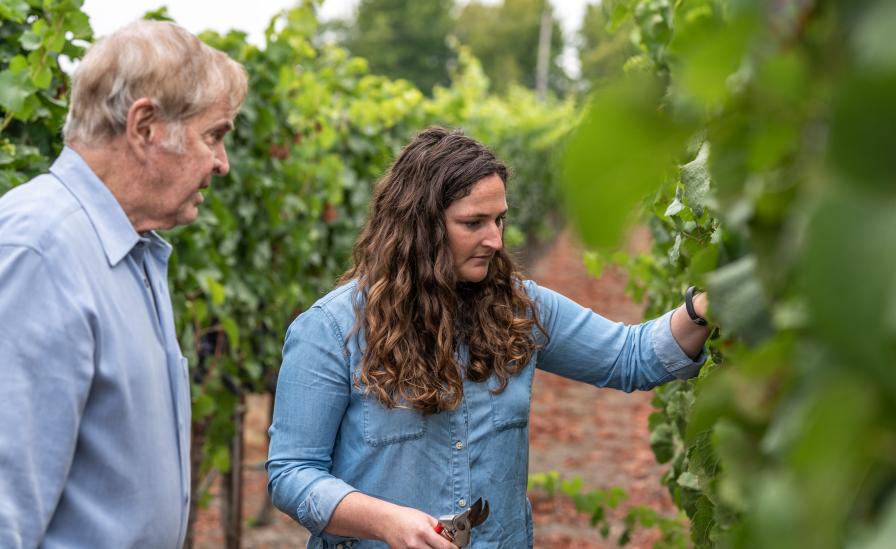
Emeritus Vineyards founder Brice Cutrer Jones and daughter Mari Jones.
Photo: Scot Hampton
In the 1990s, Jones’s father, Brice Cutrer Jones developed a vineyard with Aubert de Villaine, a world-renowned winemaker. It was during a conversation about the availability of water—and the requirement to truck it in—that de Villaine explained that when vines are irrigated, the signature of the wine is changed.
Subscribe Today For
