



Urgent Message for California Wine Growers: Pull Your Vines Now
 March 24, 2025
 California wine grape growers have a drinking problem. Worldwide, alcohol consumption continues to decline, especially of wine, learned growers at the Unified Wine & Grape Symposium’s standing-room-only State of the Industry session in January. They’re simply growing too many wine grapes, not all them are wanted, and especially in the last three years, many get left on the vine to rot.
The crux of the problem, declining consumption, is unlikely to abate soon. Baby Boomers are the biggest consumers of wine, and as they die off, they’re replaced in the market by 20-somethings who don’t like alcohol so much, wine in particular.
“There were consistent declines in all categories in 2024 – spirits, beer, and wine,” Danny Brager, a California consultant, told the audience. “I’ve never seen all categories down.”
The session is the highlight of the largest trade show of its kind in the Americas, 200,000 square feet of exhibit space filled with nearly 900 exhibitors showcasing the latest technology, equipment and services for the wine and wine grape industry. The show in Sacramento, which attracted more than 10,000, is sponsored by the California Association of Winegrape Growers, which co-hosts along with the American Society for Enology and Viticulture.
Brager said there were only two categories of wine that increased last year. Non-alcoholic wines, which might be expected, but also organic wines, sales of which are increasing at 2% per year.
To demonstrate the severity of the problem, Glenn Proctor of the Ciatti Company said one longtime truism, “I can always sell excess Napa ‘Cab(ernet)’ on the bulk market,” is no longer valid, as there is plenty available that remains unsold.
Not only is there a record high amount of fruit available, he said, but there are 10 million gallons of bulk wine going wanting. He noted that 2/3 of that wine was produced from coastal grapes, 1/3 from the San Joaquin Valley, a change from recent years.
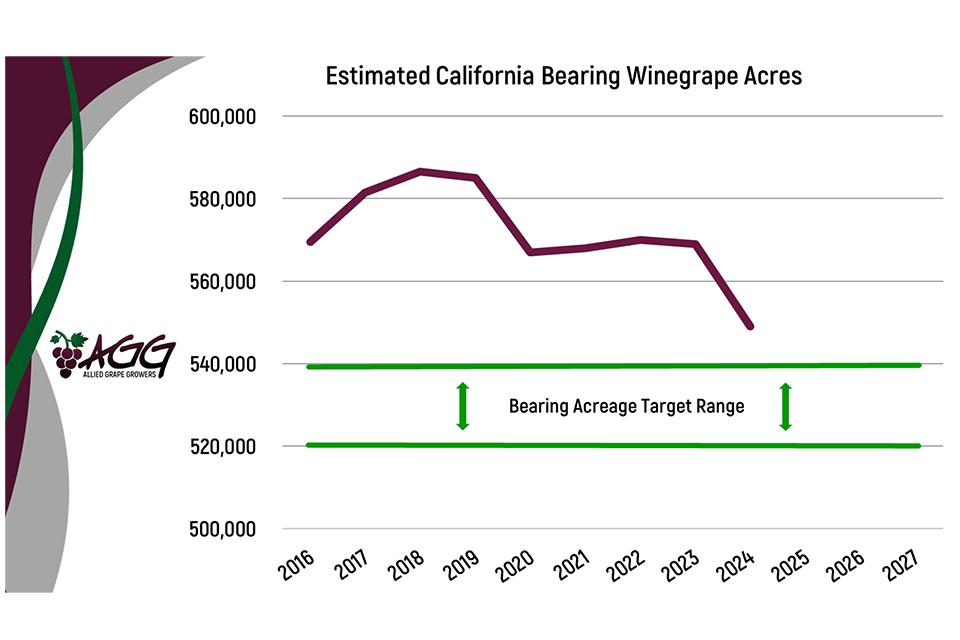
The mood is gloomy among most California wine grape growers, but they got some good news as wine grape acreage is trending in the right direction as wine consumption continues to fall.
Graphic courtesy of Allied Grape Growers
DOWN WITH ‘ZIN’
Allied Grape Growers President Jeff Bitter has been trying to drive home the imbalance for the past several years, as growers simply aren’t getting the message. He didn’t mince his words, telling growers they simply have to pull out more vines. He would like to see growers pull out 50,000 acres to get down to the target of 500,000 acres, which will get the industry back into balance.
Bitter said there are especially too many acres of red grapes, which makes the fact that growers planted only 38% white grapes last year all the more infuriating.
“Red grapes are left on vines all over the state,” he said, “and people keep planting them all over the state.”
Unlike past years, however, Bitter’s message wasn’t primarily aimed at growers in the state’s interior.
“We’re actually recommending more coastal vines get pulled, rather than the interior,” he said.
One variety in particular that should be avoided is ‘Zinfandel’, Bitter told growers, which may be appropriate, as no variety is more identified with California.
“Zin is not looked upon with favor by the market,” he said, “anywhere it’s grown.”
Another problem California growers have is that a flooded world market and a strong dollar both hurt exports. Ten years ago, California exported 16% of its production, and today it’s down to 10%.
Bitter said he concedes that removing a vineyard isn’t easy, especially these days, when few alternative crops are faring that well, and growers face limits on the amount of groundwater they can pump.
“What do you plant instead?” Bitter said, leaving the question unanswered as his voice trailed off.
Subscribe Today For
