



Finding the Right Way To Spray for Bacterial Spot of Tomato
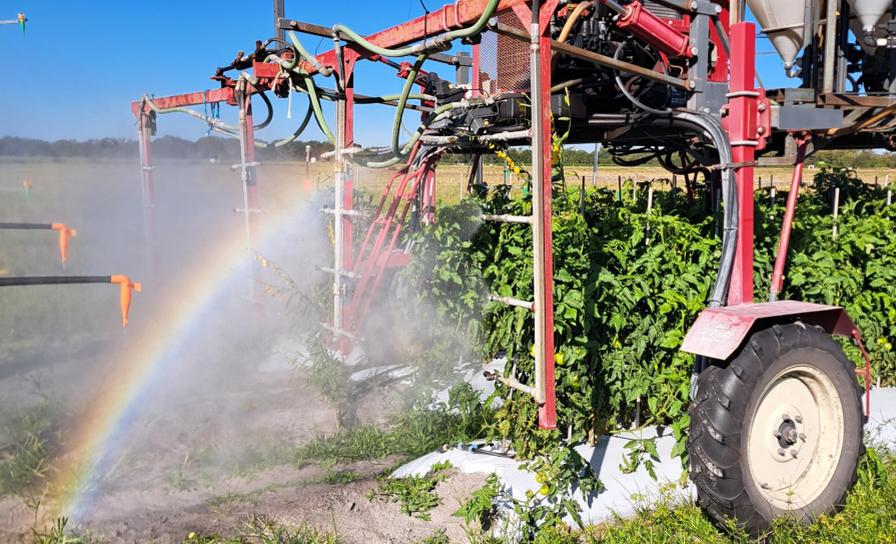
This image shows a simulation of a spray application using water only. The spray generates small water droplets (aerosols) that may contribute to the spread of bacterial spot pathogens. Photo: UF/IFAS
Bacterial spot of tomato is a relentless, weather-powered villain that can ruin a field of promising fruit. When warm rains roll in and humidity hangs in the air, the pathogen behind bacterial spot comes alive, spreading fast and scarring tomatoes.
Growers rely on fungicides to fight the disease, but fungicides often don’t work very effectively because pathogens are resistant to them, according to University of Florida Plant Pathologist Gary Vallad.
The very act of applying these materials can unintentionally help the pathogen spread. As Vallad explains, traditional spraying equipment uses high volumes of water at high pressures to deliver the fungicide to the tomato canopy. But that process also creates particles containing the bacteria that can remain suspended in the air, accelerating plant-to-plant spread across fields.
UF scientists are trying to empower tomato growers to spray fungicide without spreading the bacterial spot pathogen.
This fact raised an important question: whether the fine mist produced by traditional tractor mounted sprayers could also help move the bacteria in the field,” Vallad says.
To find out, researchers infected tomato plants with the bacterial spot pathogen in a field. They then used a tractor-driven sprayer to spray the plants with water, mimicking a fungicide application. While spraying, they used air samplers to see how far the bacteria could travel through the air.
Under these conditions, researchers detected bacteria as far as 24 feet from infected plants and up to 15 feet above the ground. Those amounts reflect the extent to which scientists sampled the air. It’s likely that the bacteria moved even farther, but scientists didn’t have additional sampling stations to measure the full extent of how far the bacteria moved, Vallad says.
“These results suggest that weather and disease severity influence how easily the bacterial spot pathogen becomes airborne during spraying. We are looking at new sprayer technology, changing nozzle types, use of low-volume air-assisted sprayers, or even changing sprayer configuration as ways to limit the production of bioaerosols.”
For more, continue reading at blogs.ifas.ufl.edu.
Subscribe Today For
