



Smart Tech
Making More Sense of the Almond Season for Growers

An almond tree can tell you how short of water it is. Stem water potential, read in bars with a pressure chamber or a sensor, has a known value for a well-watered tree on any given day. This summer, we collected readings from about 200 almond blocks across California. In the second week of August, half were past the point where a deficit stops saving water and starts costing nuts, while one block in ten showed no stress at all. Nobody farms the county average.
TAKING THE WEATHER OUT
Stem water potential measures how hard the tree pulls water from the ground; the harder the pull, the more negative the reading. A well-watered almond tree reads around -6 bars on a mild day and closer to -10 on a hot, dry afternoon. University of California (UC) publishes a table of what a well-watered tree should read under those conditions. That reading is the baseline. Subtract it to get the tree’s shortfall. Every number from here on is that shortfall, in bars below baseline.
The figures come from the public California crop stress index, which covers blocks from the Sacramento Valley to the southern San Joaquin. The index sets the stress trigger at 8 bars below baseline; within 2 bars of baseline indicates no stress.
THE CLIMB TO AUGUST 9
In mid-April, nine blocks in ten had no stress, and for two weeks the median block read a touch above baseline, wetter than a well-watered tree has any use for. Winter water was still in the profile, the days were mild, and the first sets of the year went on anyway. Most blocks stayed comfortable until June.
Then summer set in, and the blocks dried down week after week. Some of that was on purpose. Through hull split, UC guidance calls for holding trees 4 to 8 bars below baseline to save water and prevent hull rot, while avoiding prolonged deficits beyond 8 to 10 bars, where young orchards stall and mature ones drop leaves and set smaller nuts.
In a five-season UC trial, holding almonds about 8 bars below baseline through hull split saved about five inches of water a year with no yield loss (Stewart et al., California Agriculture, 2011). By the last week of July, four blocks in ten were past the trigger, and plenty of them were exactly where their managers wanted them.
Then harvest. From the first shake until the last pick up, the orchard floor has to stay dry. A grower who sees trees running short in August may have to wait. The peak came in the second week of August, when the average block sat 8.4 bars below baseline and nearly half were past the trigger. The Sacramento Valley had it worst, with more than half its blocks past the trigger.
The index cannot tell a chosen deficit from a plugged filter, or from a block waiting on the sweeper. The grower can.
Wesley Henderson, who farms almonds at Humble Hollow Farms in the Sacramento Valley and works as an agronomist for Bio-Gro, suspected his 2026 irrigation schedule was out of balance.
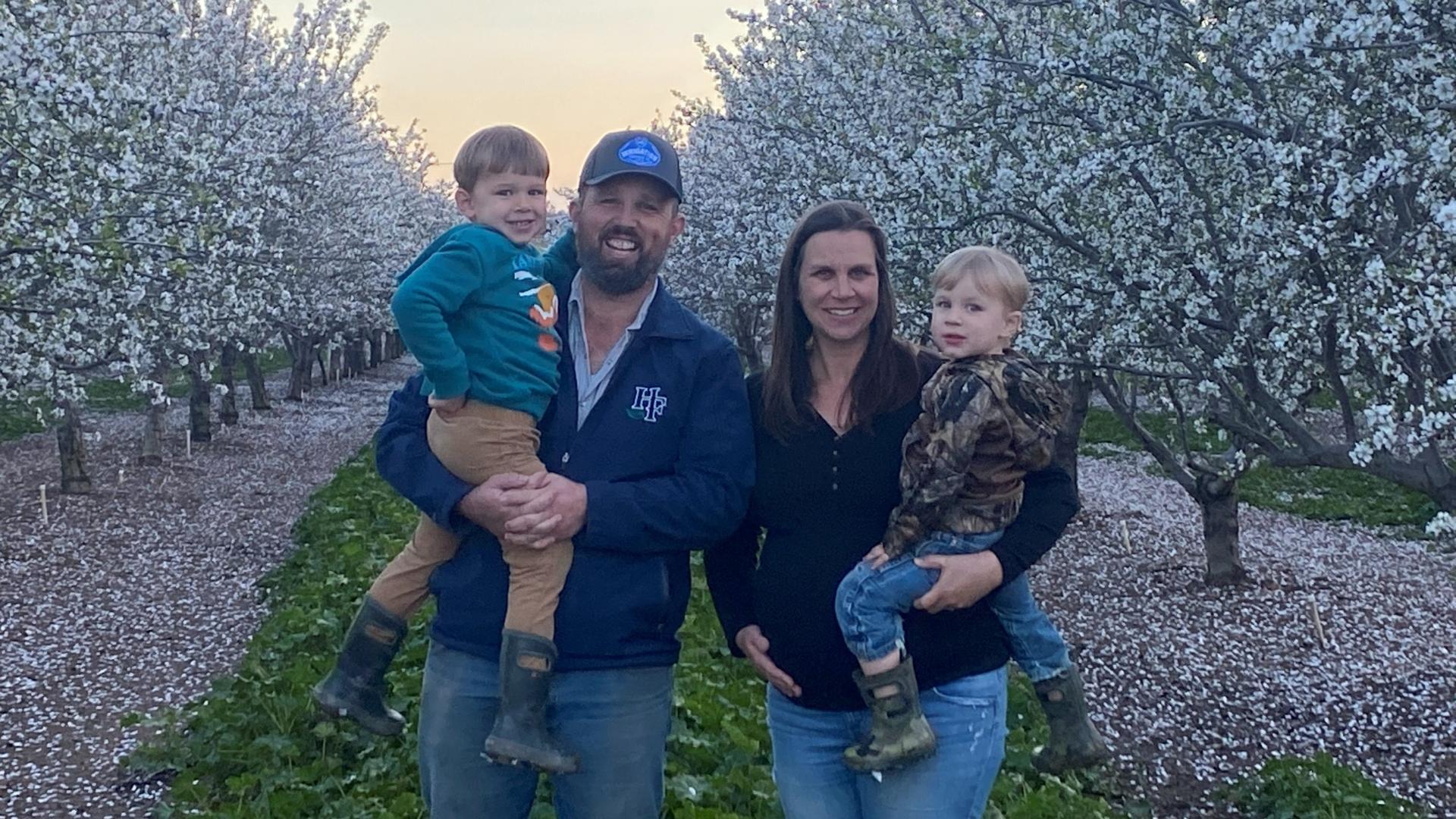
Wesley Henderson and family of Humble Hollow Farms.
Photo: Humble Hollow Farms
“I was overwatering every spring and underwatering in the hot summer months. In a year when lots of orchards had large decreases in yields, one mature orchard decreased only 10%, and my other mature orchard actually increased yield by 15%,” Henderson said.
The readings helped Henderson prioritize irrigation against other orchard work.
SAME HEAT, DIFFERENT BLOCKS
Every block in a region shares the weather, so every block shares the baseline. The rest is local. Sand on the same schedule as the loam beside it runs dry days sooner. Emitters plug. Pressure sags at the end of a long lateral. The controller knows what it was told to send, and the tree reports what arrived.
Salt is the one a moisture probe cannot see. Salty soils hold water tighter, so the tree pulls harder for every drop, while the probe counts the water and reports a block that looks fine.
One chamber reading a week is a coarse instrument. Read a block the day after a set and it looks wet. Read it the day before the next set and it looks bone dry. Same block, same week.
Adelyn Colline manages Almond Grove on the west side of the San Joaquin Valley, where the orchard dries down faster than ETc (crop evapotranspiration) and soil data suggest. After installing sensors in early June, Colline saw the trees were more stressed than ET projections showed, particularly in the northern part of the orchard several hundred feet from the soil sensor.
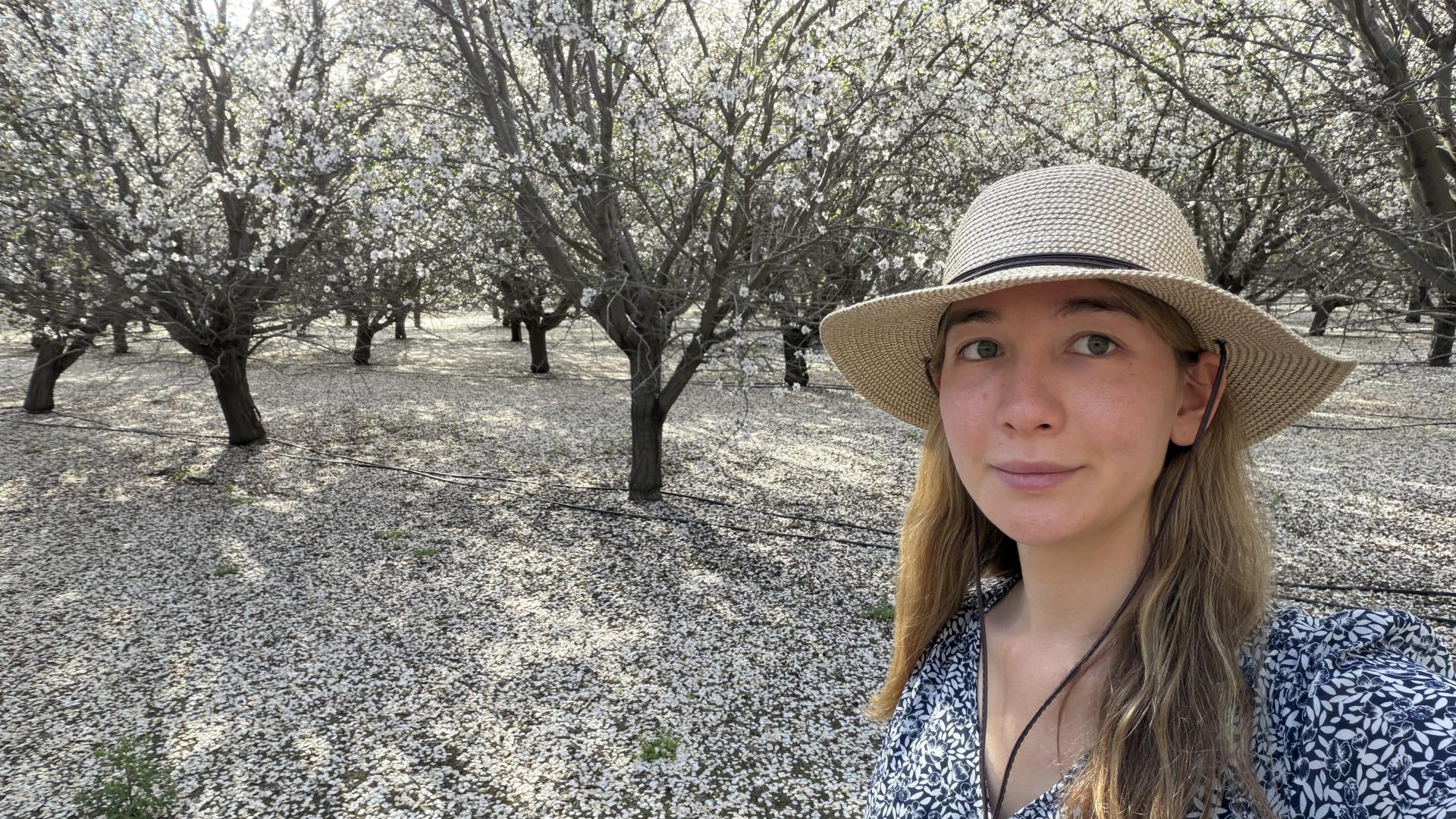
Adelyn Colline of Almond Grove.
Photo: Adelyn Colline
“So we added inline valves on its shorter rows to irrigate the whole orchard evenly without overwatering the rows that run off on rocky, slightly more angled ground,” said Colline.
For the rest of the summer, Almond Grove irrigated whenever the sensor crossed the stress trigger, giving Colline a direct measure of tree water status that soil moisture sensors can’t measure.
THE WATER GOES BACK ON
Once the nuts were off the floor, the water went back on, and the trees answered within weeks. Three weeks after the peak, 44% of blocks had no stress. By late September, more than half had recovered. By early October, two out of three showed no stress.
Last year told a gentler story. The 2025 peak came two weeks later, with 38% of blocks past the trigger. Measured from each peak, the two seasons recovered at the same pace. This year simply got stressed earlier and harder.
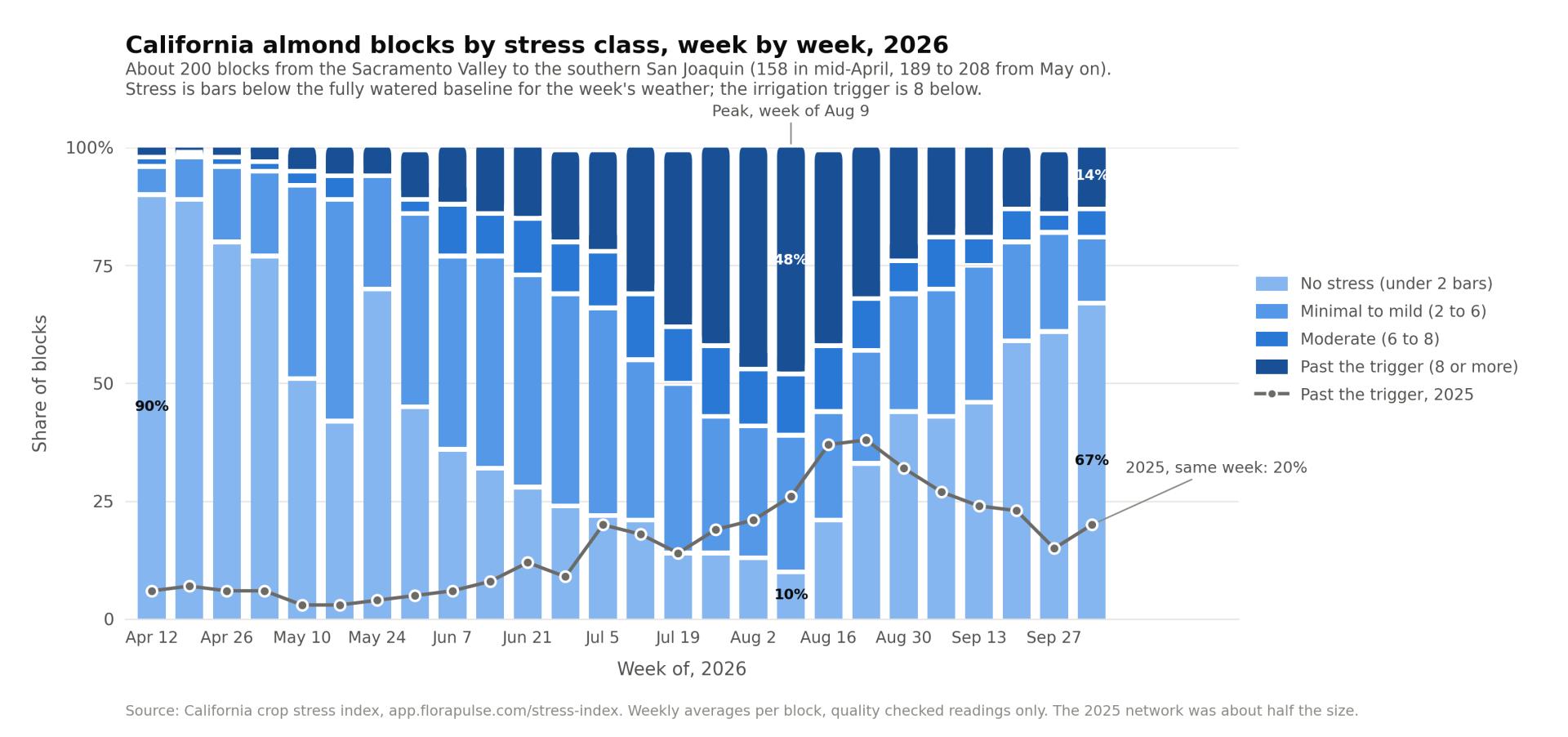
Weekly stress levels across California almond blocks, mid-April through early October 2026. Gray line shows the share past the trigger in 2025, on a network half this size.
Source: California Crop Stress Index, FloraPulse
NEXT AUGUST
With a pressure chamber, bag a shaded leaf near the trunk for 10 minutes, read it at midday, and judge the result against the baseline for that day’s weather. UC’s pressure chamber guide, ANR Publication 8503, has the full method.
A soil probe and an ET schedule both estimate what the tree should be experiencing. When the tree and the estimate disagree, trust the tree reading, then find out why.
Start looking the last week of July. Read the same trees every week, the day before a set, against the almond baseline table on Sacramento Valley Orchard Source. If a block goes past 8 bars below baseline without a planned deficit, check the filters and the ends of the laterals before changing the schedule.
The California crop stress index is available at app.florapulse.com/stress-index.

For more Smart Tech topics, click here.
Subscribe Today For
