


When Weather Wild Cards Deal Hard Lessons Learned in the Vineyard
 September 22, 2026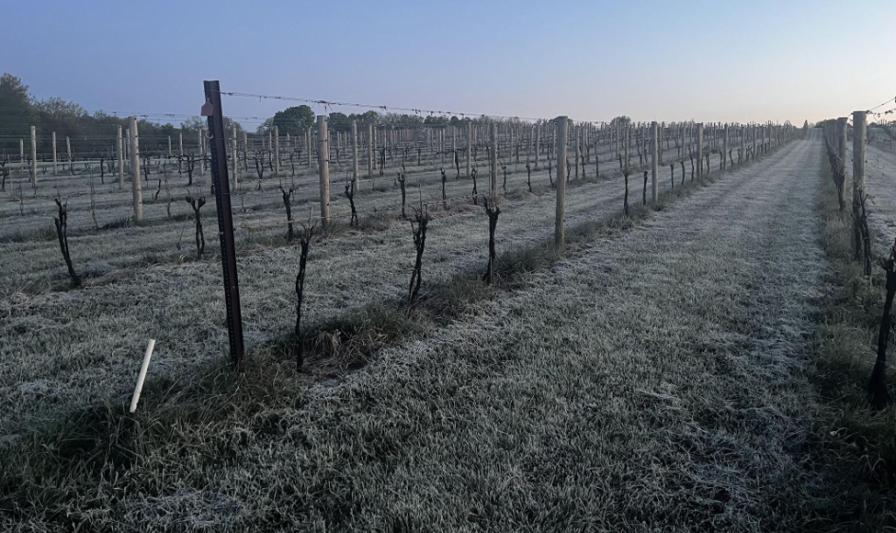
Dawn at Zephaniah Farm Vineyard on April 21, 2026, after temperatures dropped low enough to cause widespread freeze injury.
Photo: Tremain Hatch
Virginia had a nasty freeze on the morning of April 21, 2026. My family has grown grapes since 2002, making this our 25th growing season. We are located in Northern Virginia. My farm is in the Piedmont, with rolling hills ranging from 500 to 600 feet above sea level. This was the first time we’ve had freeze injury across the entire vineyard. We measured 24°F at the top of our vineyard. Shoots had emerged and were about 4 to 6 inches long before the freeze. Every vine was injured.
There are two striking things to note about the freeze at my farm.
First, most of our vines are cane pruned, and most of the bud locations on the canes were killed completely. No secondary or tertiary buds emerged. We did, however, have latent buds emerge from the perennial wood of the vine trunks.
Second, and most disconcerting for grape growers, there was about a monthlong pause in shoot development on the heavily freeze-injured vines before we saw these latent buds emerge. The freeze took place in late April, and the vines didn’t rebound until late May.
It was scary to see so many barren vineyards following the freeze.
What I continue to see is that site selection is paramount. In Virginia, our biggest environmental threats come from cold temperatures and rain during the growing season. Sites situated higher than the surrounding land have long been identified as ideal for wine grapes in our environment.
That proved true during this freeze event. Better sites showed healthy shoot growth earlier and now have closer-to-normal crop levels. Vineyards located on less-than-ideal terrain have very low crop levels. In many cases, not enough fruit is present to warrant a harvest pass.
Depending on the cultivar and elevation, some interspecific hybrid blocks with cordon training and spur pruning look pretty good. We have a fairly reliable yield of 1 ton per acre in these situations. Normal crop levels fall between 3 and 4 tons per acre.
Some of the cane-pruned, low-relative-elevation vinifera blocks have only a smattering of fruit — on the order of 200 to 300 pounds per acre. In some cases, there is significant vine mortality due to cold injury.
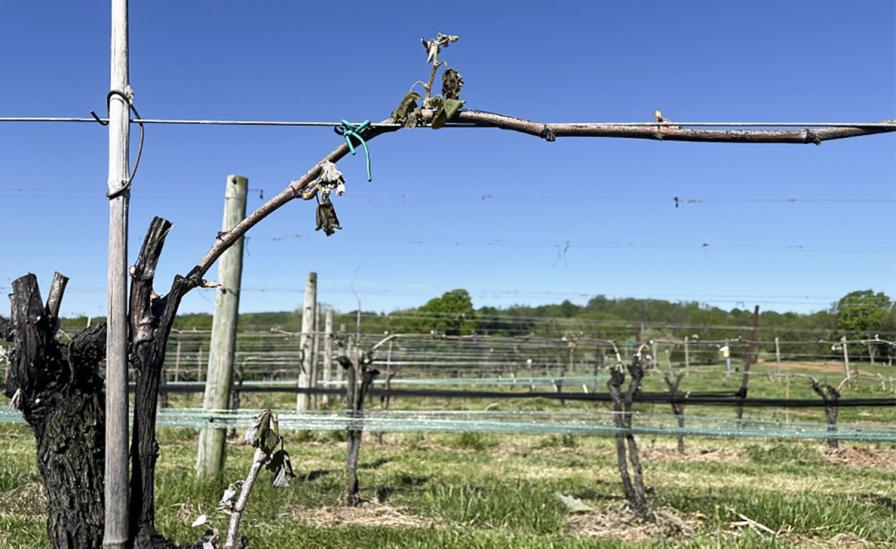
A head-trained, cane-pruned vine at Zephaniah Farm Vineyard on the afternoon of April 21, 2026, following the damaging freeze.
Photo: Tremain Hatch
One of the big pitfalls this season was matching protective fungicide sprays with phenology. With the unexpected pause in vine development, some managers missed important sprays during the critical window from bloom through five weeks after bloom. In these situations, downy mildew gained a foothold, and growers have been playing catch-up for the rest of the season.
There are some silver linings.
- We learned a lot of hard lessons about site selection. Sites with high relative elevation fared much better than lower sites.
- Some cultivars, mostly interspecific hybrids, were fairly fruitful following the freeze. At least there is some fruit to work with.
- Pruning matters, too. Many Virginia vineyards have moved toward head training and cane pruning over the past two decades. The major reason is the quicker shoot-thinning pass with this system compared with cordon training and spur pruning.
- However, following cold injury from a late freeze, we probably would have fared better with cordons that retain more perennial wood with latent buds.
While we hope events like this are few and far between, it’s in our best interest to learn all we can from difficult circumstances.
Subscribe Today For
