


Why Managing Complexity Comes Naturally for Vegetable Growers
 August 11, 2026
 Vegetable growers have always managed complexity. That’s the nature of producing dozens of crops, serving different customers, navigating unpredictable weather, and making decisions around labor, pests, diseases, and markets. Complexity isn’t new to this industry. In many ways, it’s one of the things that sets vegetable production apart.
As we analyzed this year’s State of the Vegetable Industry survey, another thought kept surfacing. The challenges themselves aren’t necessarily changing. Labor remains a concern. Weather continues to test growers. Profit margins remain under pressure. What is changing is how growers are responding.
The survey suggests many growers recognized these pressures years ago and have already begun adapting. Those adaptations now appear throughout the data — from technology investments and protected production to crop decisions, labor strategies, and a growing focus on return on investment.
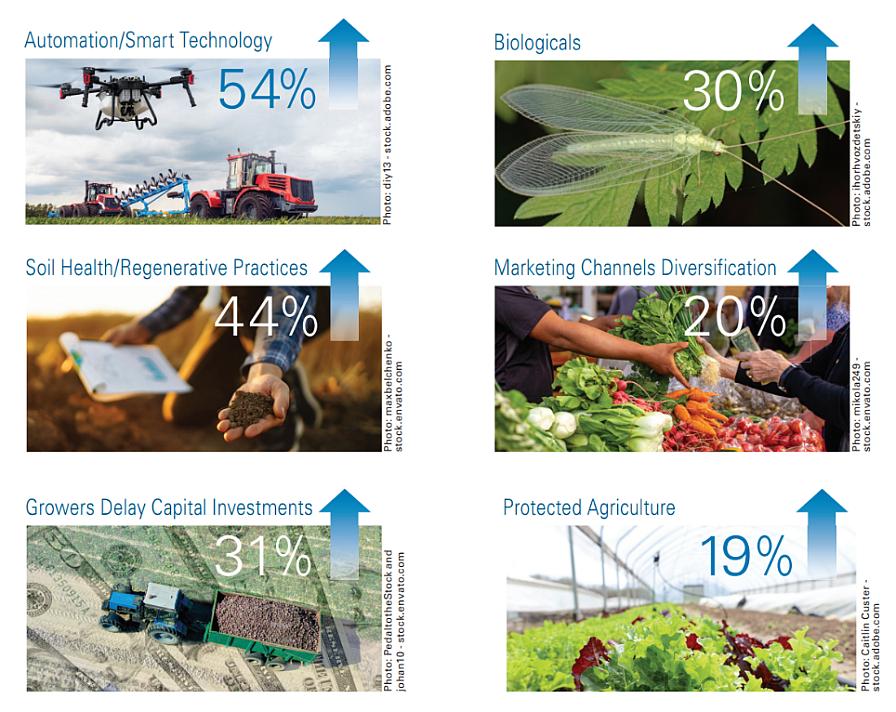
One thing became especially clear as we dug deeper into the results: Each decision touches another.
If you’re considering a new technology, you’re probably also weighing labor availability, financing costs, service support, and long-term profitability. If you’re adjusting your crop mix, weather risk, customer demand, and input costs may all be part of the equation. A decision about labor can influence technology investments. A technology decision can affect crop plans.
Weather concerns may shape infrastructure investments years before the next major storm arrives.
Vegetable growers have always balanced competing priorities.
But as margins tighten and risks become more visible, those tradeoffs carry greater weight. That’s why we chose “The Next Move” as the theme for this year’s report.
The phrase isn’t meant to suggest there is a single answer to the challenges facing the industry. There isn’t. The right decision for a diversified direct-market farm may be very different from the right decision for a large wholesale operation. What works in Arizona may not make sense in Ohio.
What this year’s survey does suggest is that growers are approaching those decisions with increasing intention. Across nearly every topic we explored, we saw evidence of growers evaluating options, measuring risk, and looking for ways to improve efficiency, resilience, and profitability.
The next move isn’t about finding the perfect answer. It’s about making thoughtful decisions in an increasingly connected and complex environment.
Click here to see all the different findings from the 2026 State of the Vegetable Industry survey.
Subscribe Today For
