



Breakthrough Study Tracks Growing Use of Biostimulants on the Farm
 July 27, 2026
 Stratus Ag Research recently concluded Year-4 of tracking grower and retailer attitudes toward biostimulants in North America, and the 2025 results point to an important shift: biostimulants are gaining broader commercial acceptance, not because the products have changed, but because of the message.
RAPID MARKET GROWTH
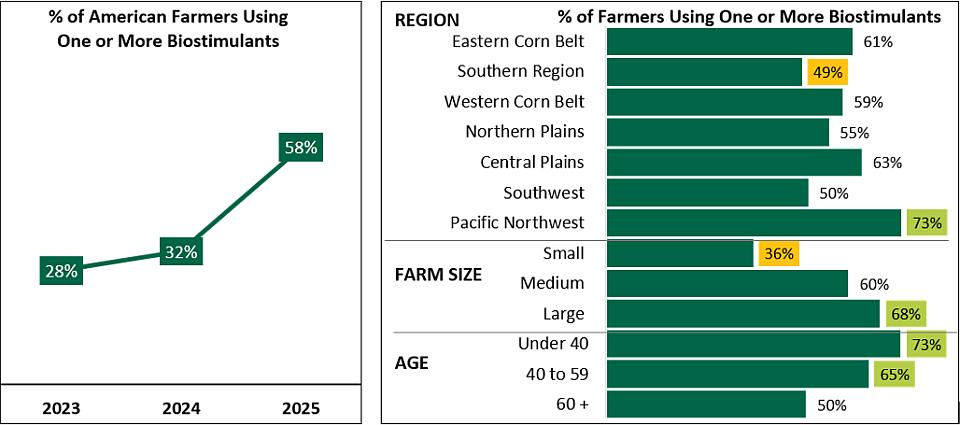
Contrary to other reports of waning excitement and declining internal investment, there were significantly more biostimulant users in 2025 in both the U.S. and Canada. Farmers reported more use across all biostimulant categories in 2025, led by beneficial bacteria and fungi, PGRs, and nitrogen-fixing biologicals.
Notably, PGRs were not previously included in the tracking study but were added in 2025. And while some of the increases in overall use and satisfaction are the result of the addition of PGRs, the increases were still significant even when the PGR data was excluded.
This study is conducted through an online survey sent to the Stratus Ag Research database of Canadian and U.S. farmers after harvest; samples sizes range from 800 to 1,000 growers and retailers each year. The results summarized here are from the U.S. grower report; there were minor differences in the Canadian report. Results are also available for retailers in both Canada and the U.S.
Graphics: Stratus Ag Research
GROWING ACCEPTANCE
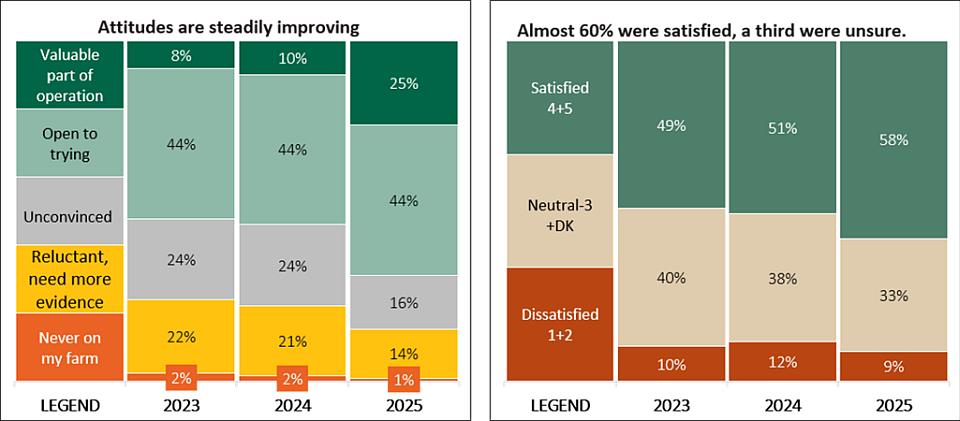
Farmer attitudes towards biostimulants continue to improve over time. As part of the tracking study, Stratus asked farmers to choose which of five statements best matched their thinking on biostimulants. Back in 2023, only 8% of farmers placed themselves into the ‘biostimulants are valuable’ category. Fast forward to 2025, 25% of farmers consider biostimulants to be a valuable part of their operation. And while satisfaction ratings have varied over the 4-year tracking period, attitudes toward the category continue to improve, suggesting we may be moving from the early adoption phase into broader adoption.
CLOSING THE GAP BETWEEN EXPECTATION AND PERFORMANCE
Farmers were also more satisfied with the biostimulant brands they had experience with in 2025 compared to 2024. This is reflected in the increase in commitment to continued use across all categories. The shift in satisfaction came primarily from the neutral/don’t know category, which suggests farmers are starting to understand what to expect from biostimulants and their expectations are slowly starting to align with what the products have to offer. It’s less likely that these products are suddenly performing differently, but rather farmers are beginning to understand what success looks like.
Graphics: Stratus Ag Research
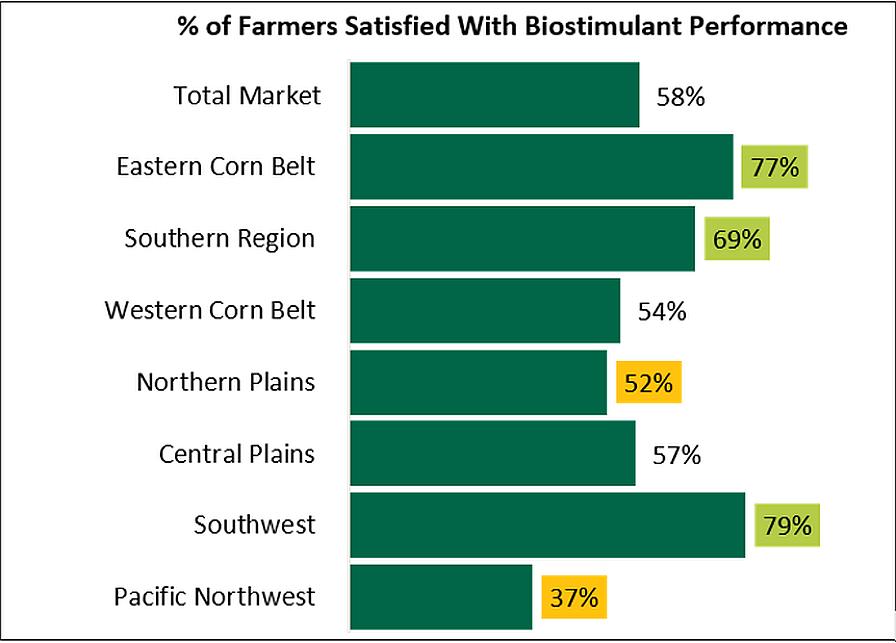
But performance still varies significantly by geography, by category and from year to year. As an example, growers in the Northern Plains were significantly less satisfied on average with the brands they used compared to other regions. Biostimulant performance is context dependent; performance varies depending on existing fertility programs, climate, soil conditions and the stressors present at the time of application. A strong result in one season reflects the conditions of that season, not necessarily a guarantee of the same outcome next year.
Graphic: Stratus Ag Research
AN EXPLANATION IS BETTER THAN BROAD CLAIMS
This is why the positioning of biostimulants is so important. In the tracking study we asked farmers what actions from manufacturers and retailers would be the most helpful in their decision-making process. Growers are looking for support when evaluating biostimulant performance, advice on how and when to use a biostimulant and explanations on how the biostimulant is working.
It is tempting for companies to make blanket statements about applying a biostimulant every year for general plant health benefits or to protect yield. But this generic positioning doesn’t align with the complexity of how biostimulants work and how they elicit a response in the crop. The companies who narrow their positioning to better reflect the specific challenges the product addresses are the ones who are most likely to be successful. This is also supported by growers’ preference for more detailed product positioning.
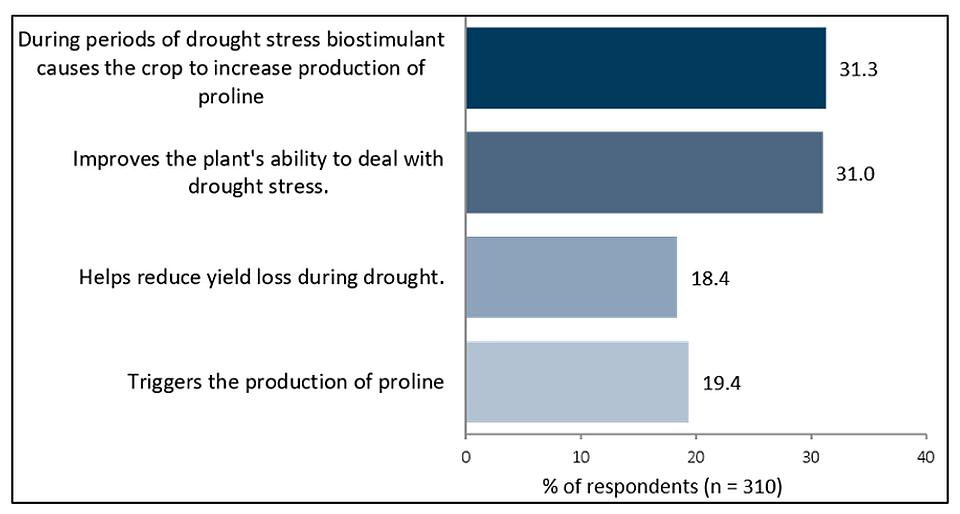
We asked the farmers about their preference for the specificity of product benefits. The more detailed statements that provide clear explanations on how the product is interacting with the physiology of the crop are the ones that growers resonated with the most. It seems likely that the brands that solve crop-specific issues and are supported by companies who set realistic expectations are the ones that will last.
Farmer Preference for Specificity of Product Benefits
Graphic: Stratus Ag Research
THE “N-FIXING” LESSON
This shift in product positioning could be part of the reason for the increase in satisfaction with N-Fixing biologicals in 2025. Consistently in the tracking study, satisfaction among growers who have used an N-fixing product has been lower than the other biostimulant categories, but this looks like it’s starting to change. The early positioning of N-fixing products led growers to have extremely high expectations for what these products could deliver and their ability to change the way the industry uses synthetic nitrogen. Farmers were expecting to see yield gains and that is generally not what happened. Since this expectation was set, it has been a slow uphill battle to encourage users to adjust their expectations to align with what the product can deliver.
In the last few years, there has been a shift in the way companies are positioning N-fixing products. There is now more focus on nitrogen use efficiency, nitrogen delivered at the root, and more consistent performance. This softening of messaging and focus on nutrient use efficiency rather than yield building may have contributed to the increase in satisfaction with the category 2025. The lesson here could be that growers are more forgiving when a biostimulant is positioned as a risk management tool rather than just a yield generation tool.
IT’S A PROCESS
Biostimulant use is becoming more common as the industry continues to find balance between positioning and performance. When asked what encouraged biostimulant users to try a product for in the first place, advice from a trusted advisor was the main trigger followed by reliable trial data. While users were open to support and expertise from manufacturers and retailers, they put more faith in those without bias – especially other farmers and independent agronomists.
Growers also want to see several trials over a few years; trials are most impactful if they are on or near their farm, and conducted by a farmer, or some other non-biased party. The trusted recommendation is what gets a farmer’s foot in the door, but the proof of concept and clear communication is what closes the sale.
In the end, the biostimulant market is not simply a story of faster adoption or broader use; it is a story of a category learning how to earn trust. As more growers experiment with these products, the opportunity for manufacturers and retailers is to move beyond broad promises and help farmers understand where, when and why a product should work. The brands that succeed will be those that set realistic expectations, support growers through the learning process, and demonstrate value in the specific situations where biostimulants can make the most meaningful contribution.
To see more syndicated research on ag biologicals and biostimulants, visit stratusagresearch.com.
Subscribe Today For
