



Fresh Ginger Takes Root as Alternative Crop in the Midwest
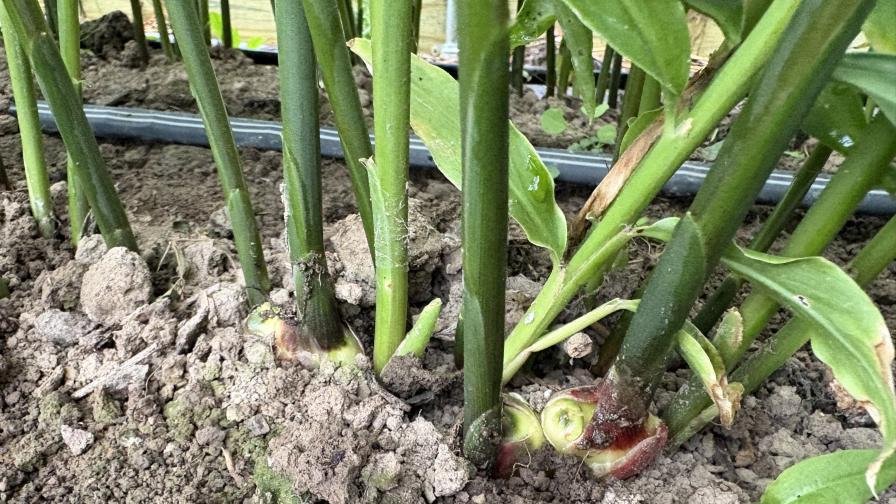
Fresh ginger rhizomes develop near the soil surface as the crop approaches harvest.
Photo: Nick Frillman
For nearly two growing seasons, Nick Frillman, Extension Specialist at University of Illinois Extension, has worked alongside the Illinois Extension field staff members and more than a dozen diversified growers across the state to evaluate and refine best practices for fresh ginger, also known as baby ginger, production.
Funded by an Illinois Specialty Crop Block Grant through the Illinois Department of Agriculture, the project aims to help specialty growers throughout Illinois and the central Midwest successfully incorporate fresh ginger into their operations. Frillman shares key findings, production tips and market opportunities below.
Ginger’s Growing Potential
Fresh ginger presents a promising opportunity for diversified vegetable growers, particularly those selling through CSAs, restaurants, and value-added markets. As a warm-season crop accustomed to heat and moisture, ginger is well-suited to changing growing conditions.
Baby ginger, harvested after five to six months in Illinois, offers a tender, entirely usable rhizome without the tough skin or fibrous texture of mature ginger. Consumer demand for locally grown, health-conscious products continues to rise.
“Market demand for fresh ginger in all major metro areas of the Midwest and even minor metro areas of Illinois has gone nowhere but up in recent years as consumers are ever more interested in locally sourced produce, and especially products that can confer health benefits, such as ginger, specialty mushrooms, etc.,” says Frillman says.
While two years of research have revealed no major insect pest issues, seed quality and disease management remain challenges. Ginger rhizomes can carry soilborne pathogens, including Fusarium spp., which can cause plant death and spread to neighboring plants.
“We are very much so still attempting to understand what pathogens affect ginger rhizome at various phases of the production cycle, and more work is needed to determine effective IPM treatment protocols,” says Frillman.
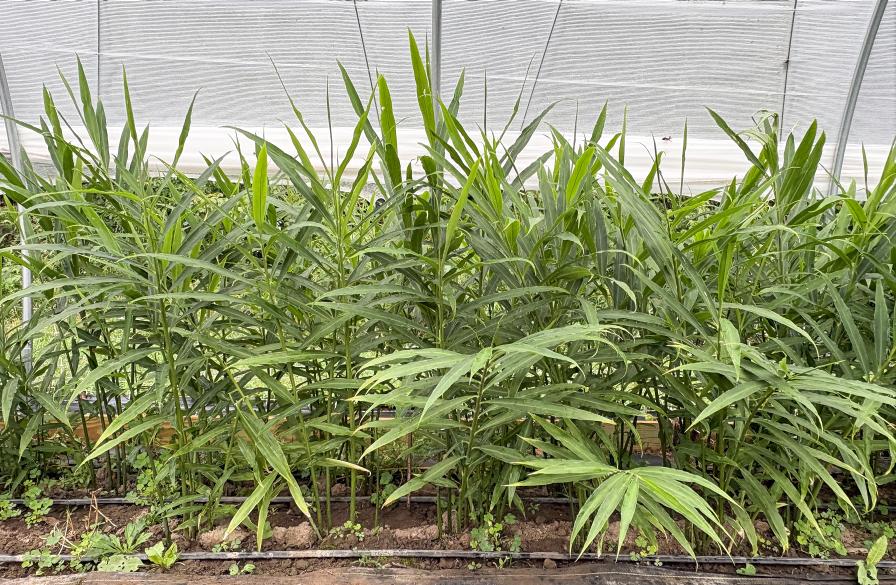
A good stand of fresh ginger in a grower’s high tunnel, a month from harvest.
Photo: Nick Frillman
Growing Ginger Successfully
Successful ginger production begins with mastering the pre-sprout process. Rhizomes require well-draining media, consistent warmth around 75°F, and damp — but not waterlogged — conditions. Germination chambers followed by heat mats may accelerate sprouting, while improper conditions can lead to significant seed loss.
“If this process is not extremely dialed in, growers will lose much of their seed stock due to dry or wet rot before the first plant is in the ground,” Frillman says.
Ginger is also a heavy feeder, requiring nitrogen-rich fertilizer at planting and regular fertigation throughout the growing season. Consistent moisture is essential, particularly during extreme heat, while growers using protected structures may benefit from 20% shade cloth to reduce heat exposure.
To maximize rhizome development, growers should extend the growing season as long as possible, allowing ginger to mature until temperatures approach 50°F.
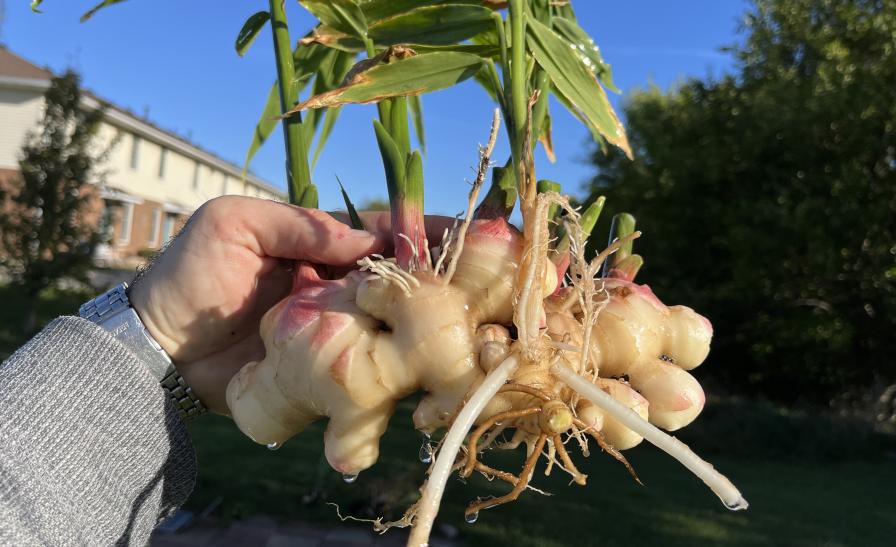
Freshly harvested and washed baby ginger has tender skin and lacks the fibrous texture associated with mature ginger.
Photo: Nick Frillman
Fresh Ginger, Fresh Profits
Fresh ginger offers strong market opportunities, with retail prices ranging from $20–$25 per pound and wholesale prices averaging $12–$15 in Illinois metro areas, Frillman reports. However, its limited shelf stability and preferred storage temperature of approximately 55°F make quick turnaround essential for maintaining quality.
“Fresh market ginger should be harvested, washed, air dried for 12-24 hours, then sold retail or wholesale as soon as possible,” Frillman says.
Beyond fresh rhizomes, growers can market healthy ginger tops as ingredients for soups, stir-fries, and teas, creating an additional revenue stream from the same crop. Maintaining proper nutrition throughout the growing season is essential for producing marketable tops.
Value-added products such as ginger powder, candied ginger, ginger juice, and sushi ginger offer further opportunities to diversify revenue. Illinois growers have already demonstrated success with these products, providing additional ways to capitalize on the growing demand for locally produced ginger.
 Loading ...
Subscribe Today For
