



Florida Farmers Still Holding Their Breath in the Wake of Epic Flood Event
 November 13, 2026
When scanning headlines that include verbiage like, “One-in-a-1,000-year rain event” — “historic flooding” — “colossal rains” — “Biblical,” one might be skeptical about the overhyping of a rain storm. However, in the case of the flood event that hit Central Florida Nov. 1-3, simple words don’t do it justice. And even as I write tis post, flood concerns persist along the already swollen St. Johns River as it flows north. Along with stunned residents and local businesses, farming operations are left to dry out and clean up after the deluge.
A large swath along Florida’s Space Coast south to its Treasure Coast was in the bullseye of the overly persistent rainfall pattern. Several locations in Brevard County registered more than 20 inches of rainfall in less than 60 hours! Devastating flash floods resulted from the deluge, washing out major roadways and leaving people stranded until the waters receded enough.
There were other hard-hit areas just outside the main core. According to Amir Rezazadeh, who serves as the UF/IFAS Multi-County Fruit and Field Crops Extension Agent in St. Lucie and Indian River counties, effects of the recent flooding vary considerably from one location to another. “Some agricultural operations have escaped major damage as floodwaters receded quickly, while others remain saturated or partially underwater,” he notes in a blog featuring his initial damage assessments.
When it comes to that part of the state, Indian River citrus comes to mind. So, how did the groves fare? Rezazadeh writes: “Most citrus trees in the areas where water receded quickly have not suffered substantial flood damage. This is encouraging, but it does not mean that every grove is in the same condition. The situation depends heavily on location and how quickly each site drains.”
Keep a close eye on the next citrus crop estimate from USDA. The forecast might take a hit thanks to this flood event.
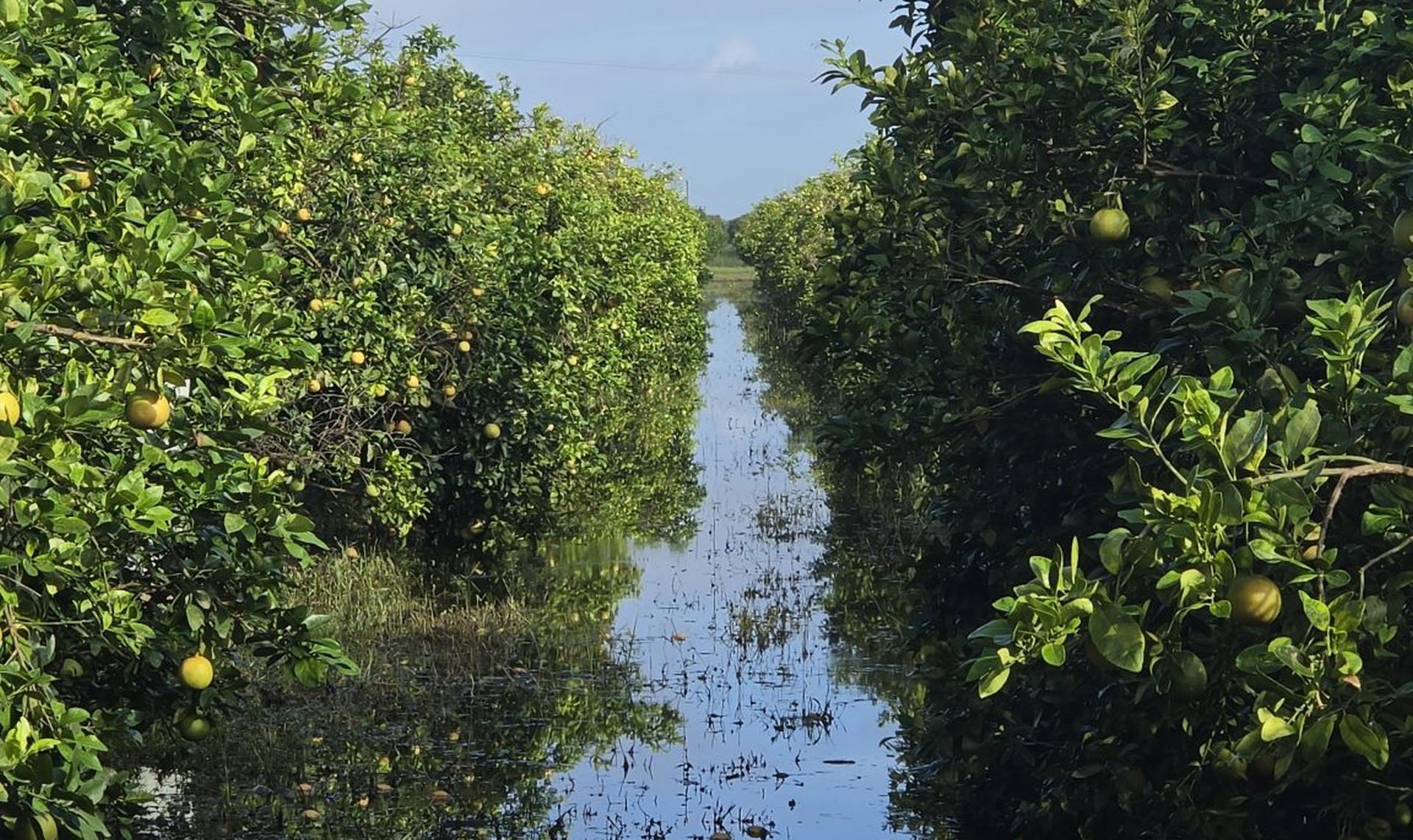
Scenes of flooded citrus groves like this were common around parts of Central Florida.
Photo: Amir Rezazadeh
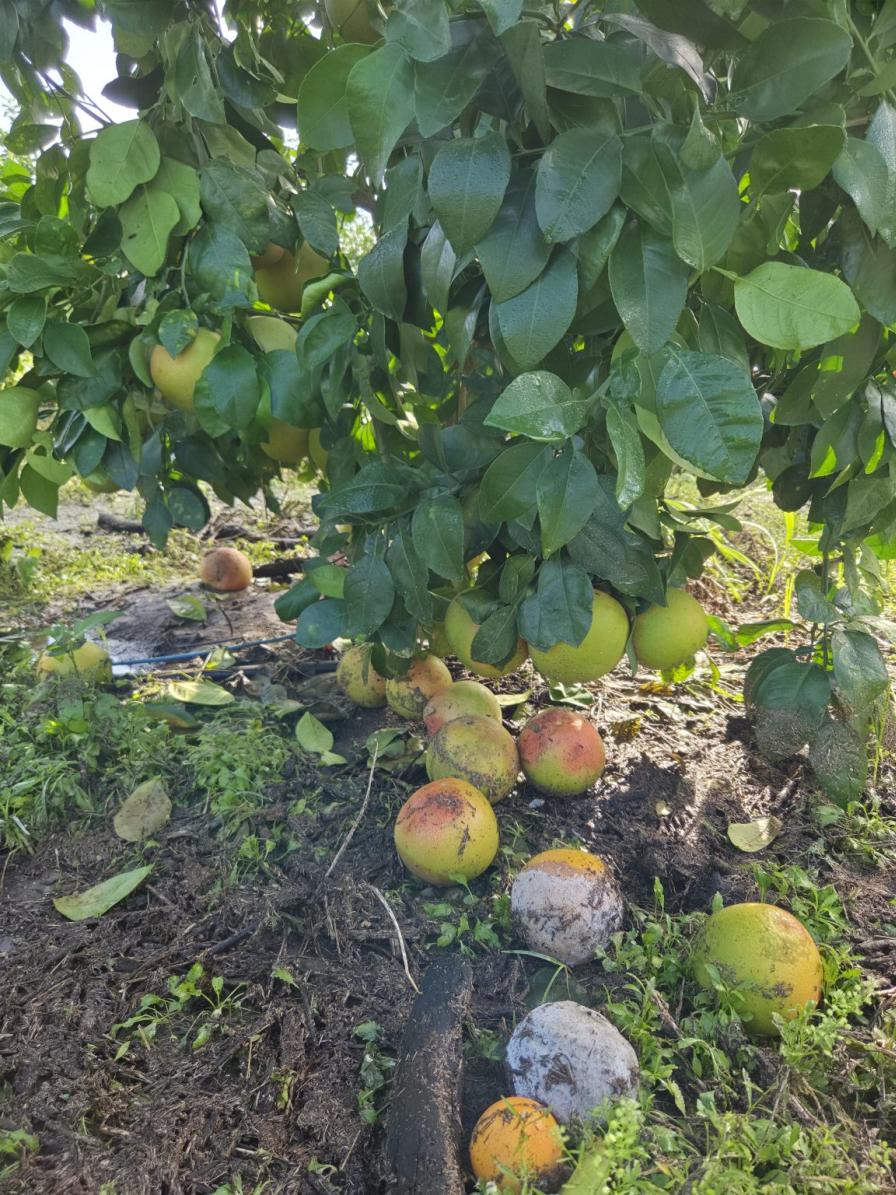
Grapefruit drop caused by flooding and saturated soil with water.
Photo: Amir Rezazadeh
In addition, landscape nurseries and cattle ranches alike were impacted. “Some landscape nurseries are experiencing damage where plants remain in standing floodwater,” Rezazadeh notes. “My main concern is prolonged saturation and the resulting lack of oxygen around plant roots. If these conditions continue, affected plants may wilt and drop their leaves, with damage becoming more severe the longer they remain in water.”
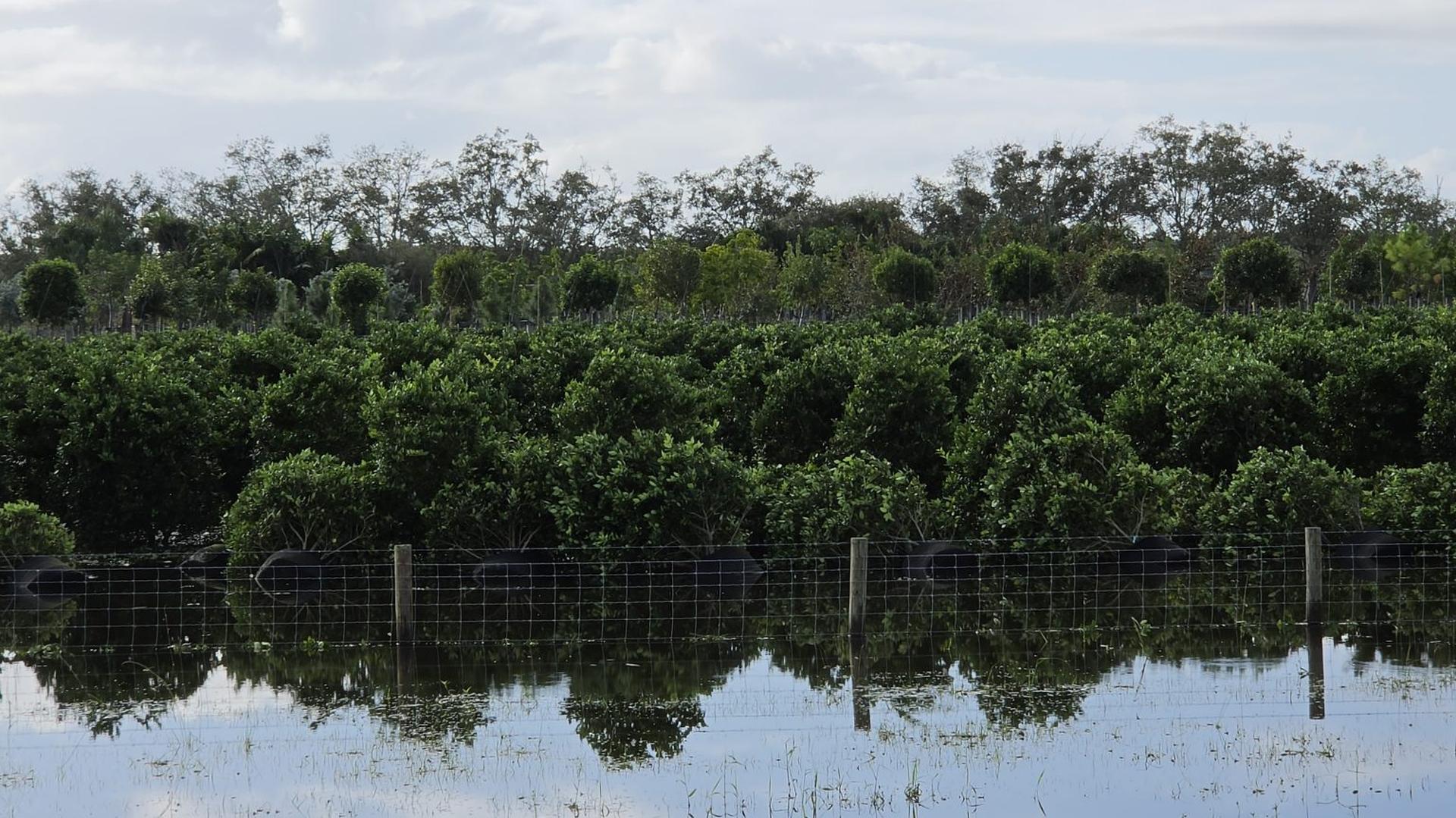
This landscape nursery in Ft. Pierce, FL, was inundated.
Photo: Amir Rezazadeh
As for the cattle ranches, Rezazadeh says higher ground helped provide refuge for steer, but feed is still a concern. “If water takes too long to recede, cattle may face shortages because flooded grazing areas remain unavailable,” he adds.
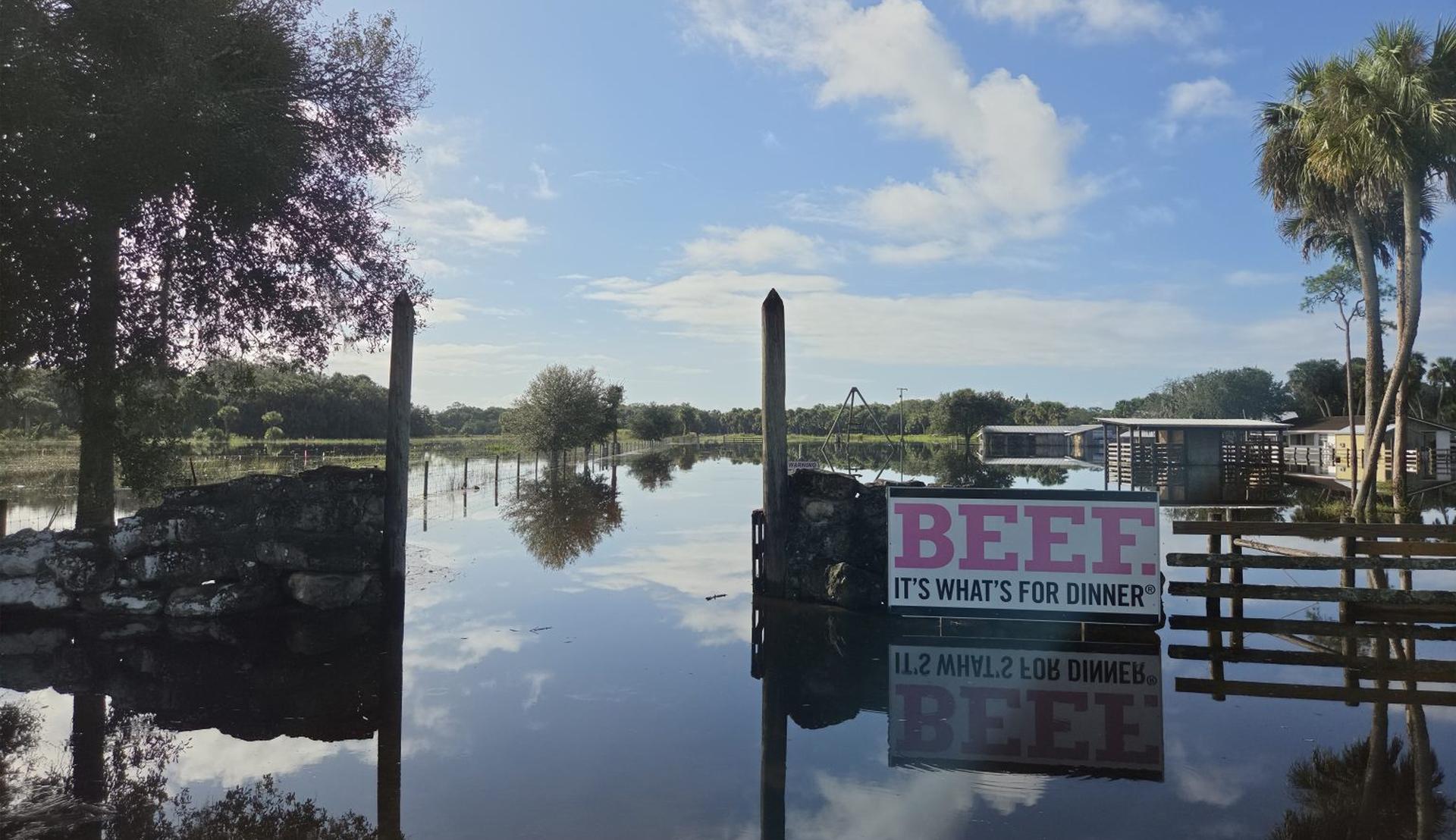
Swamped cattle ranch in Ft. Pierce, FL. Cattle had to be moved to higher elevations.
Photo: Amir Rezazadeh
Rain, Rain, Go Away? Not Likely
Florida is no stranger to flood events, but this one was for the record books. The thing is, this stormy pattern is likely to recur for parts of the South through the winter thanks to a strong El Niño event in progress. A strong jet stream will likely set up with a more southerly flow. Along with that, comes volatile atmospheric energy.
According to NOAA’s latest Winter Outlook, wetter-than-average conditions are most likely across the southern tier, from the Southwest to the Southeast, and along the East Coast. Notice the darkest green overshading the Sunshine State. Looks like the Dry Season will have to wait.
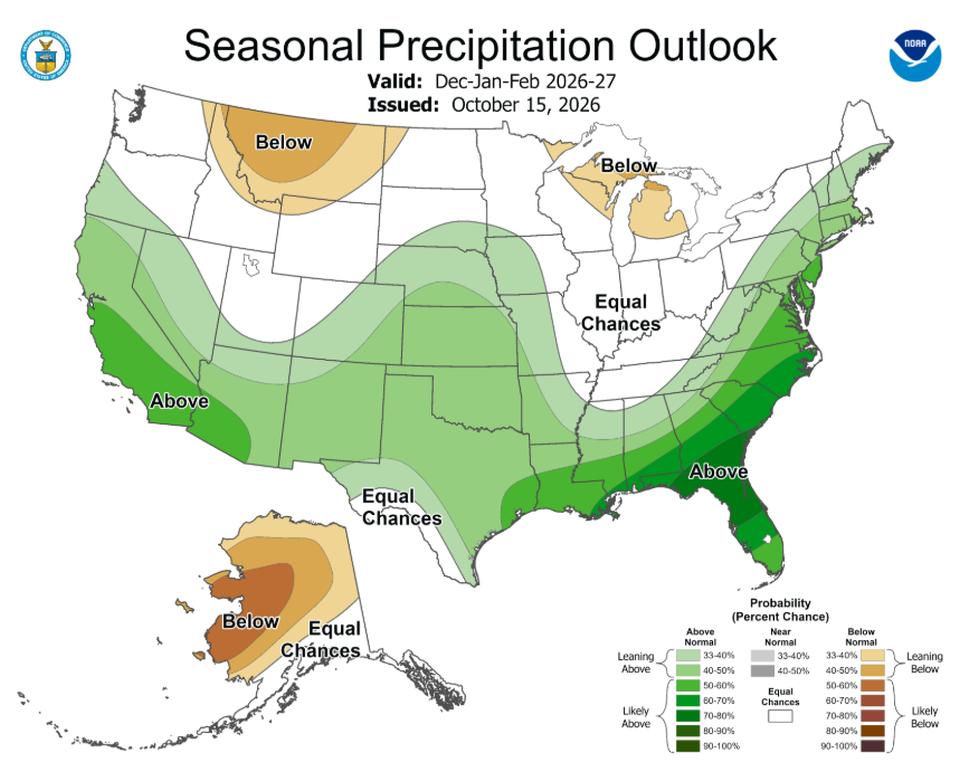
Graphic: NOAA
What Should Farmers Do Now?
The Florida Department of Agriculture and Consumer Services recently issued a “Post-Flooding Produce Safety Announcement,” which contains guidance for farmers impacted by the extreme weather event. Here are the main takeaways from the announcement:
- Floodwater vs. Pooling: “Flooding” or “Floodwater” is the flowing or overflowing of a field from open bodies of water outside the food crop producer’s control including lakes, rivers, ponds, and canals. “Pooling” often occurs after a heavy downpour when fields become saturated and rain water pools on the soil surface. Events that lead to pooled water or excess standing water in a field, such as rain or a problem with an irrigation system, are not considered flooding.
- Flood Damage: Flooding poses significant challenges for crop production due to the potential introduction of biological, chemical, and physical hazards that may be harmful to the health of humans. If the edible portion of a crop has been exposed to flood waters, it is considered adulterated and should not enter human food channels.
Produce Safety Considerations for Flooded Farms:
• If water sources have been impacted, take appropriate corrective measures and consider testing the water source before use to verify the water quality is suitable for its intended use.
• Avoid the movement of people and/or equipment between flooded affected and non-flood affected areas of the farm. Where movement can’t be avoided, use sanitation protocols for all vehicles and tools used in flood affected areas to prevent cross-contamination.
• Establish a buffer zone between flood affected and non-flood affected areas on the farm.
• Keep flood affected crops away from non-flood affected crops using visible markers in the field.
In the meantime, the Florida Farm Bureau Federation has opened a Disaster Relief Fund for both Hurricane Isaias and the flood event. The organization is accepting applications for any farm or ranch family suffering agricultural losses. CLICK HERE for more details.
 Loading ...
If your agricultural operation was impacted by the recent flooding, you are encouraged to complete the Agricultural Losses and Damages from November 2026 Flooding Survey compiled by UF/IFAS. CLICK HERE for more information.