



In Focus: Steve Parker
 October 24, 2011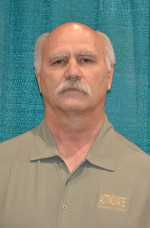
1. In your dealings with growers, how have their attitudes toward the management of canker changed since the eradication effort failed?
Parker: It is still a sore subject with many of them. They wonder why they are now trying to control the disease with fewer trees than they had before, but are aware they have to pay more attention to their remaining orchards. Managing the disease in those areas that have had a history now means more spray costs and potentially lower quality fruit than before. In the case of Valencias, it does not mean many more sprays, but for Hamlins, more care is necessary. For fresh fruit, and in particular grapefruit, a number of sprays are required. This usually means spraying every three weeks throughout the season from spring flush until the fruit has fully expanded. This adds up to 11 or 12 sprays for grapefruit. Four or five sprays for Valencias and Hamlins end up somewhere in between. Because the University of Florida has taken a programmed approach, the growers know the disease can be managed. In most cases, this also includes treatments for citrus leaf miner.
2. In general, how do biological fungicides work?
Parker: Biologicals work by colonizing the root or leaf to which they have been applied to exclude a disease from becoming established. In the case of Actinovate applied to the surface of the fruit or leaf on a citrus tree in combination with Kocide 3000, we know Actinovate will colonize those areas of the leaf not occupied by a copper droplet. As Actinovate sporulates, it produces several metabolites that include enzymes and antibiotics effective against plant diseases. As the copper residue degrades, these secondary products will then protect those areas. The colonization of the surface of the leaf consumes food sources that would be available to other bacteria, such as canker. Because there is no food source and the area is colonized by a beneficial organism, canker or other diseases have a more difficult time getting established.
3. How has Actinovate AG’s label been updated recently?
Parker: Actinovate AG’s label has been updated by EPA to include control of bacterial canker of citrus and bacterial speck and spot of tomato, both changes within the last six months.
4. Discuss the product’s performance in UF/IFAS trials.
Parker: In Dr. Pam Roberts’ trials on grapefruit, which are noticeably more susceptible than Valencias, the combination of Actinovate AG at six ounces plus the lowest labeled use rate of Kocide 3000 has shown the lowest levels of infection on fruit and foliage for two years in a row. This has resulted in less infection than the high rate of Kocide 3000 alone or Actinovate AG alone. Though none of these products performance is perfect, it does take some load off of copper carrying the entire control burden, and reduces the risk of resistance to copper products.