



Growers On The Hot Seat
 January 3, 2011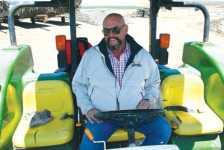
Martin turned his pickup truck around and headed for the ranch, determined to sort out the truth. The odd thing was, the supervisor was telling the truth. The woman driving the Mercedes was in fact from Cal/OSHA, and she was following up on a report that a pepper harvesting crew wasn’t being provided adequate shade. According to recently enacted heat illness regulations, growers must provide enough shade so that at any one time a minimum of 25% of the workers on any one crew can avail themselves of shade.
California is not only a large state, it’s a leader in television, movies, and information technology. But perhaps more than any other factor is its political makeup, says Martin. The Golden State grows more than half the nation’s produce, so there are obviously a lot of people involved in agriculture, but they are out-muscled politically by the huge coastal urban populations with little interest in farming that elect “liberal, do-gooder lawmakers,” says Martin. “I’m here from the government and I’m here to help you — go broke.”These lawmakers are often well-intentioned. For example, who’s opposed to clean water? But the devil, as usual, is in the details. “They’re over-regulating to the point that it’s just not worth it,” he says. “To pass a law just to give people a warm and fuzzy feeling — that’s a law to avoid.”
Actually, Rio Farms turned out to be in compliance after all. But that wasn’t the point, as far as Martin was concerned. The point was that the high temperature that day would likely not even hit 60°F. “These people don’t have a clue,” says Martin, shaking his head. “No clue — this is just a classic example.”
The bizarre situation — why is a state employee tooling around a ranch in a Mercedes in the first place? — is illustrative of how growers today are being regulated, says Martin. Even the regulations that do make sense, such as the heat illness laws that are necessary to protect workers from unscrupulous labor contractors during triple-digit heat waves, are often enforced in such a way as to be practically ludicrous.
For example, enforcing the above mandate of shade provision during the winter seems like a waste of time and money. But it can get worse. Martin says that Rio Farms was told by a safety expert “it is heavily suggested to have shade available even if your crew works only at night,” because it’s better to be safe than sorry. “What they have done is make everything subjective — ‘feasible’ is a word they use a lot — so you don’t have a way to argue it,”
he says. “That’s what’s scary.”
Tractor Trouble
The heat illness regulations are just one example, says Martin. Another involves tractor seating. For many years, growers in the Salinas area have been using tractors to transport three-person irrigation crews. Cal/OSHA never had a problem with the practice. After all, the tractors easily accommodate three seats. But for some reason, Cal/OSHA started enforcing a regulation on the books that allowed only the driver.
Martin said that the word among growers was that state agencies’ budgets are hurting so badly that they are trying to drum up revenue through fines. Because growers were largely compliant on the heat regulations, Cal/OSHA was going after them on the tractor issue, growers said. However, in just the past few months, Martin says that Cal/OSHA appears to have put the issue pretty much on hold.
“Why? Maybe it’s because they can’t find a single incident where any worker was harmed from the use of these units in the several years we’ve all been using them,” Martin wrote in an e-mail to American Vegetable Grower. “What a novel idea!”
Water Battle
Who’s Next?
Subscribe Today For
