



Be On The Lookout For Spotted Wing Drosophila
 March 3, 2010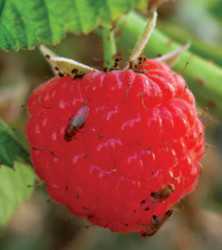
The pest gained prominence last spring when it started hitting berries and then cherries in California. It then moved up the coast, and by late summer it was attacking blueberries and other berry crops in Oregon and Washington. The pest is something of a mystery, as entomologists don’t know if it’s new to the U.S., or if it just wasn’t doing much damage in the past.
SWD is believed to be originally from Japan, said Mark Bolda, a University of California Cooperative Extension farm adviser in Santa Cruz County, who specializes in strawberries and caneberries. Bolda spent much of January reviewing the Japanese literature with the help of translators, but has found few answers. He does know one thing, though: This is one serious pest, and as Walton says, the Pacific Coast climate is perfect no matter what the crop. “If you’re on the coast growing fruit, period, you need to be aware,” he says.
Plan Of Attack
The climate is perfect because SWD doesn’t like it either too hot or too cold. It will die either below freezing or above 100 degrees, and thrives in a moist climate, so the heavy tree fruit production areas of the San Joaquin Valley would appear to be largely safe, says Bolda.
In areas where SWD does thrive, it is really prolific and populations build at a furious rate. Females lay up to 400 eggs at a time, and the SWD can go from egg to maturity in just 10 to 12 days. To coordinate an overall plan of attack, researchers have put together a proposal to the Specialty Crops Research Initiative for a $5.6 million grant to study the pest, Walton says. If funded, work would start this year.
In the meantime, researchers have identified five initial goals:
• Evaluating the pest’s genetic parameters, studying such aspects as over-wintering and where and how the pest can survive.
• Optimizing monitoring systems.
• Screening for the most effective pesticides. (See sidebar: “What To Spray.”)
• Scheduling workshops for growers where they can get information and ask questions.
• Setting up a website for growers: suzukiioregon.hort.
oregonstate.edu. Another good website is Bolda’s blog: ucanr.org/blogs/
strawberries_caneberries.
Cherry Crop At Risk
Researchers have not seen many infestations in strawberries, but other berry crops, especially blueberries, are definitely at risk. In addition, because cherries ripen in California in the late spring before temperatures soar and there is often still moisture in the air, they too are at risk. “If I were a cherry grower,” Bolda said, “I’d be on my toes.”
There is also concern in the nation’s #1 sweet cherry production state, says Doug Walsh, an entomologist at the Washington State University Irrigated Agriculture Research and Extension Center in Prosser. Walsh is particularly concerned if there is a an unusually wet spring. Fully one-third of the crop is exported to Asia, and they are under quarantine for Western Fruit Fly. “The tolerance is zero, and do you think the inspectors will really know the difference between (SWD) and Western Fruit Fly?”
Growers in the Northwest will also have to be on their toes. Walsh urges cherry growers to keep a close eye on their pollinators, which will act as the proverbial canaries in the coal mine. “They put on fruit early, so really scrutinize them,” he says.
Subscribe Today For
