

The Organic Report: Learning Experience
 February 7, 2011
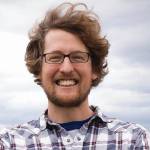
 Casey Knapp’s been on a mission of sorts since back when he was in middle school. The 20-year-old Knapp, who grows strawberries at the family farm in New York when he’s not studying Agricultural Science at Cornell University, says he’s long wanted to educate people about food.
It started back in 2001, when the fifth-generation farmer’s family business, Cobblestone Valley Farm, in Preble, NY, started selling milk to Organic Valley. Headquartered in La Farge, WI, Organic Valley is America’s largest cooperative of organic farmers and is one of the nation’s leading organic brands. Organized in 1988, it represents 1,332 farmers in 32 states and one Canadian province, and achieved $527 million in 2008 sales.
Organic Valley began by producing organic produce, but soon added dairy and later meat under the Organic Prairie Family of Farms label, and today produces a variety of organic foods that are sold in supermarkets, natural foods stores, and food cooperatives nationwide. At the helm of Organic Valley is one of the original seven farmers, George Siemon, the chief executive officer.
Generation O
For the past few years, Organic Valley has been bestowing Gen-O (for Generation Organic) Awards on young growers from 18 to 35 who have demonstrated a commitment to organic farming and preserving the family farm and rural community through leadership, stewardship, and innovation. One winner from the western, central, and eastern regions was selected this past year and awarded an all-expense paid trip to the Kickapoo Country Fair, an annual event celebrating rural heritage and the future of farming in La Farge.
“As we look to the future of farming, we feel it is vitally important to acknowledge the farmers of tomorrow who will ensure that delicious, local, and sustainable organic food choices exist for generations to come,” said Siemon. “Our three young Gen-O award winners represent hope for building an environmentally and economically sustainable food system, and through their examples, show organic farming as a viable and rewarding profession.”
The regional winners of the Gen-O Award were Mitch Lucero of Richfield, ID (West); Matt Fendry of Lanesboro, MN (Central); and Knapp winning the East. As an award winner, Knapp wanted to get out and represent Gen-O, so he jumped at the chance this past fall to join the “Who’s Your Farmer?” Tour. The two-week tour started at Organic Valley headquarters and wound
its way through Ohio, Vermont, Massachusetts, Rhode Island, Connecticut, New York, and Washington, D.C.
The young growers spread the good news about the many benefits of organic food and farming through presentations, school garden visits, and “grilled cheese socials.” They stopped at universities including Ohio’s Oberlin, New York’s Columbia, Massachussets’ Harvard, Connecticut’s Yale, and Rhode Island’s Brown in their veggie oil-powered school bus. The tour concluded in the nation’s Capitol where they met with legislators.
You Are What You Eat
Knapp said the tour was beneficial on a number of levels. “It was awesome because the students, especially, were enthusiastic, really enthusiastic,” he said.
One surprise for Knapp was the huge range in how much the students, in particular, understood about farming. “For many, their knowledge of the food system was really limited; some didn’t even know what organic meant. Come on, this is 2011,” he said. “Others wanted to know exactly what a cooperative was. The questions really ranged from the most basic to the most complex.”
Many of the students had good, practical, if not skeptical questions. For example, some people wanted to know how they could be sure organic products are actually organic. “I explained how farms are audited,” he said, “and how there’s a paper trail for everything.”
In all, it was a terrific opportunity to help achieve his long held goal about educating people about food in general and organic farming in particular. Knapp hopes they do another tour in the future, and said if they do, it will likely be on the West Coast.
“We want to change the way people view food. If we only helped one person realize where their food comes from, that’s an achievement,” he said. “You are — literally — what you eat.”
Subscribe Today For
