



Worse Than Lonely Groves In Florida
 November 1, 2007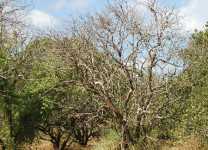
Just driving down the road, some of them jump out at you with their dead trees, grown up weeds, and overall look of decline. But what you can’t see — the canker and greening the trees may be hosting — has the state’s citrus industry taking a serious look at abandoned groves.
Active growers have been told time and again to destroy infected trees to help slow the spread of canker and greening. Most growers have, but what about those groves in transition out of production or have changed hands from one property owner to the next? Who is responsible for those trees? That is what the Florida Department of Agriculture and Consumer Services (FDACS) and citrus leadership are trying to get to the bottom of.
Definitions
Richard Gaskalla, FDACS director of plant industry, agrees some abandoned groves are obvious, but he and the industry are working together to define what exactly an abandoned grove is even when it is not so obvious.
“The department has been requested by the industry to take the lead in coming up with a more well-defined proposal on this issue,” says Gaskalla. “That is kind of where we are at right now. I’ve been talking with tax assessors and others to see how they deal with abandoned citrus property. At the end of the day, we have to come up with a program that has pretty good support and incentives built in to get people to come into compliance.”
The issue is being studied under the Citrus Health Response Program, which was established by USDA, FDACS, and the state’s industry in response to canker and later greening. While Gaskalla says he is not quite prepared to define what an abandoned grove is, there are a number of factors being considered.
“We are looking at what kinds of inputs have been invested in the property over a certain period of time,” he says. “We are asking questions like, has any fruit been picked? Is the grove being fertilized and irrigated? Are weeds and pests being controlled? We are looking at those sorts of factors.
“If there just hasn’t been any inputs or care given to a grove over a period of time, then that grove will no longer be considered a commercial grove, but an abandoned grove that is posing an agricultural nuisance.”
As a first cut, Gaskalla says the department and industry should look at some form of minimum standards that could be required for groves that are clearly not in production.
Who’s Responsible?
When standards are put into place, the responsibility for action would fall to the property owner when a grove is determined to be abandoned or an agricultural nuisance. Gaskalla adds that tax incentives could make required actions more palatable for land owners.
“While this is all in the conceptual stages right now, we may look at extending the ag tax exemption for some time after the property owner removes the trees. For the property owner, the lower tax value on the land could offset the costs of removing trees.”
Gaskalla says a lot of work remains to come up with a solid legal description of an abandoned grove and what an incentive program may look like to get property owners to remove trees that could be aiding in the spread of greening and canker.
“It is a pretty broad issue, but we are attempting to get a handle on this 2-ton elephant one bite at a time,” he adds
Subscribe Today For
