



Expert Insight on Controlling Alternaria in Almond Orchards
 March 7, 2026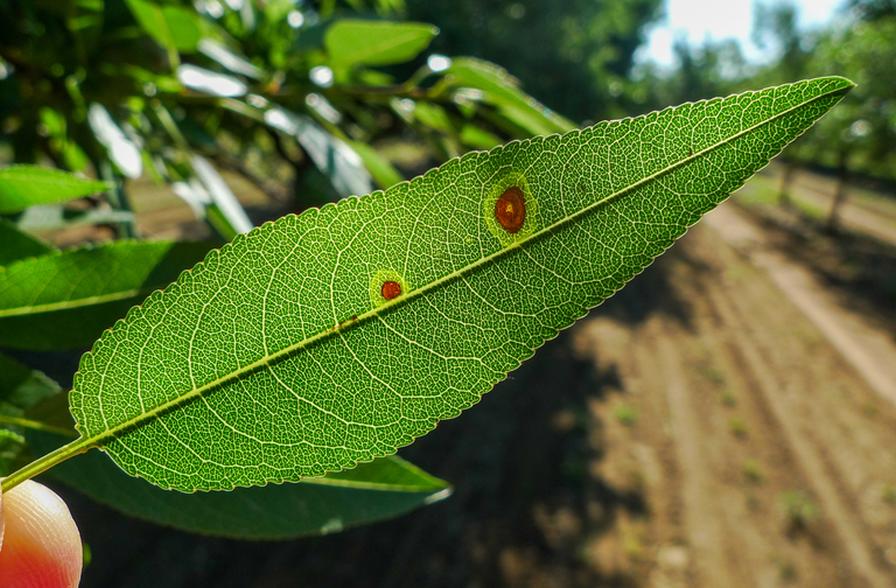
Alternaria symptoms found in almond orchard. Photo: Gerald Holmes, Strawberry Center, Cal Poly San Luis Obispo, Bugwood.org
Alternaria is a common fungal disease that affects almond orchards, causing dark leaf spots, reduced nut quality, and in severe cases the development of harmful mycotoxins. Historically, Alternaria pressure was most common in regions with limited spring winds, particularly in the southern San Joaquin Valley and parts of the northern Sacramento Valley. Over the past five years, however, the disease has expanded significantly and is now found throughout much of both the San Joaquin and Sacramento Valleys.
This expansion is largely driven by changing environmental conditions and evolving orchard management practices. Warmer and wetter spring seasons create favorable conditions for fungal growth, while modern high-density orchard plantings reduce airflow and increase humidity within the canopy. Together, these factors create an ideal environment for Alternaria to develop and spread.
Looking ahead, many almond growers are anticipating significant Alternaria pressure in the 2026 season. Current weather projections indicate a warmer-than-average spring. Even in the absence of rainfall, irrigation practices such as micro‑sprinklers and soils with poor drainage can create humid microclimates that allow the disease to thrive.
For the most effective control of Alternaria in almonds, as well as other diseases such as scab and rust, growers should consider the following disease-management guidelines:
Graphic courtesy of Jared Hajik
Most susceptible almond varieties: ‘Monterey’, ‘Butte’, ‘Carmel’, ‘Sonora’, and ‘Winters’ varieties tend to be the most susceptible to Alternaria and should be monitored closely during the spring months.
Disease monitoring timing: Orchards should be monitored from April through June, when environmental conditions are most favorable for disease development.
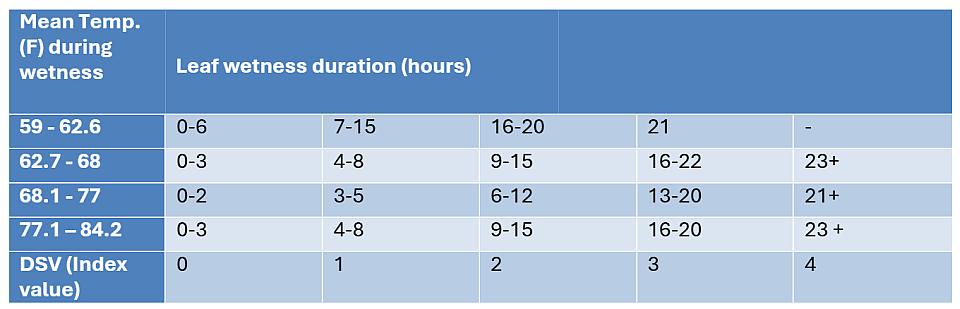
Disease severity model: A disease severity value (DSV) model adapted for almonds can help guide treatment decisions. Fungicide applications are recommended if the accumulated index values over a seven‑day period reach 10 or higher. See table below for values:
Treatment timing: If an orchard has a history of Alternaria, preventive sprays should begin in mid‑April, with a follow‑up application approximately two weeks after the initial treatment.
Resistance management: Resistance management is critical when treating Alternaria. If resistance has been identified in the orchard, fungicides from FRAC Groups 7 and 11 should be avoided to maintain treatment effectiveness.
Subscribe Today For
