
How Kait Thornton — ‘The Apple Girl’ — Has Grown Into Being the Face of an Industry
 March 4, 2025
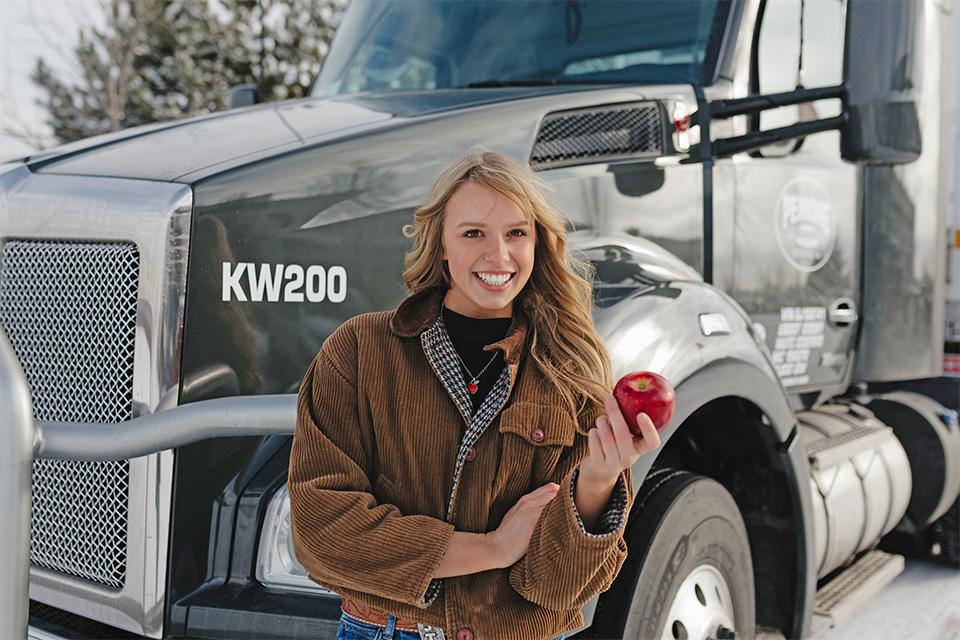
 Kait Thornton spends her days and nights (and pretty much any time she can get a Wi-Fi connection) trying to guide the apple industry through dark times. Ironically, she does so from a Pacific Northwest town that does not have a stop light. To its credit, though, Tonasket, WA — population: 1,100 — did make waves recently upon erecting a blinking stop sign.
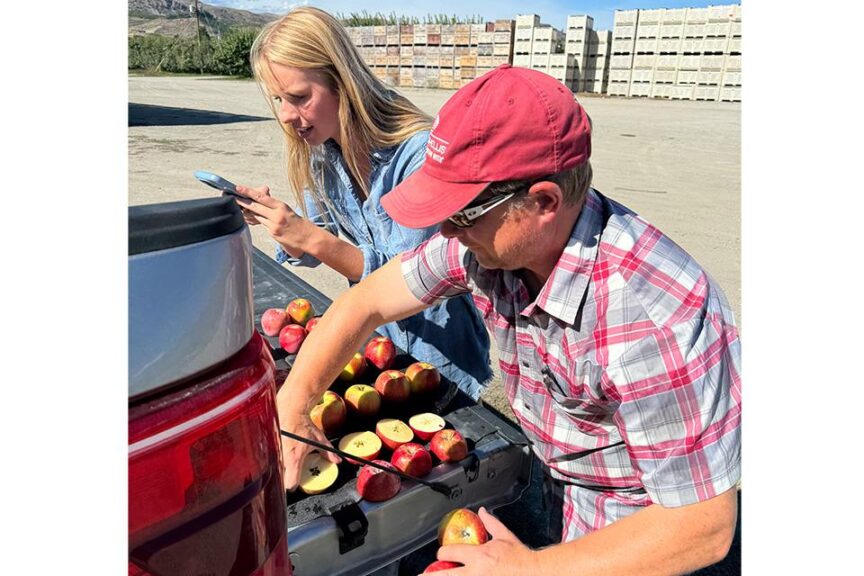

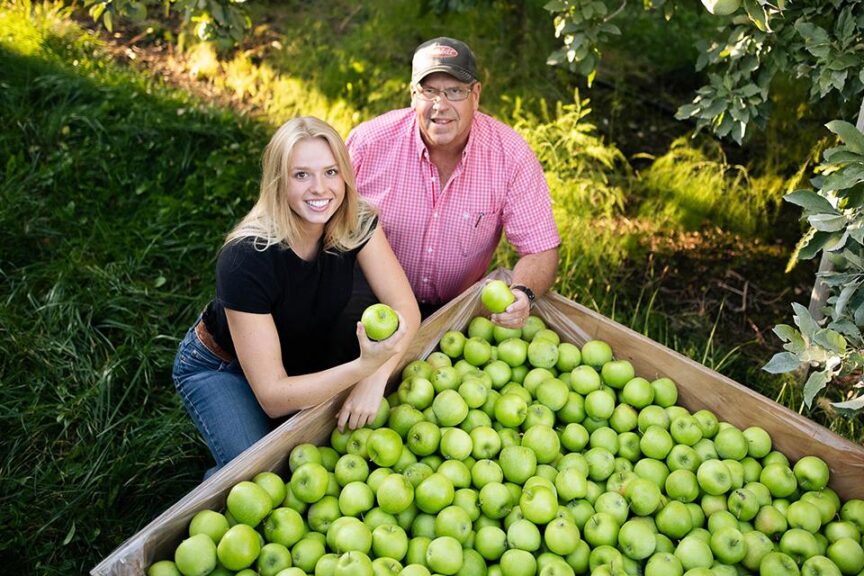
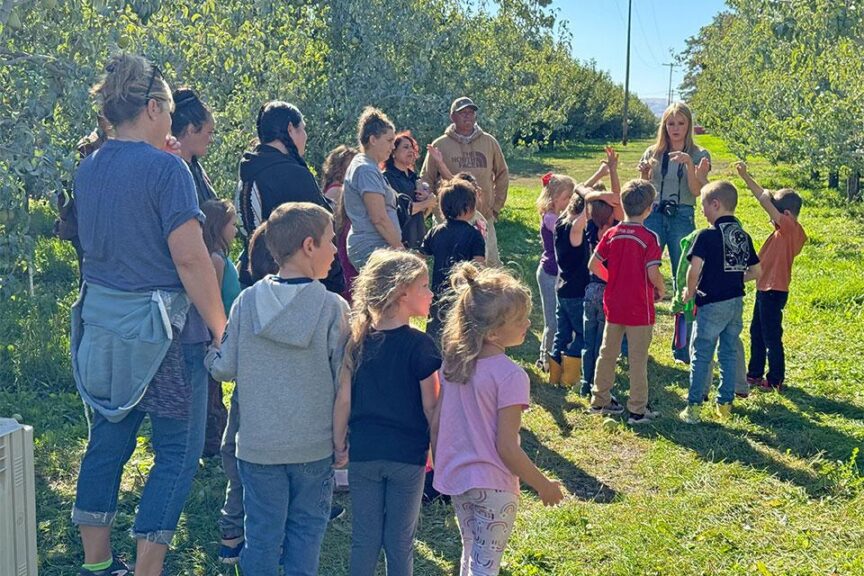
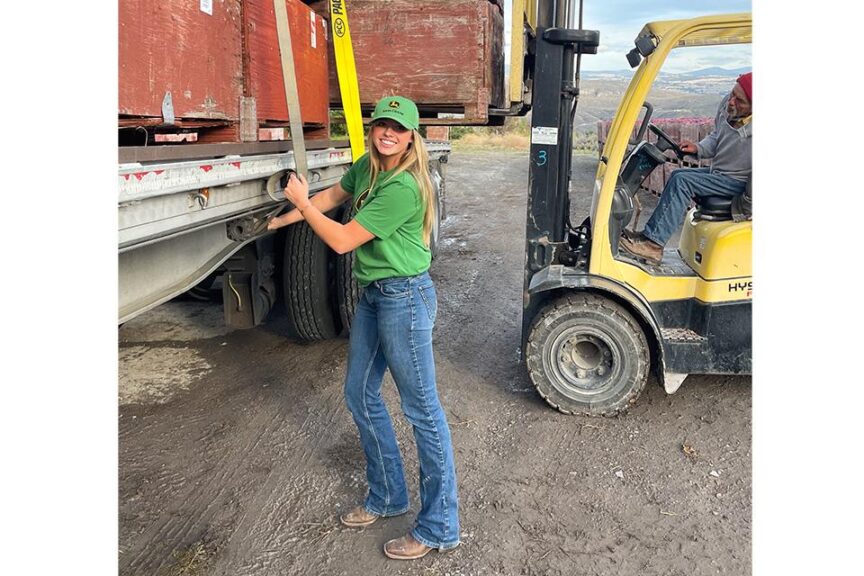
View all


“That was a big event,” Thornton says.
Hoopla rarely visits Tonasket, an agricultural/forestry town located 20 miles from the Canadian border. As a teenager — which was only a few years ago for the 22-year-old Thornton — a hopping night out meant a half-hour drive south to patronize the McDonald’s and Walmart in Omak.
“I remember in school a guest speaker came, and he was like, ‘Man, what do you guys do around here for fun — chase tumbleweeds?’” Thornton says. “I was like, ‘Yeah, that’s about right.”
Well, not entirely correct. Thornton, for one, is busy chasing her dreams. And unlike the new stop sign in her hometown, that has been nothing to blink at.
1 MILLION FOLLOWERS OR BUST
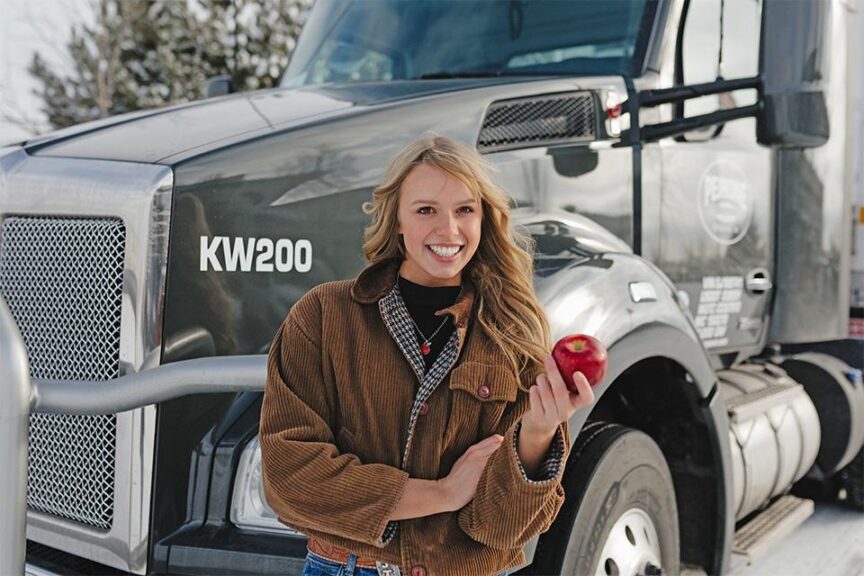
At last count, Kait Thornton had more than 550,000 followers combined across TikTok (374,000), Instagram (193,000), LinkedIn (9,300), and Snapchat (7,200). One of her TikTok posts has been “liked” 6.9 million times. Most of those fans know Thornton as “The Apple Girl” — a nickname that originated on TikTok during her college years at Washington State University.
“I knew people weren’t going to watch my videos and remember what my name was. I knew from being a consumer of social media that, ‘That’s the girl who talks about her lizard,’ or ‘That’s the guy who is always on a skateboard.’ So, I was like, ‘I’m definitely just the apple girl.’ And for a while, I started my videos, ‘Hey, y’all, it’s your favorite apple girl.’”
Just like that, a brand was born … from North Central Washington. “If I wanted to have the platform I do now, even 20 years ago I would have had to move to somewhere like L.A. or a place where you get a lot of exposure,” Thornton says.
What is on her social media checklist in 2025? “To get on the Joe Rogan podcast,” she quickly answers. Rogan, though, has 19 million subscribers, she realizes. “I don’t know how attainable that [goal] is,” she sighs.
Then again, who would have predicted — besides her dad apparently — that Thornton would become such a marketing force in her early 20s.
FATHER KNOWS BEST
Thornton represents the fourth generation at her family’s current tree fruit farm, which is comprised of 440 acres. This year marks the 100th anniversary of her family’s farming debut in the Okanagan Valley. Through it all, family members past and present have overcome adversity.
In 1930 the 4-year-old brother of Kait’s eventual grandfather succumbed to diphtheria on the homestead. “That was tough on the family, but it was of the times,” Thornton says. “That little picker cabin is still standing. It’s part of the property I now own. I’m fixing up that house and trying to get it livable. It’s kind of hallowed ground.”
Her grandfather, after growing up on the farm, was selected to serve in World War II. As a combat medic, he saw three years of heavy combat with the 3rd Infantry Division, which included U.S. war hero Audie Murphy. “He led an incredible life, then came back, and he wanted to become a doctor because of his younger brother dying,” Thornton says.
Thornton’s father, Geoff, eventually took over the farm and began growing pears in addition to apples. “We had lost a bunch of that acreage. So my parents had to kind of rebuild, and we’ve acquired most of the original homestead land, which is cool,” Thornton says.
@apple.girl.kait
In tribute to her grandfather, Thornton spent her early teens wanting to become a physician’s assistant rather than a farmer. That mindset began to change as her father entered rehab for alcoholism and her mother left home after suffering a nervous breakdown.
“One of the letters that I wrote my dad when he was in rehab was like, ‘Dad, I want to learn from you, but you have a short temper when you’re drinking,’” Thornton says. “When he got out of rehab, he was like, ‘I’ll teach you.’ He started involving me more. I got started selling fruit.”
What may now seem like a sixth sense to Thornton was anything but at that time.
“He encouraged me and recognized certain traits that I had. He’s like, ‘You’re really good at marketing,’ and I didn’t even know what marketing was at the time,” Thornton says. “As he noticed that I wanted to take over the orchard, he wanted to encourage that passion but also build skills in me that would be useful.”
Thornton wasted little time putting those newfound skills to use with a little help from an old friend — social media.
KAIT’S CRATES
By age 15, Thornton had long since become a fan of Instagram and TikTok. “Growing up in a small town, that was a way to connect with people who are outside your immediate tiny bubble. I really enjoyed connecting with people in different areas and learning from them,” she says. “When TikTok came out, it was primarily like a dancing app. I was like, ‘This is kind of a fun app.’ TikTok was the biggest one for me.”
Enter Facebook — specifically its Marketplace platform — and the official start to Thornton’s entrepreneurial career, just days before her 16th birthday. Motivated by her father, she began selling 25-pound boxes of apricots; hence, the name for her new business, Kait’s Crates.
“For my first sale, I had arranged with people to meet them in town, but I couldn’t drive myself, so one of our employees had to drive me into town,” Thornton says. “But then I turned 16, got my pickup, and the rest is history. I’ve been doing this since the summer of ’18. I get energy from other people even though I was really awkward at the time. It wasn’t like I started out just a social butterfly. I was still an insecure 16-year-old with braces.”
RELATED CONTENT: 5 ‘Farming-fluencers’ You Need To Be Following
After earning college credits in high school through the state’s Running Start program, Thornton enrolled at Washington State University, where she needed just two-and-a-half years to earn her degree in marketing. “I figured I could make even more valuable connections in the business school and expand my brain and my skillset in the business sense vs. going into ag and learning more of the biology side.”
Once graduated, she quickly turned back to agriculture while fully re-engaging with the social media audience she had attracted before starting at WSU. “Even at 80,000 followers, I felt like I was making at least a difference in a few peoples’ lives when they were looking at fruit, and I knew I wanted to go back into ag for sure,” Thornton says. “When I got my biggest scholarship, which is the T.K. Mathison scholarship through the Washington Apple Education Foundation, they wanted me to write my goal. I wrote that I just want to make the biggest impact in the fruit industry that I can. That’s kind of the mentality I went into college with.”
RALLYING THE TROOPS
Since rejoining her father (now seven years into sobriety) at the family farm in December of 2023, Thornton has not been twiddling her thumbs, which has otherwise been the running joke in Tonasket, she laughs. She and South Africa native Danielle Helberg, after studying abroad together in Switzerland, established AGNOVO, a social media management and consulting service for agriculture-based companies.
“Because of my influencer work, I’d worked with companies whose focus is in agriculture, but they were using agencies with people who clearly didn’t understand the product or the service,” Thornton says. “They were really good at marketing, but they weren’t as good at connecting in a B2B sense or B2C sense.”
Along the same lines, Thornton has taken it upon herself to help right the U.S. apple industry, which has been hit by the triple-whammy of low prices and high costs for labor and crop inputs.
“It’s hard,” she says, referring to her own farm. “I mean, we haven’t seen an actual money-making year since 2012. Not like, “Whoo-hoo, this is a bumper crop!’ We grow beautiful fruit. I’m seeing the fruit that’s going on the trucks. But we’re fighting so hard just to survive; not even to thrive but just to break even and just continue farming.”
What can fellow apple growers do about that? For starters, take to social media themselves, Thornton says.
“I don’t need to be the sole face of the industry or sole face of agriculture. There’s so many stories worth telling. And if it’s something you truly believe in, and you’re talking about it authentically, people really listen. They take that information with them. I get countless comments from people who say, ‘I think of you every time I’m in a grocery store or every time I eat an apple.’ That’s something that moves the needle.
“We need to amplify our voice. I was having those one-on-one conversations in grocery stores, which were great. But that was my intention with social media: I could have that same conversation with a hundred people at a time. And now it’s thousands of people at a time, and sometimes millions of people at the same time.”
Not bad for a Pacific Northwest apple girl-turned-entrepreneur. Any more followers, and Joe Rogan will be the one asking for directions to Tonasket.
Subscribe Today For