



Inspiring Legacy of Pears Grows Strong at Tamura Orchards
 January 6, 2026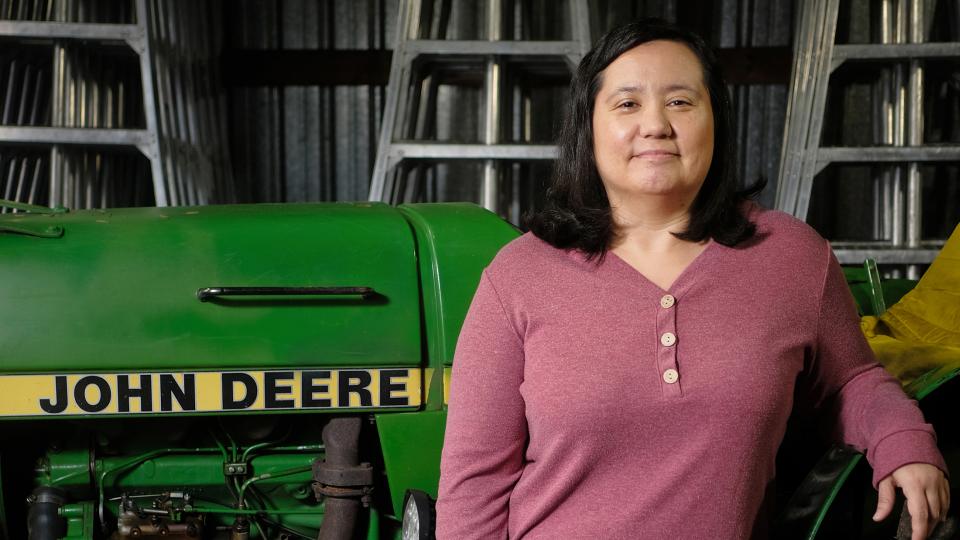
Lesley Tamura of Tamura Orchards in Hood River Valley, OR.
Photo by Kyle Ramey
In Oregon’s Hood River Valley, the pear trees have a way of telling time. They mark the seasons with bloom, fruit, and the long silence of winter. For many growers, those rhythms become a lifelong companion. For fourth-generation pear grower Lesley Tamura, they’re also a reminder of the legacy she carries and the future she’s determined to build.
“My great-grandfather immigrated from Japan as a teenager in 1907,” she says. “He eventually moved to Hood River in 1918, purchased property, cleared it, and planted a pear orchard.” The family’s beginnings were far from easy. They lived in a tent while he worked to establish the orchard. “He couldn’t make the very last payment on the land and lost it,” Lesley explains. Then came World War II and the incarceration of Japanese American families. “They didn’t know if they would be allowed to come back or if they would have anything to come back to. And when they did return, they faced hateful discrimination.”
Her family was one of the few who got their land back. They rebuilt, re-planted, and moved forward; first her great-grandfather, then her grandfather, then her father, building what today is known as Tamura Orchards. “Being the fourth generation to do this work has made me feel a deep responsibility to continue the legacy they created,” she says. “They endured a lot to do this work, and I don’t take that lightly.”
Today Lesley and her father work side-by-side on their 42-acre pear orchard in Odell, growing mainly Green Anjou, Bosc, and Red Anjou pears. But becoming a grower wasn’t always her plan.
From the Classroom to the Orchard
For nearly a decade, Lesley taught sixth-grade dual-language students. Teaching was the only career she’d ever pictured for herself. But over time, burnout crept in.
“I grew up wanting to be a teacher and always assumed it would be my forever career,” she says. “But after 10 years, I found myself pretty burnt out.” She had long known that her brother didn’t plan to farm, and the decision point approached. “I figured, ‘If not now, when?’ I didn’t want to miss my chance.”
Coming back meant learning fast, and humbly. “Anyone who knows me will tell you I’m very type-A,” she laughs. “So I’ve really had to learn the difference between what I can and cannot control.” Weather, labor, regulation, markets — she’s at peace with the futility of wrestling those. “But when there are things I can control, I pursue them relentlessly.”
That dual mindset fuels her approach today: one part grit, one part grace. “I can make sure our orchard produces the best possible pears year after year,” she says. “And I can do my part to represent our industry to our lawmakers and the public.”
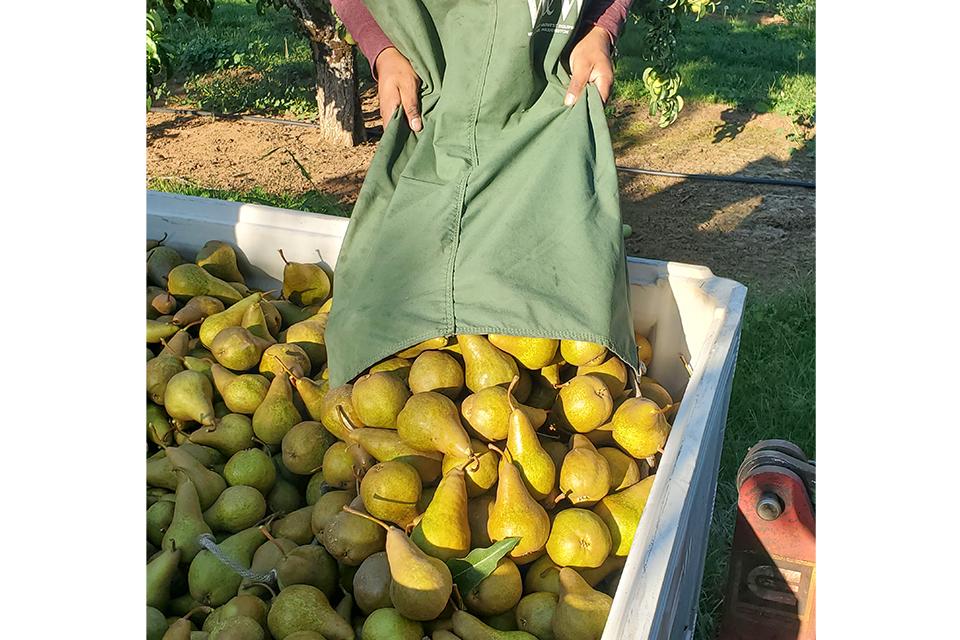
Pear harvest at Tamura Orchards.
Photo courtesy of Tamura Orchards
Hands-On Leadership
Like many small family growers, Lesley’s job description changes by the hour. She smiles when asked what part of the operation she’s most involved in. “You have to wear various hats on any given day, whether it is HR, bookkeeper, crew supervisor, facilities manager, or mechanic.”
Her role is to ensure her crew has what they need to work safely and efficiently. One minute she’s updating food-safety postings; the next, she’s fixing a plumbing issue in employee housing or processing payroll taxes. “Or I’m ordering pesticide products to make sure we have what we need before we start spraying the next day,” she adds. “Or I’m jumping in to check bins during harvest if we don’t have enough bin checkers.”
The variability is relentless, but so is the satisfaction. “It’s important that I create a working environment where everything runs smoothly so my employees can do the work … as efficiently and easily as possible,” she says. “Everything overlaps, and Mother Nature demands her own timing.”
The Rhythm of the Work
Ask her to choose a single task essential to orchard success, and she politely refuses. “Everything we do is central to the orchard’s success,” she says. “It’s all interwoven.” Frost season, though, offers a vivid window into the stakes.
Before the season begins, she and her team prepare: test-running frost fans, filling propane tanks, cleaning and testing nozzles on orchard heaters. Then begins the waiting and the nighttime vigilance. “Growers are monitoring temperatures with weather sensors and alert systems. Mechanics have to get fans back up and running when they break down in the middle of the night. Fuel companies refill tanks as they run low on cold nights,” she explains.
Some years, it’s only a few nights. Others, it’s weeks. “You’re starting fans, lighting heaters, driving around to monitor everything, taking quick power naps in the truck, and waiting for the temperature to rise,” she shares. And then, when the sun finally warms the valley, they service everything and prepare to do it again.
It’s a level of commitment that many outside the industry never see.
A Voice for Growers in a Changing Landscape
In addition to running her family orchard, Lesley serves as Chair of the Columbia Gorge Fruit Growers (CGFG), where she has become a respected voice on issues ranging from regulatory burden to public perception.
“The regulatory and compliance landscape is out of control in Oregon,” she says bluntly. “Growers want to comply, but navigating the rules is really difficult, and we don’t get support from the state agencies who are creating them.”
She works to simplify that landscape by creating reference materials, clarifying rules with agencies, and helping growers learn from one another. She has also made it a priority for the organization to tell the industry’s story to the public. “So many people living in the Gorge have no idea what we do and why we do it, even though they’re surrounded by orchards,” she says. “We have a lot of great stories to tell.”
Her advocacy includes testifying in the state legislature and helping mobilize growers to participate in public comment processes. It’s not work she expected to take on when she left teaching, but it’s work she feels called to.
The Next Generation of Women in Ag
This year, the United Nations has designated 2026 as the International Year of the Woman Farmer, an acknowledgment of the growing role women play in agriculture worldwide. Lesley’s path reflects both the challenges and the resilience behind that recognition.
“For me, strength means being willing to admit when you don’t know what you’re doing and asking others for help,” she says. “That’s hard, but especially intimidating as a woman, because you already feel like you’re starting from behind.”
She entered a field that is still largely male, with limited hands-on experience and a professional background in a traditionally female-coded job, teaching. “I was nervous,” she admits. “And when I had to start learning everything from the beginning, the only people around me to learn from were men.”
While she’s certainly encountered sexism, she says it’s the exception, not the rule. “Regardless of anything that divides us, this is a difficult lifestyle and we’re all doing our best to survive,” she says. What made the difference for her were the relationships she built; her “team.”
“There are a lot of people willing to help others learn,” she says. “It’s just a matter of finding the ones you really want to learn from.”
Her advice to young women entering agriculture is warm, practical, and grounded in her own experience: ask questions, make connections, join committees, and build your team. “I’ll never know everything, and I may always feel a bit of imposter syndrome,” she says. “But you can’t let that stop you from pushing forward.”
Carrying the Legacy Forward
On any given morning in Hood River, you might find Lesley walking a row of pears her great-grandfather once tended, checking buds or scouting for early pest pressure. The work has changed regarding the technology, regulations, and markets over the decades, but the throughline remains the same: family, resilience, and a deep commitment to the land.
“I came back because I didn’t want to miss the chance,” she says. A century after her family planted their first trees, she’s making sure the orchard, and the legacy, continues to thrive.
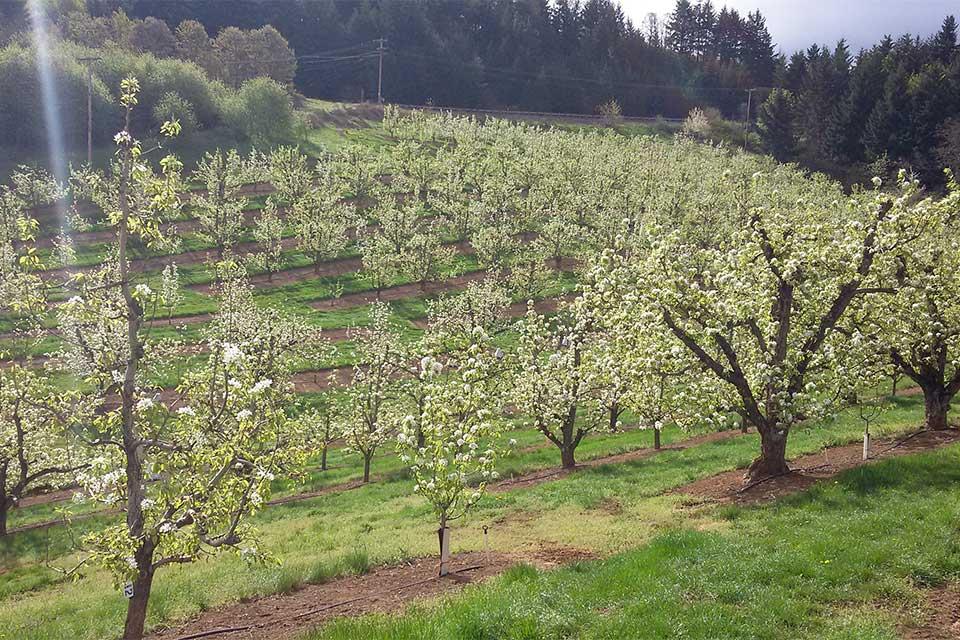
Pear crop at Tamura Orchards.
Photo courtesy of Tamura Orchards
Tamura Orchards at a Glance
Founded: Early 1900s (Fourth-generation operation)
Grower: Lesley Tamura
Location: Hood River Valley, Oregon
Primary Crop: Pears
Sustainability and Stewardship: Emphasis on careful water management and soil health; integrates modern orchard efficiencies while preserving heritage practices; commitment to responsible chemical use, canopy management, and fruit quality standards.
Subscribe Today For
