



A Biological Approach To Grow Great Blueberries
 February 4, 2025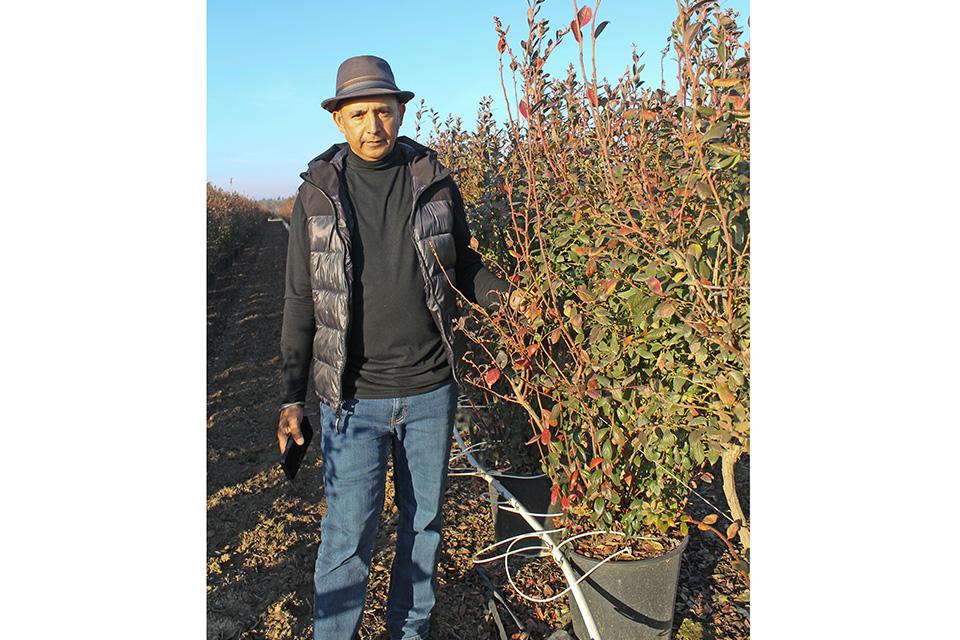
Paul Gill is one of California’s largest blueberry growers, and by far the largest that farms exclusively organic.
Photo by David Eddy
How serious is Paul Gill about wanting to farm exclusively organic? In 2019, when he started his new enterprise in California, he actually imported organic dirt, 40 truckloads of soil from Denmark.
“True, the initial cost was high,” he says to the surprised look from a visitor. “But I simply didn’t want to wait for three years (to transition from conventional ground).”
After farming blueberries for many years in British Columbia, Gill sought a new way to farm, free of chemicals. It was too difficult to grow organic blueberries in Canada because of the rain and potentially consequent diseases, so he decided to head for California.
“The mighty sun,” he says, a term he uses frequently, “really helps.”
Today Gill is Managing Partner of Paragroup Farms Inc., overseeing 350 acres of blueberries on four ranches in California’s San Joaquin Valley, north of Fresno. All of it is farmed organically, and he has finally reached his goal of using zero fungicides.
“If you have the mighty sun and the right amount of nutrients,” he says, “you don’t need any fungicide.”
At the opposite end of the scale, Gill would relish an organic herbicide, as weeds are his nemesis.
“We tell people it never ends — we have to fight weeds 24/7, it’s our No. 1 problem,” he says. “We use weed mats, steamers, weed eaters, then we go in with a hoe if nothing else works.”
American Fruit Grower followed up a quick visit to one of Paul Gill’s ranches by conducting a Q&A on biological products via email. It has been lightly edited for clarity:
When it comes to biologicals, what’s the best decision you ever made? The worst?
“Just deciding to grow organic was the best decision we ever made. But there were many bad decisions we made, such as trusting and believing in ANY products. Not everything always works.”
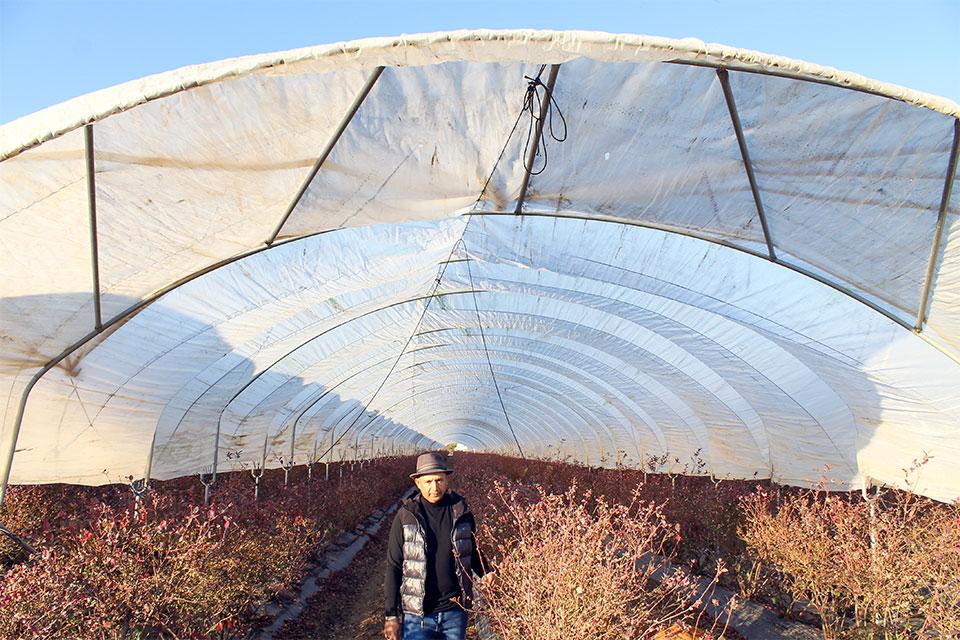
Paul Gill uses a variety of techniques to produce early crops that fetch higher prices. That can mean growing under cover.
Photo by David Eddy
Where has using a biological product been equally or more effective than conventional approaches?
“There is no such thing as a magic product that does everything. Many times there are certain biofertilizers that are more effective than conventional, although they are expensive. However, biofungicides and insecticides are often less effective than conventionals. So, we have to figure out IPM practices in order to get more out of them.”
If I were an organic grower new to biological products, what’s the first piece of advice you would give me?
“There is no such thing as a magic product that does everything. You have got to use your experience, and no one will be an expert overnight, just like any other profession. Be patient and work hard!”
What’s the best source of information for help with biologicals?
LinkedIn, journal articles, and I do have an American Fruit Grower magazine subscription. Communicating with multiple growers, both within and out of country, and attending conferences and visiting booths in search of newer technologies are also valuable.”

Paul Gill takes a close look at one of his early blueberry varieties ‘Snowchaser’.
Photo by David Eddy
How did you start using biostimulants?
“The concept and theory behind biostimulants seems very interesting. There is plenty of literature available, which we read through. Also, we learn a lot about newer technologies and their efficacy at booths of the conferences and ag shows. Initially we started looking for third-party data and decided to take a chance. Many of them didn’t initially show desired results, but we never stopped testing newer technologies.”
What have you found to be the most valuable biofertilizers? Why?
“There are a few products which worked well, but there is no ONE product that performs miracles. We try many products, test them at our own level and also through third-party contract research operations (CROs) before coming to a conclusion about their efficacy/potency. Biofertilizers containing beneficial microbes with specific strains tend to work better. More than just the brand of any biofertilizer, what matters the most is how our cultural practices enhance retention of applied biofertilizer.”
What have you found to be the most valuable biostimulants? Why?
“Biostimulants are a crowded market, but a few work well. It all depends on its purpose and claim of the use. Certain products are claimed as stress reducers (salinity, heat, cold, drought, etc.) and others are for reducing fertilizer usage by increasing the bioavailability of the existing fertilizers. There is no ONE product that performs a miracle. We try many products, test them at our own level and also through (CRO) before coming to a conclusion about their efficacy/potency. Some seaweed products are good as microbial food as well. In general, beneficial microbial inoculants, seaweed, and humic acids work well.”
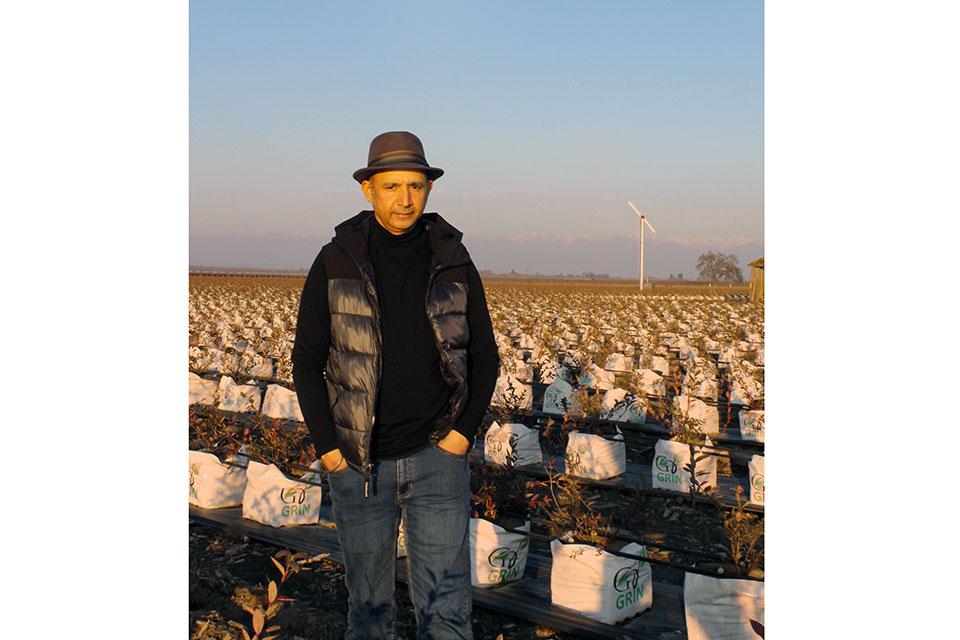
Gill constantly trials new varieties and organic inputs. At any one time, he has about 30 new varieties in trials.
Photo by David Eddy
What have you found to be the most valuable biopesticides? Why?
“Biopesticides are tricky and need a lot of precision in order to get most out of them. A combination of biopesticides made out of botanicals and microbials at the appropriate time of year/crop stage works well. The same product can be effective at certain times but not others. Biopesticides are not silver bullets. A mixture of beneficial microbes, micronutrients, and botanicals can work better. Establishing a plant’s immune system helps a lot more than just biopesticides.”
If you were starting over again, what would you do differently in your use of biologicals?
“Use of biologicals right from day one can play an important role in establishing microfauna and plant immune systems. So, we will use biologicals right from day one if we begin all over again.”
What biological products provide the most bang for the buck?
“Products with beneficial microbes, seaweed, humic and amino acids provide bang for the buck as long as they keep their prices reasonable. There are certain products that can be good, but that still doesn’t necessarily justify their pricing. Keeping prices reasonable is another factor companies have to work on. We do not expect cheap, just reasonable.”
Subscribe Today For
