



Following Letter of the Law for Soil Fumigation Success
Soil fumigants are used on high-value crops against a wide range of invaders, including nematodes, fungi, bacteria, insects, and weeds. Knowing how these products work — as well as their numerous hazards — was the subject of a March online workshop hosted by Penn State Extension.
Most growers understand the basics of soil fumigation, which travels the tiny air spaces in soil to eliminate pests. Commonly used fumigants include chloropicrin, 1,3-dichloropropene, methyl bromide, and metam sodium and potassium, with popular brands encompassing Vapam HL, Telone II and C-35, and Basamid G.
Familiarity with these tools is only half the story. The real work begins in developing a comprehensive product management strategy that includes knowledge of product safety hazards.
“Remember that this is a gas that kills weeds, but it will kill the roots of your trees if not used properly,” Kari Peter, a Professor in the Department of Plant Pathology and Environmental Microbiology at the Penn State University Fruit Research and Extension Center, said. “You can’t just guess on how to use a fumigant.”
EXCEPTIONAL RULE
To that end, “the label is the law” is standard under the Federal Insecticide, Fungicide, and Rodenticide Act (FIFRA). As soil fumigants are classified as Restricted Use Pesticides, label instructions carry the same weight as federal regulations, Peter noted.
“FIFRA is one of the few federal laws that legally allows hazardous materials to be introduced into the environment — most environmental laws are designed to keep them out,” Peter said. “The function of the label is not to make your life difficult, it’s to manage the risk associated with a particular product.”
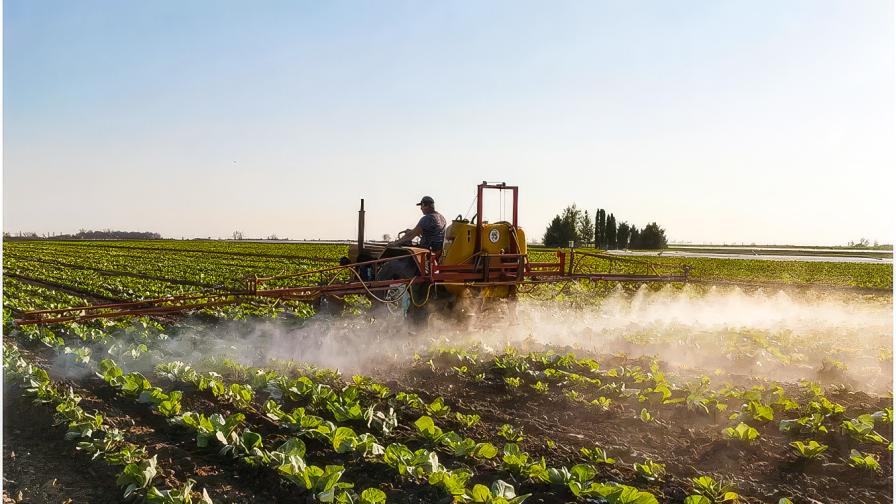
The Federal Insecticide, Fungicide, and Rodenticide Act (FIFRA) is one of the few federal laws that legally allows hazardous materials to be introduced into the environment.
Photo: Penn State University Extension
A soil fumigant label reads more like a safety manual than an instruction sheet. Labeling will have “signal words” such as “WARNING” or “DANGER,” as well as best practices around soil moisture, temperature, and weather conditions.
Additionally, fumigant labels specify PPE requirements, including best practices for respirators, protective suits, and chemical-resistant gloves. Instructions may even include the specific grade of rubber (e.g., butyl) required for equipment that comes into contact with a fumigant.
BEST PRACTICES
Farmers concerned about chemical PPE can also check the latest updates from National Institute for Occupational Safety and Health, Peter added.
“With fumigants, you have to be really careful because they can soak into your skin,” Peter said. “Heat illness is an issue, too. If you’re suited up and fumigating in an outfit that’s not breathable, that can expose you to heat exhaustion or heat stroke.”
Label literacy includes best practices for product use — for example, a non-fumigant nematicide can be utilized post-planting, while most fumigants must be used before trees go into the ground. Peter also shared advice on how to time your applications for the best results.
“Make sure moisture is plentiful,” Peter said. “I always look at the weather forecast to make sure there’s going to be rain coming right after I apply the nematicide. If a grower has irrigation and can use the chemigation option for the nematicide, it is recommended to run the irrigation before and after the application to allow for thorough coverage of the roots.”
BIO ALTERNATIVE
Biofumigation is another option for growers, particularly in nematode control. Although nematodes can be mitigated through chemical fumigation, incorporating mechanically chopped brassicaceous plants such as mustard or rapeseed is a strong alternative.
“These plants release their nematocidal properties when they’re chopped up,” Peter said. “In the spring, you’ll chop up (the plant) and put it into the soil.”
For growers who still rely on fumigants, a thorough review of product labels is non-negotiable, Peter said.
“Labels can change, so you want to be label literate and not have to guess when using any pesticide,” she said. “Make sure you read the label first — that’s something really important to be mindful of, so you know how to use the product before applying it.”
Subscribe Today For
