


Disease Management for Grapes: When the Best Defense Is a Good Offense
 May 12, 2026
 There are two important caveats I find myself explaining before any vineyard pest management conversation in the eastern U.S. First, pesticides are not a replacement for an integrated pest management program. We must get cultivar choice and site selection correct before we plant. We must be on top of canopy management tasks to have a fighting chance with disease management. Second, it is in nobody’s interest to spray more pesticides than necessary. We know the margins are slim in agriculture, and wasteful use of pesticides is costly for material, machinery, and labor.
That being said, here in the humid East we grow wine grapes that are sensitive to a slew of fungal pathogens that can cause quality and quantity issues for our crop. We know that we have high disease pressure. The fungicides we use are protective in nature; we apply them on clean tissue to protect from infections. Good growers are prepared to use fungicides diligently, conscientiously, and proactively.
Let’s break this down:
Diligently — Pesticides are important tools. They can achieve excellent control of disease, but with misuse they can cause environmental and human harm.
Conscientiously — We want to be efficient and judicious with our pesticide use. For obvious reasons we don’t want to use them more than necessary.
Proactively — Pesticides are important tools in our vineyards. We should be proactive with respect to intervals between sprays. Growth that takes place after our last spray application is not protected, and precipitation and sunlight can degrade the pesticides we applied. We stretch our intervals as far as we can but no further.
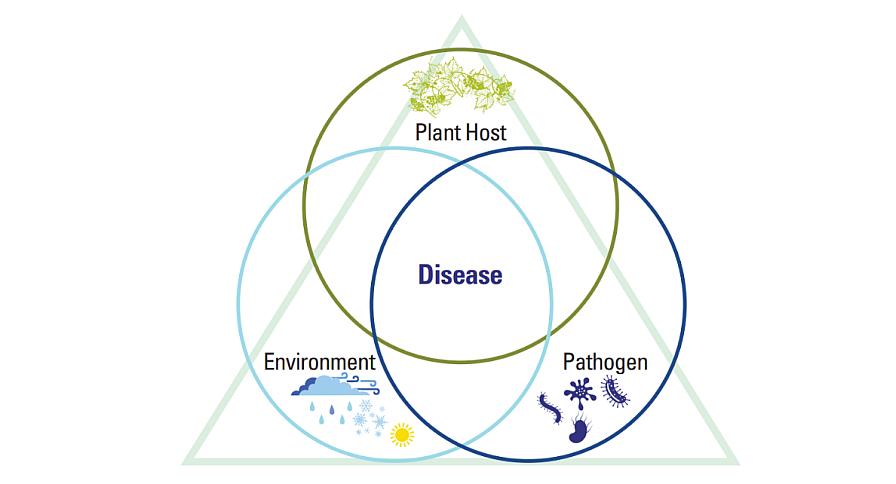
We know we need to protect our vines from a range of different pathogens. We can’t just use one fungicide all season long. We spend time during the winter designing a spray template that will work for the season. That way we have time to think through the spray program and select materials that will offer appropriate disease control across the growing season. Having a template will give us an opportunity to determine the quantity of materials we need to have on hand for the season.
A template will also give us guidance if we have extreme weather events. For example, it’s not unrealistic to have 4 inches of rain in a single week during the growing season. In this situation it is important to growers to have the materials on hand for the next application to go on ASAP due to excessive rain rinsing.
The growing season is a time to be proactive with pest management. We have seen all ranges of weather in the past couple seasons. Be prepared. If you are not proactive, you are way too late.
Subscribe Today For
