


How Saunderskill Farms Succeeds From One Generation to the Next
 August 25, 2026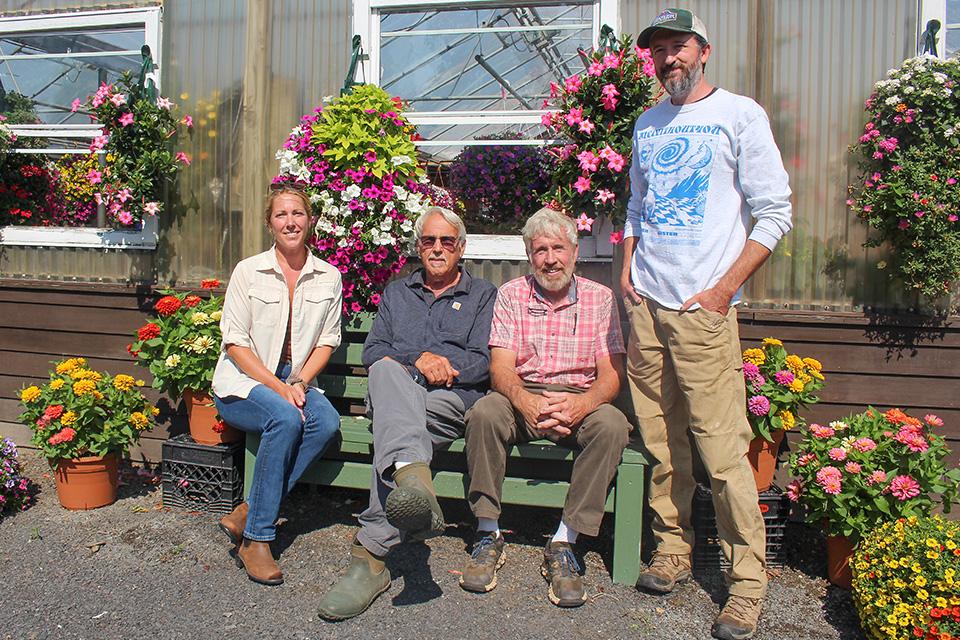
(From left) Renee Ciardi, her father Dan Schoonmaker, uncle David Schoonmaker, and cousin Ryan Schoonmaker, David’s son. They manage the Saunderskill farm and greenhouse in eastern New York State.
Photo: Thomas Skernivitz
For years, the question hovered over Saunderskill Farms: Who would come next? Brothers Dan and David Schoonmaker were getting older. The operation they had spent their lives running had already been scaled back, with vegetable acreage dropping from about 300 acres to 50. They had begun renting farmland to neighboring growers and even considered looking outside the family for someone who might eventually take over portions of the operation.
Then, at a child’s birthday party, the answer began to take shape. Renee Ciardi, Dan’s daughter, mentioned to her cousin Ryan Schoonmaker that the family was looking for farm managers.
“Why don’t we do it?” Ryan asked.
Renee’s response was just as simple: “Yeah, we could.”
“It was just a spur-of-the-moment kind of thing,” Ryan says. “We never discussed it. After that, Renee and I started discussing it more seriously.”
For a farm whose roots stretch back to 1680, the conversation marked a pivotal moment.
“It was always talked about among the cousins: What’s going to happen to the farm?” Renee says. “We wanted to see it continue. But it really took that moment for us to realize we could do that together.”
PEACE OF MIND
Both cousins had built substantial careers away from Saunderskill. Renee, who turns 40 in November, spent 10 years with New York Farm Bureau, eventually directing its Young Farmer program. Ryan, 43, spent roughly 20 years as a television editor.
Both returned to Saunderskill full time in February.
For Dan, 71, and David, 70, the decision brought something they had been missing.
“Peace of mind,” Dan says.
The concern was never whether Saunderskill’s popular farm market would survive. Dan’s oldest daughter, Jennifer, and her husband are partners in that business. The larger question was what would happen to the roughly 500 acres of tillable land the family owns.
“We didn’t want to see the farmland we are farming sold,” Dan says. “We didn’t know what we were going to do with it, but we knew we wanted to see it remain open space and still be farmed.”
Without a clear successor, the brothers had gradually begun scaling back. Saunderskill once grew roughly 300 acres of vegetables and served about 35 wholesale customers in Bergen County, NJ. As land values increased and family farms there disappeared, Saunderskill’s customer base steadily shrank.
“We were getting older, and there wasn’t somebody behind us kicking us, saying, ‘Come on, let’s go,’” Dan says. “It was more like we were just looking around and saying, ‘Well, I don’t see anybody.’”
Now they do.
David hopes that, within a few years, their roles can reverse. “Hopefully, in a couple of years, these guys can be 80% or 90%, and we can be 10%,” he says.
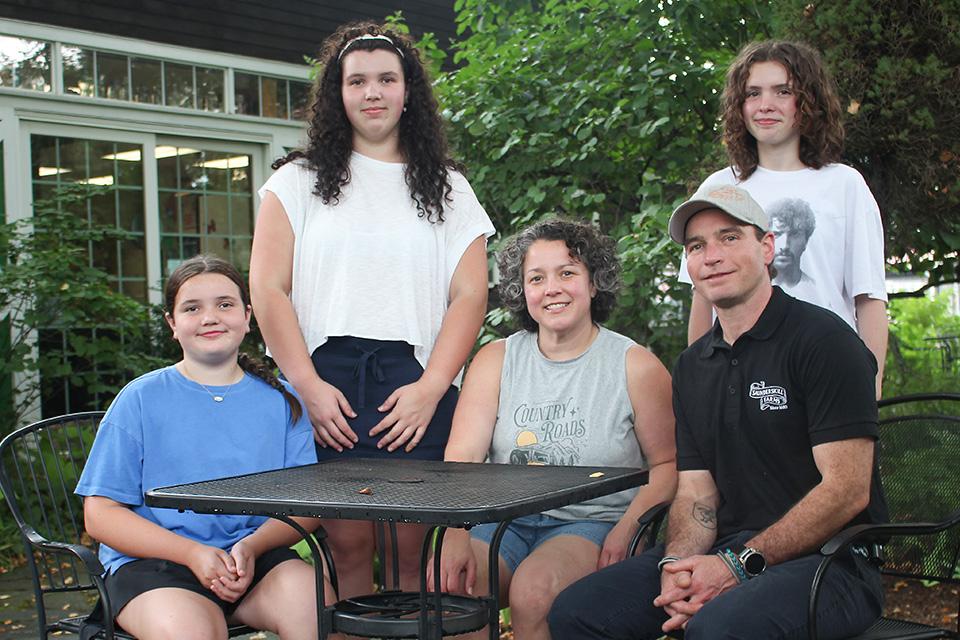
Renee’s sister, Jennifer Shea, runs the Saunderskill Farms market with husband Ryan and their three daughters.
Photo: Thomas Skernivitz
STARTING OVER
For now, however, Renee and Ryan are learning. Renee has been shadowing her father, concentrating much of her time at the farm market, where she helps manage greenhouse operations, flowers, and retail activity. Ryan works more closely with David in the fields.
Saunderskill’s fruit production includes about a half-acre each of blueberries and strawberries, along with about 2 acres of apples. The berries are sold through the farm market and offered for pick-your-own. Strawberries, now grown using plasticulture, give way to blueberry season, while apple harvest begins in late August.
“This interview is the most time Ryan and I have spent together sitting down,” Renee jokes.
For Ryan, returning to the farm has meant becoming a beginner again. After two decades in television, he went from knowing his profession inside and out to finding himself “back to the bottom rung.”
“It’s definitely as hard as I thought it would be, if not harder,” he says. “The hardest thing is going from something that I spent my whole life being good at.”
“You make mistakes,” Ryan says. “I make a lot of mistakes, and that’s how you learn. It’s hard going from being an expert at something to being a novice.”
For Renee, a decade away from Saunderskill proved valuable in a different way. Her Farm Bureau career took her throughout eastern New York and exposed her to growers, agricultural organizations, leadership training, and government advocacy.
“I think it was good to get off the farm, get a little experience, and learn that there’s more than the Hudson Valley,” she says. “It really helped me grow as a person and gain the confidence I needed to come back and know that we can do this.”
Coming home also carries personal meaning. Renee’s mother, Cathy, passed away six years ago after playing a central role in building Saunderskill’s farm market.
“I’m the happiest I’ve been in a really long time,” Renee says. “We lost my mother six years ago, and it makes me feel closer to her.”
Dan still describes his late wife’s role simply: “She was the brains, and I was the brawn.”
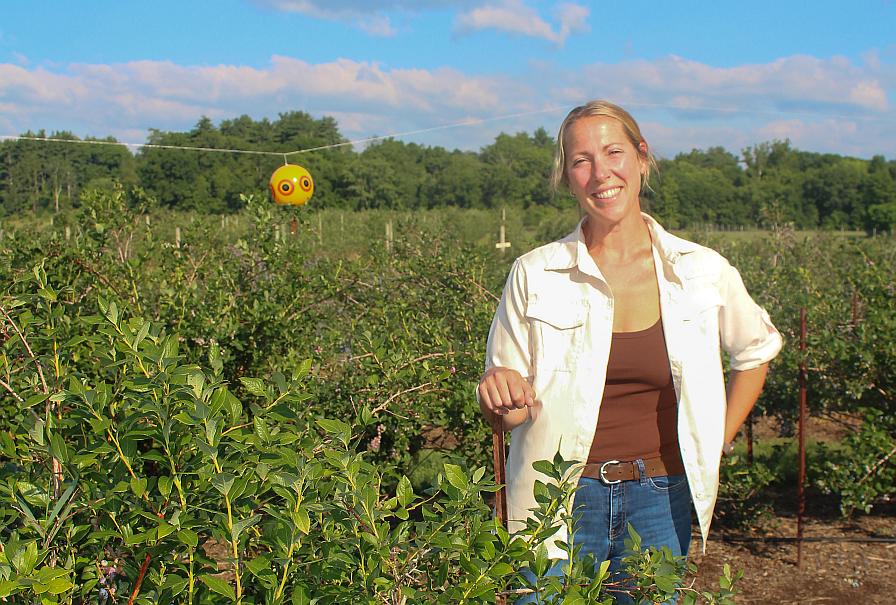
Renee Ciardi at home in the orchards of Saunderskill Farms.
Photo: Thomas Skernivitz
NO PRESSURE TO RETURN
That sense of family history surrounds Renee and Ryan, but neither says they were pushed to take over the farm. Renee believes the opposite approach helped bring them home.
“They didn’t put pressure on the next generation to come back to the farm,” she says. “They actually encouraged us to go out and experience the world and figure out that we wanted to come home.”
Ryan acknowledges that Saunderskill nevertheless remained in the back of his mind. Had another successor emerged, he says, staying away might have been easier. Without one, the farm’s future increasingly felt like unfinished business.
“If we weren’t going to do it, then what would happen to the farm?” Ryan says. “You don’t want to let that happen on your watch. You don’t want to let this thing that’s been around since 1680 go under because you didn’t want to do it.”
For Renee, that history is both motivation and weight. “Dad, Uncle David, and Grandpa worked so hard their whole lives to keep it going,” she says. “That was the most inspiring and intimidating part.”
David offers the next generation no romantic illusions about what lies ahead.
“We’ve always told these guys, unless you absolutely love it, don’t even think about doing it,” he says. “It’s hard. You’ve got to be dedicated to it.”
Renee and Ryan had plenty of opportunity to choose something else. In the end, that may be what makes their choice to come home matter most.
Subscribe Today For
