



Most Wanted Pests
 December 29, 2010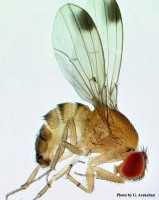
Spotted Wing Drosophila (SWD)
The Damage: SWD gained notoriety in 2009 when it started hitting berries and then cherries in California. It then moved up the coast, and by late summer it was attacking blueberries and other berry crops in Oregon and Washington. Females lay up to 400 eggs at a time, and the SWD can go from egg to maturity in just 10 to 12 days.
Crops Affected: Cherry, raspberry, blackberry, blueberry, and strawberry crops. It has also been known to attack other soft-flesh fruit such as boysenberry, some Japanese plums, plumcots, and nectarines.
Ask The Expert: Mark Bolda ([email protected]), Farm Advisor, Strawberries and Caneberries Santa Cruz, Monterey and San Benito Counties, University of California Cooperative Extension
Q: Do you think SWD will be more prevalent in 2011 than it was in 2010? What are you anticipating?
A: Probably anticipating about the same, but I would expect we have fewer problems because many growers are aware of this pest and know what to do.
Q: What can growers do to minimize the risk of being affected by SWD?
A: First, detecting SWD when it enters the field; second, taking steps to control it when it arrives; and third, practicing rigourous sanitation, (ie: removing old fruit from the field).
Q: What are some of the earliest symptoms that may indicate a plant is being affected by SWD?
A: There is really no scale of symptoms; either it happens or it doesn’t. Once the skin of the fruit has been penetrated and the eggs laid, a big part of the damage has been done.
Q: If a grower discovers he does have an SWD infestation, what should he do?
A: Spray insecticides and continue good field sanitation. There is no other option to address an infestation. We have a list of materials available on my blog (ucanr.org/blogs/strawberries_caneberries) and the University of California IPM website (www.ipm.ucdavis.edu). There are decent organic options also.
Q: What’s the most important thing growers need to know about this pest?
A: That it is present and to know what it looks like so they can take steps to address it.
Video:.
European Grapevine Moth (EGVM)
The Damage: European grapevine moth larvae will appear in flower clusters. The second generation will enter berries, causing them to wrinkle. Females will lay a single egg on a berry, meaning there can potentially be as many larvae as berries. They caused significant concern throughout prominent grape growing regions in California in 2010, with quarantines issued in some areas.
Crops Affected: Grape and spurge laurel are preferred hosts, but it has also been reported on blackberry, currant, olive, cherry, prune, and more.
Ask The Expert: Lucia Varela ([email protected]), California statewide IPM advisor
Q: Do you think EGVM will be more prevalent in 2011 than it was in 2010? What are you anticipating?
A: EGVM populations have decreased substantially through the 2010 season. I expect lower populations in 2011.
Q: What can growers do to minimize the risk of being affected by EGVM?
A: If in traps deployed next spring moths are detected in their vineyards, growers will need to spray for the first and second generation. They also need to follow all the requisites of the compliance agreements.
Q: What are some of the earliest symptoms that may indicate a plant is being affected by EGVM?
A: Detection of moths in pheromone traps. Also, in early spring, flower clusters that appear to be clumped together can be a sign that larvae are inside laying silk.
Q: If a grower discovers he does have an infestation, what should he do?
A: Contact the Agriculture Commissioner’s Office in their county.
Q: What’s the most important thing growers need to know about this pest?
A: Growers need to be aware that if they have an infestation they need to contact the Agriculture Commissioner’s Office.
Video:.
Brown Marmorated Stink Bug (BMSB)
The Damage: Both adults and nymphs have been found to feed on fruit. BMSB wreaks havoc not only on fresh apples; it burrows so deeply into the flesh that in many cases, processors will also reject the fruit. BMSB can and will feed anywhere. It enters orchards from the outside, but if populations are left unchecked, reproduction can occur within the orchard, which leads to rapid population build-up.
Crops Affected: Apples and peaches were the most affected in 2010, but it also targets grapes, pears, berries, and several vegetables.
Ask The Expert: Tom Kuhar ([email protected]), Associate Professor,Department of Entomology,Eastern Shore AREC, Virginia Tech
Q: Do you think brown marmorated stink bug will be more prevalent in 2011 than it was in 2010? What are you anticipating?
A: It is extremely difficult to forecast insect outbreaks. In Virginia and Maryland in 2010 we had the highest infestations of the bug in the fall months that we’ve ever experienced. This followed an extremely cold winter (2009-2010) and a summer (2010) that had a drought. We don’t know if these weather events contributed to the high densities or not. I would say that we should be prepared for heavy infestations in the Mid-Atlantic in 2011 based on the high numbers that have gone into overwintering locations.
Q: What can growers do to minimize the risk of being affected by the pest?
A: We do not have a lot of information on this topic. One thing we did learn was that tree fruit needed to be sprayed much earlier than they had suspected.
Q: What are some of the earliest symptoms that may indicate a plant is being affected by brown marmorated stink bug?
A: This bug is pretty conspicuous and the sheer presence of the bug and its nymphs on plants will be the best evidence.
Q: If a grower discovers he does have a stink bug infestation, what should he do?
A: Right now pyrethroid insecticides such as Baythroid, Hero, Brigade, Warrior II, Asana XL, permethrin (and all of the generic counterparts of these chemicals), as well as neonicotinoids such as Venom, Provado, Actara, and Belay are labeled on most vegetables and provide control of stink bugs. Organophosphates such as Orthene along with the carbamate Lannate are also very effective, but not labeled on all crops. Thionex (endosulfan) has lost registration on a number of crops, but if growers still have this product available, it is highly efficacious against stink bugs.
Q: What’s the most important thing growers need to know about this pest?
A: Based on experience in tree fruit, if high densities of this bug occur on a grower’s farm, it will be almost impossible to control effectively. Bugs keep re-infesting plants after the spray residual disappears, and can injure fruiting vegetables very quickly. The brown marmorated stink bug will be a devastating pest. Almost all vegetables appear to be attacked, although the bug appears to prefer fruit, fruiting vegetables, beans, and sweet corn.
Video:.
Subscribe Today For
