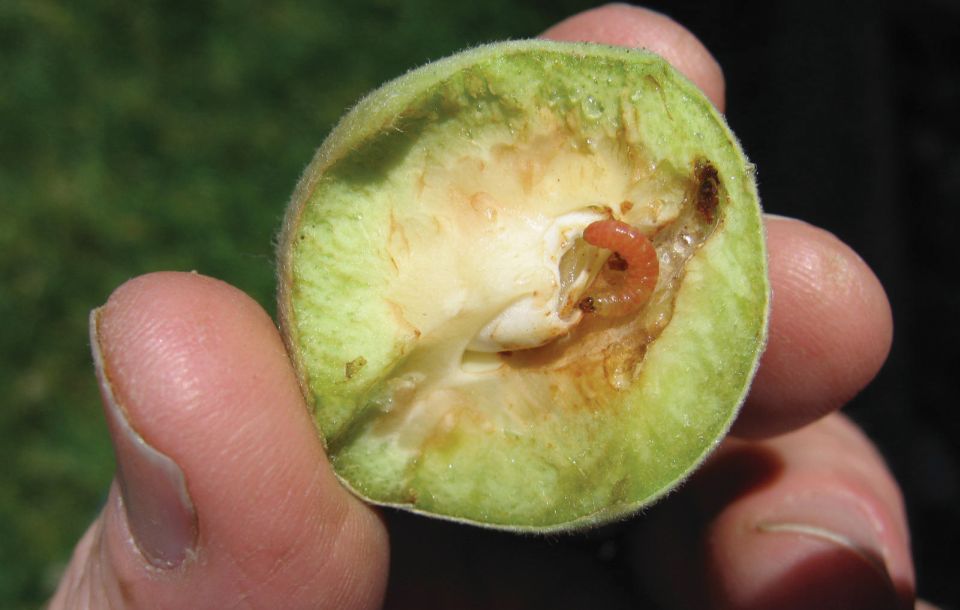
Oriental Fruit Moth One Shifty Pest By Bill Shane|July 6, 2017 This moth has many characteristics that have allowed it to adapt and thrive in many peach and nectarine growing regions.Read More
The Hidden Margin Leak Between Projected and Actual Harvest Dates By Muhammad Abdullah, Folio3 Agtech|June 2, 2026
New Round of USDA Aid for Specialty Crops Good News for California Walnuts By California Walnut Commission|June 1, 2026
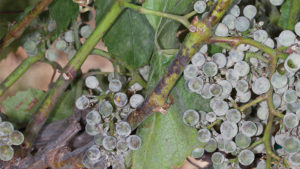
Getting to the Bottom of Berry Scarring By Matthew Fidelibus|June 5, 2017 It’s a costly defect, but learning what causes berry scarring can help you prevent it.
Ease Bitter Pit by Boosting Calcium By Christina Herrick|June 5, 2017 Promising research shows the link between transpiration and calcium uptake and how abscisic acid may help reduce calcium disorders in ‘Honeycrisp.’
Multiple Leader Training Optimizes Sweet Cherry Labor Efficiency By Gregory Lang|June 4, 2017 The final intensive training system to be examined in the North American NC-140 Sweet Cherry Canopy Architecture and […]
Powdery Mildew Management Tips for Vineyards By George Zhuang | Allison Ferry-Abee|June 3, 2017 Follow these suggestions to help reduce disease pressure in your vineyard.
Have Flooded Orchards? Keep an Eye out for Damage By Janine Hasey | Greg Browne|June 3, 2017 While the damage from waterlogging or Phytophthora may not be immediately known, there are some warning signs to be on the lookout for.
Cutting Down on Biggest Grape Growing Expense By Christina Herrick|June 2, 2017 An automated grapevine pruner hopes may help slash labor costs.
Pruning Goes High-Tech By Christina Herrick|June 2, 2017 Researchers moving toward robotics that shift dormant pruning from an art to a science.
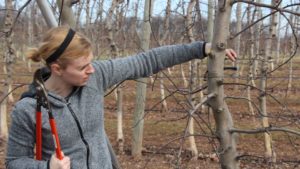
Learning Pruning, by Doing By Christina Herrick|June 2, 2017 A firsthand account of using four pruning rules.
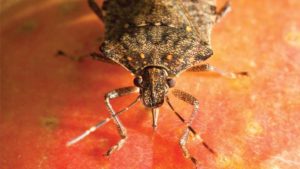
Can Attract-and-Kill Technology Protect Fruit Against Brown Marmorated Stink Bug? By Karli Petrovic|June 1, 2017 Since devastating many Mid-Atlantic farms in 2010, this Asian-borne pest continues to cause growers significant headaches. New research, however, may offer insights into treatment options that minimize the use of harsh chemicals.
Organization Now Washington Winegrowers Posted by Christina Herrick|June 1, 2017 New name and logo better reflects the evolution of the state’s industry, as more growers have wineries.
It’s Time to Embrace Technology on Your Farm Operation By David Eddy|May 31, 2017 Find opportunities to adopt new innovations critical to the success of your operation — and maybe a lot more.
Is CRISPR/Cas9 a Viable Solution for the Control of Crop Insect Pests? By Kenong Xu|May 31, 2017 Gene editing has the potential to aid growers in control of invasive pests.
Exploring Biodegradable Plastic Mulches in Red Raspberry By Lisa DeVetter | Chris Benedict|May 30, 2017 As tissue culture plugs increase in popularity, growers are seeking ways to get these planting off to a good start.
How to Make Dollars and Sense of Today’s Produce Marketplace Mayhem By Paul Rusnak|May 22, 2017 Despite current challenges impacting the future of the North American fruit and vegetable industry, there are opportunities to be had.
Researchers Still Have a Lot to Learn about Spotted Lanternfly By Christina Herrick|May 19, 2017 While some feeding habits have been recognized, there’s still a learning curve with this enigmatic invasive pest.