



The Most Valuable Pollinators to Boost Your Melon Yields
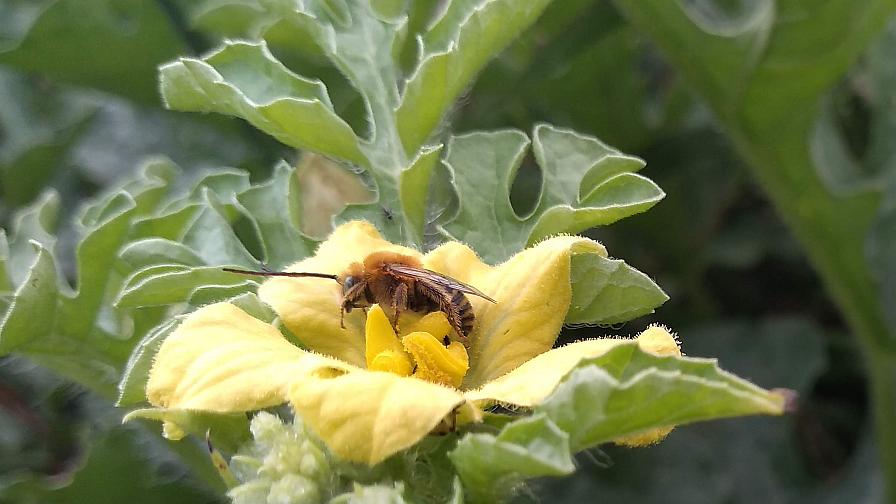
A squash bee does its job to pollinate this watermelon bloom.
Photo: Maddalena Vierbuchen
Melon production relies on effective pollination, with honeybees and native bees playing a critical role in moving the heavy pollen needed for fruit set. Supporting these pollinators through thoughtful management can improve yields and strengthen long-term crop success.
The MVPs (Most Valuable Pollinators)
Although a variety of insects visit melon blossoms, bees are the most effective pollinators because they can efficiently transfer the heavy, sticky pollen required for proper fruit set. Both managed honeybees and native wild bees contribute to successful melon pollination. The extent of wild bee involvement often depends on the surrounding landscape.
“Pollinators are essential for melon production, and fields are routinely stocked with managed honey,” Ian Kaplan, Professor at Purdue University says.
Watermelon growers benefit from using multiple pollination strategies. Research shows that both managed honeybees and wild bees are important, with honeybees contributing through their abundance and bumble bees delivering more pollen per visit despite being less common.
Honeybees are abundant but less efficient, and bumble bees can supplement pollination despite not preferring melon flowers. Wild bees are the most effective cucurbit pollinators, but because they can’t be mass-reared and are sensitive to management practices, their numbers may not always maximize yields.
“A particular farm will generally determine how much the wild bees are contributing to crop pollination with landscapes containing more semi-natural open or forested landcover having more wild bees,” Hannah R. Gaines Day, PhD, Research Scientist at University of Wisconsin-Madison.
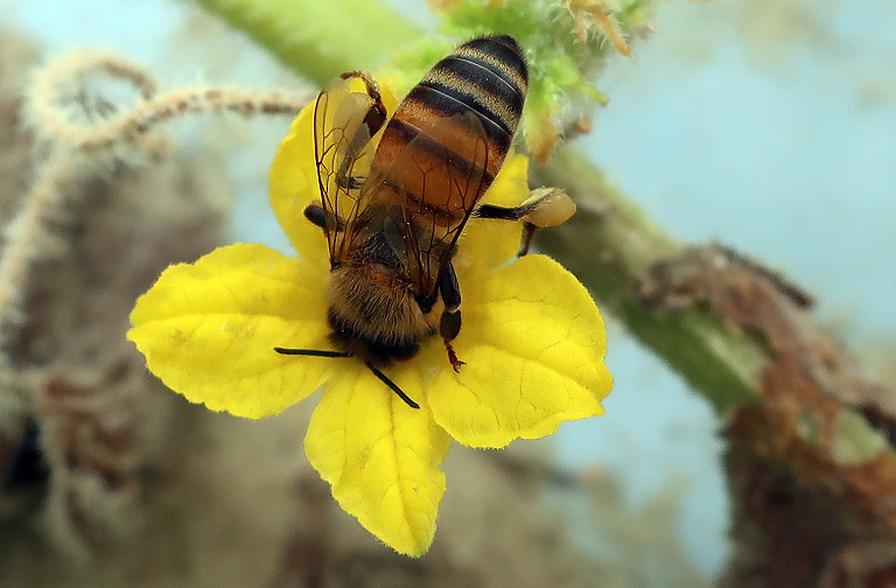
Honeybees are essential pollinators in large-scale melon production, efficiently transferring pollen to ensure a strong fruit set.
Photo: David Riley
Blooms that Boost Pollination
“The best plants to support pollinators will depend on where you are located,” Day says.
Native plant species generally provide the best support for wild bees, offering the nectar and pollen resources they are adapted to use. When establishing pollinator habitat, it aims to include at least three different plant species in bloom at any given time to ensure continuous forage throughout the growing season.
“Most melon pollinators have generalized diets and therefore can be supported by many different types of flowering plants. Maintaining a diversity of flowers that bloom at different times of the season is usually the best option,” Kaplan says.
Maintaining a range of flowers that bloom throughout the season is ideal, but integrating them into commercial systems takes planning. Growers can position fields near undisturbed habitat, leave flowering weeds along edges, or adjust management practices to intentionally add flowering resources.
“The Xerces Society has plant lists by region for providing forage for bees on the Pollinator Conservation Resources website,” Day says.
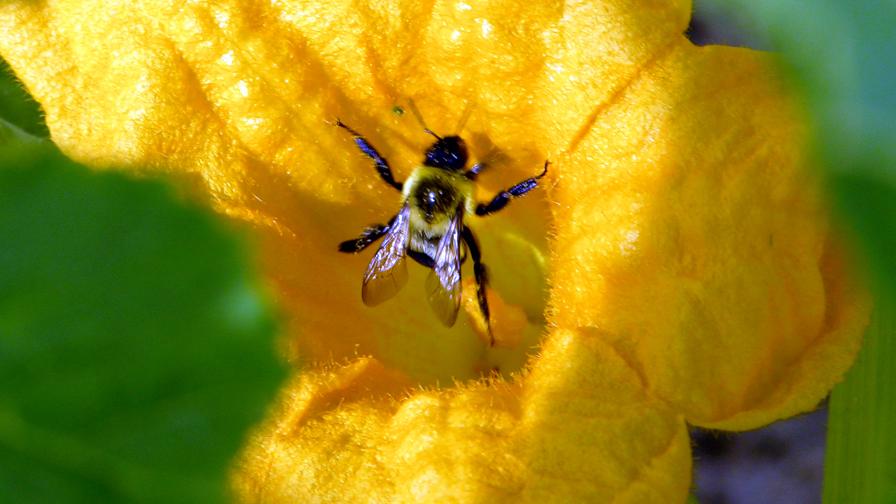
Commercial growers often rely on managed bumble bees for consistent pollination, particularly in intensive production systems.
Photo: David Riley
Setting the Stage for Better Pollination
On farms surrounded by limited natural habitat, managed honeybee hives may be necessary to ensure adequate pollination. Melons are also pollinated by specialist native squash bees, which are ground-nesting and often establish their nests directly within the field itself.
Best management practices for pollinator-dependent crops, including melons, include avoiding pesticide applications — even fungicides — during times when bees are actively foraging. “Timing spray applications for nighttime and avoiding chemicals that are toxic to bees are two possible approaches,” Day says.
Support melon pollination by limiting insecticides, using selective products, and timing sprays to avoid blooming and peak bee activity. Distribute managed hives for even coverage and protect them from pesticide exposure and reduce tillage to safeguard soil-nesting wild bees.
“Our research has shown that using integrated pest management (IPM) practices based on field scouting and adopting pest thresholds improves pollination success,” Kaplan says.
Subscribe Today For
