



How To Help Your Potato Crops Recover After Hail Injury
 May 8, 2026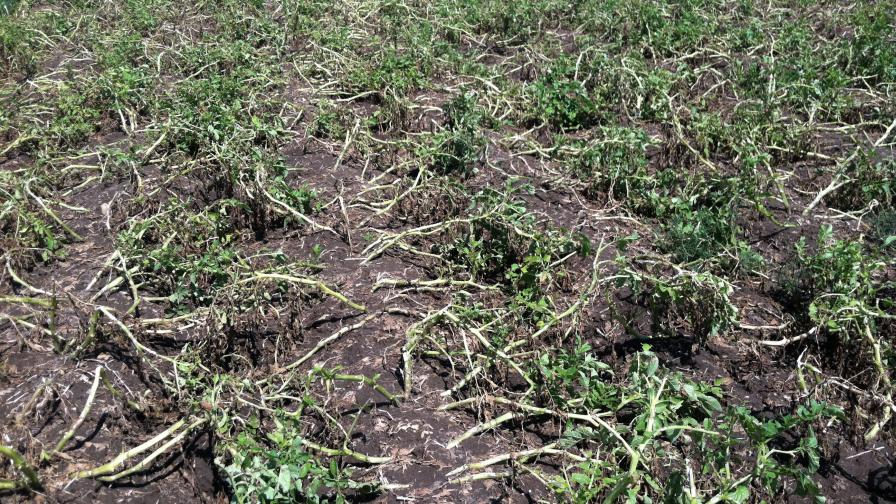
This planting of potatoes is showing signs of distress from hail injury.
Photo: Carrie Huffman Wohleb
Hail is one of the more unpredictable risks in potato production. There are no preventive options once a storm develops, and the damage can range from minor leaf injury to severe canopy loss and yield reduction. In the aftermath of a hail event, growers are often faced with decisions about whether to intervene — and if so, how.
Four Factors that Determine Outcome
Amount of Defoliation: The extent of canopy loss is one of the strongest predictors of yield impact. Light defoliation (less than about 30%) typically results in minimal yield loss because enough leaf area remains to sustain photosynthesis. As defoliation increases into the 30% to 70% range, yield reductions become more likely due to limited carbohydrate production. Severe defoliation (>70%) can significantly reduce yield, particularly if stems are also damaged.
Timing of Injury: When the hail occurs is almost as important as how much damage it causes. Early-season injury (vegetative growth) is often the least damaging because plants have time to regrow. The crop is most vulnerable during tuber initiation and early bulking. Defoliation at this stage reduces the plant’s ability to set and size tubers, often resulting in fewer and smaller potatoes. Later in the season, once most tuber bulking has occurred, hail typically has less impact on yield but may still affect quality (e.g., greening of exposed tubers) and increase disease risk.
Across multiple studies, damage during early bulking consistently results in the greatest yield loss. Moderate defoliation at this stage typically reduces yield by 10-20%, depending on the cultivar and growing conditions.
Cultivar: Later-maturing cultivars have a greater capacity to recover from hail damage because they have more time left in the season to rebuild the canopy and continue tuber bulking. For example, a full-season cultivar like ‘Russet Burbank‘ may partially compensate for mid-season defoliation if favorable conditions persist. In contrast, an earlier-maturing cultivar like ‘Russet Norkotah‘ has a shorter recovery window, so similar damage at the same growth stage results in a greater proportional yield loss.
Weather Following the Event: Conditions after hail can impact how well the crop recovers. Warm temperatures, adequate soil moisture, and minimal stress favor regrowth. Under these conditions, potatoes can produce new leaves from remaining nodes to rebuild the canopy. In contrast, hot, dry conditions can compound stress and slow recovery.
Prolonged wet weather following hail increases the risk of disease development in damaged tissue. Hail wounds provide entry points for pathogens, particularly bacteria such as Pectobacterium spp., which thrive under wet conditions.
Do Inputs Help Crops Recover?
A common question after hail is whether applying fungicides, bactericides, or nutrients will improve recovery. Many growers apply these products with the goal of protecting wounded tissue or stimulating regrowth. However, research across crops — including a few studies in potatoes — suggests that these inputs often provide little measurable benefits for yield recovery.
Fungicides and bactericides do not restore lost yield, but they may help prevent additional losses when disease pressure is high after the hailstorm. Their effectiveness may be limited by how quickly infection occurs through fresh wounds, since most products work best when applied preventively. They have no benefit in the absence of pathogens, which likely explains the inconsistent trial results.
Foliar nutrient applications are sometimes used to “jump-start” regrowth. While nutrients can improve plant color and short-term vigor in some cases, there is little evidence that they translate into higher yields following hail.
For potatoes, heavy nitrogen applications after hail can shift growth towards vines and away from tubers, leading to stop-start tuber growth and misshapen potatoes.
Practical Takeaways
- In many cases, the crop’s natural ability to recover — combined with favorable weather — will have a greater impact on yield than any input applied after the storm.
- Timely applications of fungicides and bactericides may help to prevent further losses, but only if disease pressure is high.
- Ultimately, the best strategy is to optimize recovery conditions — maintain proper irrigation, provide adequate (but not excessive) fertility, minimize additional stress, and allow time for regrowth.
- Where possible, extending the growing season slightly may help offset canopy loss by giving tubers more time to bulk.
Subscribe Today For
