



Rethinking Calcium, Potassium, and Timing in Growing Tomatoes
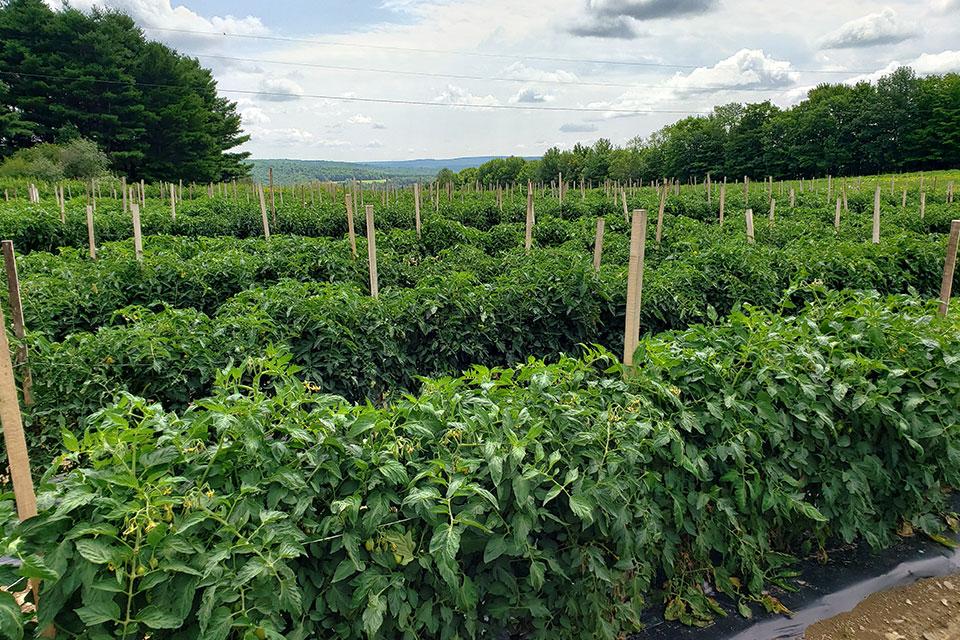
Modern determinate tomato varieties have concentrated, early and heavy yields of large fruits. This creates an acute demand for calcium and potassium.
Photo: Judson Reid, Cornell Cooperative Extension
Many tomato fertility programs deliver plenty of nutrients, yet deficiencies still show up in the field. Understanding how water, growth stage, and environmental stress influence nutrient uptake is key to correcting the problem.
Why Calcium Uptake Breaks Down in Tomatoes
“Water availability appears to be the most influential factor in calcium uptake,” says Judson Reid, Vegetable Specialist with Cornell Cooperative Extension.
However, adequate soil moisture does not always ensure sufficient delivery to developing tissue. Heat, wind, heavy fruit load, and rapid shoot growth can all restrict calcium movement within the plant, even when soil calcium levels are sufficient.
Early planting into cold soils can limit root development and reduce calcium uptake. Excessive nitrogen, meanwhile, can push vegetative growth beyond the plant’s transport capacity.
Calcium limitations are also common when high-yielding varieties set fruit during peak evapotranspiration, particularly in well-drained soils where maintaining consistent moisture is difficult.
Growth Stages Most Sensitive to Nutrient Timing
Fruit sets and early sizing are among the most nutrient-sensitive growth stages in tomatoes. Particularly in modern high-yielding hybrids with concentrated fruit sets and large fruit size.
As fruit develops, mobile nutrients such as potassium and magnesium are remobilized from older foliage to support fruit growth, often leading to foliar deficiency symptoms. Reduced nutrient levels in leaves can limit photosynthetic capacity, resulting in fewer and smaller flowers in subsequent clusters.
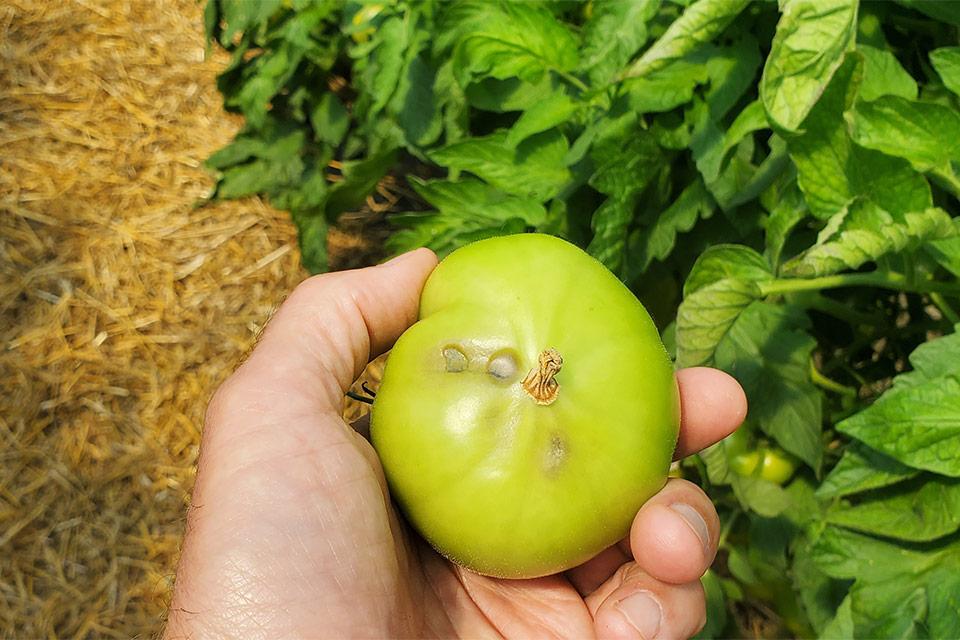
Early stages of Blossom End Rot caused by a lack of calcium. Excess nitrogen can create a competition between shoot tissue and fruit for calcium, leading to Blossom End Rot.
Photo: Judson Reid, Cornell Cooperative Extension
In-Season Testing Guides Smarter Nutrient Decisions
Tissue testing is a valuable tool for monitoring foliar nutrient status throughout the growing season and is most effective when interpreted alongside soil and irrigation water test results.
“This should be combined with results of both soil and water tests to make informed decisions around additional nutrient applications,” Reid says.
When tissue tests indicate low calcium levels, but soil and water tests show abundant calcium, the issue is likely related to factors such as soil pH, root health, or water movement rather than a true nutrient deficiency.
In these situations, addressing uptake limitations is often more effective than additional fertilizer applications.
Focusing on Uptake, Not Just Inputs
Effective tomato nutrition depends less on how much fertilizer is applied and more on when and how nutrients are taken up by the plant. Aligning fertility programs with growth stage, water management, and in-season diagnostics can help growers correct nutrient limitations while avoiding unnecessary applications.
Subscribe Today For
