



Pepper Anthracnose Is on the Move – What Growers Should Know
 April 4, 2025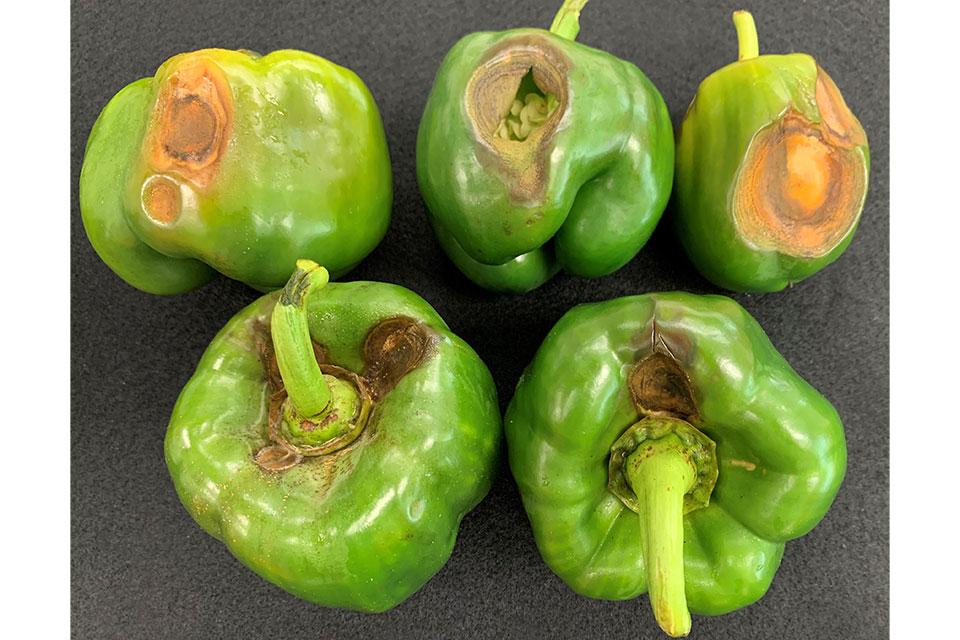
Bell peppers are very susceptible to green fruit anthracnose.
Photo by Anthony P. Keinath
As the state vegetable pathologist, I’m responsible for 44 vegetable crops grown in South Carolina. Recently I realized it’s time to branch out from cucurbits and pay more attention to other vegetables, like peppers. Starting in 2019, conventional and organic pepper growers throughout South Carolina reported a serious rot in the green fruit of bell and other peppers. Diagnosing the problem was easy, as the salmon-orange spores of the fungus were everywhere — green fruit anthracnose.
It was widespread in the eastern U.S. in the early 2000s, but then “disappeared.” Why did it show up again?
This reappearance of a disease after a period with few reports or outbreaks is officially called a resurgence. It may be due to changes in one or more parts of the disease triangle: the host crop, the pathogen causing the disease, or the weather. In this case, the most likely explanation is a new species of pathogen appeared.
What’s in a Name
Using DNA fingerprinting, my former graduate student determined that the diseased peppers harbored a new species of the causal fungus Colletotrichum, the fungus associated with outbreaks of anthracnose on many crops.
Not surprisingly, the new species was Colletotrichum scovillei. The name, published in 2012, is a tribute to Wilbur Scoville, the hero of all hot pepper enthusiasts.
Among my collection of preserved fungi, a sample from a jalapeño in 1997 also turned out to be C. scovillei. Prior to 2012, C. scovillei was part of a very large species named C. acutatum, the name used for the pathogen on green pepper fruit in the 2000s.
It’s possible, but unproven, that C. scovillei was responsible for those outbreaks, too. This species was documented in Ohio in 2019, Ontario in 2021, and New York in 2023 on banana and bell peppers.
While we’re talking about names, the name of the Colletotrichum that causes anthracnose on ripe fruit, that is, red or other colored fruit, is C. gloeosporioides. This species typically can’t attack immature fruit like C. scovillei can.
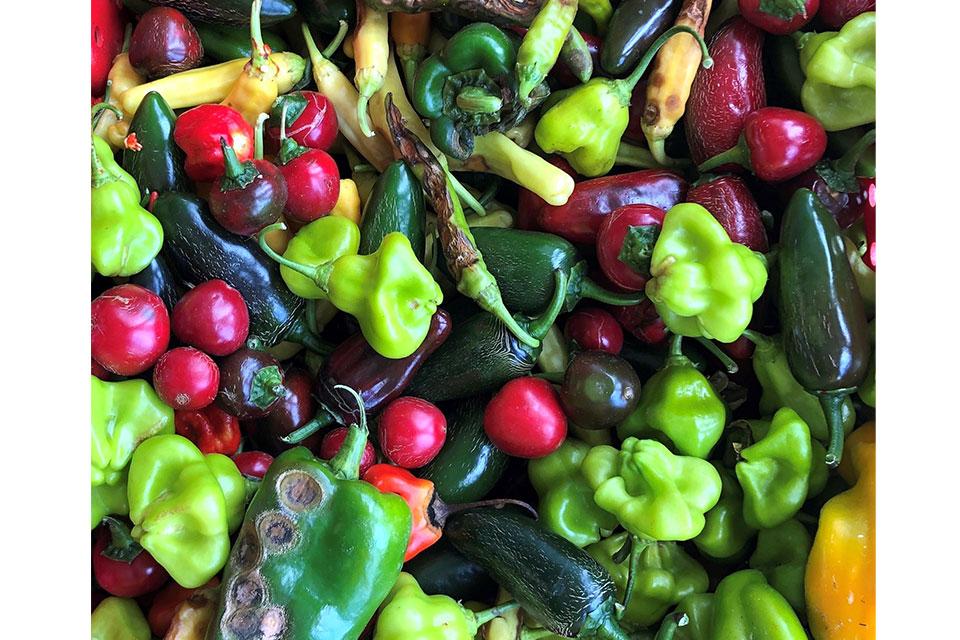
Many peppers are susceptible to green fruit anthracnose.
Photo by Anthony P. Keinath
Fungicides Work, Weather Helps
After diagnosis comes management, and this problem is more difficult to solve.
I tried two tactics, testing fungicides that a colleague in New Jersey had found to be effective and looking for host resistance. Both techniques were only partially successful, so more work is planned.
Azoxystrobin (Syngenta’s Quadris and generics) is one of the most effective fungicides against green fruit anthracnose. I sprayed mancozeb in rotation with Quadris in fall 2022 and 2023 on four types of peppers: a bell, a bull’s horn (or Italian frying pepper), a jalapeño, and a New Mexico-type chili.
Bell pepper was the most susceptible. This difference among pepper types was particularly noticeable in 2023, the drier of the two years. Even using a traveling gun to spread Colletotrichum spores from diseased to healthy fruit didn’t do much to cause disease on the other three pepper types.
The fungicide program reduced fruit rot in both years, providing 81% control in 2022 and 90% control in 2023. The yield of healthy fruit was six times greater with fungicides than without spraying in 2022, but there wasn’t enough disease to affect overall yield in 2023.
A Few Peppers Show Promise
Most edible peppers belong to one of four species of Capsicum. In spring 2022 and 2023, we tested 16 cultivars, representing the four species and 11 fruit types. All peppers in C. annuum are susceptible: bell, banana, bull’s horn, cayenne, chili, jalapeno, and sweet cherry.
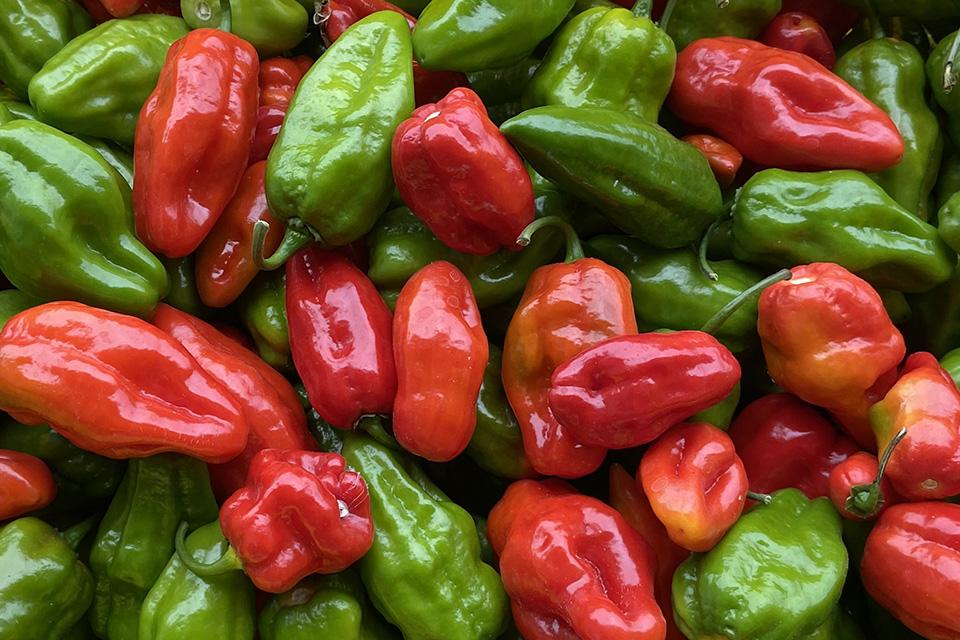
‘Roulette,’ a sweet, red habanero, is resistant to pepper anthracnose.
Photo by Anthony P. Keinath
Many hot peppers in C. chinense and C. baccatum are susceptible too, like Scotch bonnet, bishop crown, and Ají amarillo chili.
RELATED CONTENT: Sweet Pepper Varieties To Know and Grow
Hot C. frutescens peppers, like tabasco, however, are highly resistant. We checked, but there is no direct relationship between Scoville heat units and resistance. Some other characteristics of tabasco peppers makes them resistant.
The next step is to try to cross a susceptible pepper with a resistant pepper. This breeding approach involves crossing two species, so it could be tricky. Without a resistant C. annuum pepper, though, there isn’t a simpler way to breed a resistant pepper.
Subscribe Today For
