




Don’t Wait for Nematode Damage to Show Up. Prep Belowground for Peace of Mind.
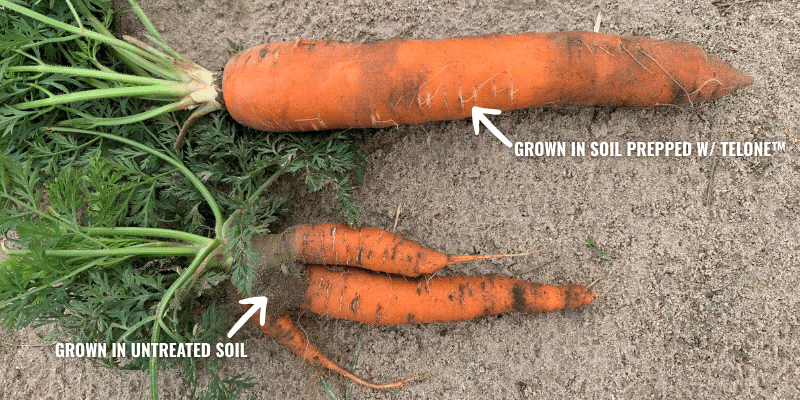
When specialty crop growers see stunting, yellowing, wilting, or uneven growth aboveground, the real problem may have started weeks earlier and several inches below the soil surface.
Plant parasitic nematodes are microscopic pests that feed on plant roots, compromising the very system crops rely on to access water and nutrients. Because the damage happens belowground, growers may not recognize a nematode problem until it’s too late and crop performance is already affected.
For high-value specialty crops, that can be a costly discovery. In fact, nematodes cause an estimated $10 billion in U.S. crop losses each year.
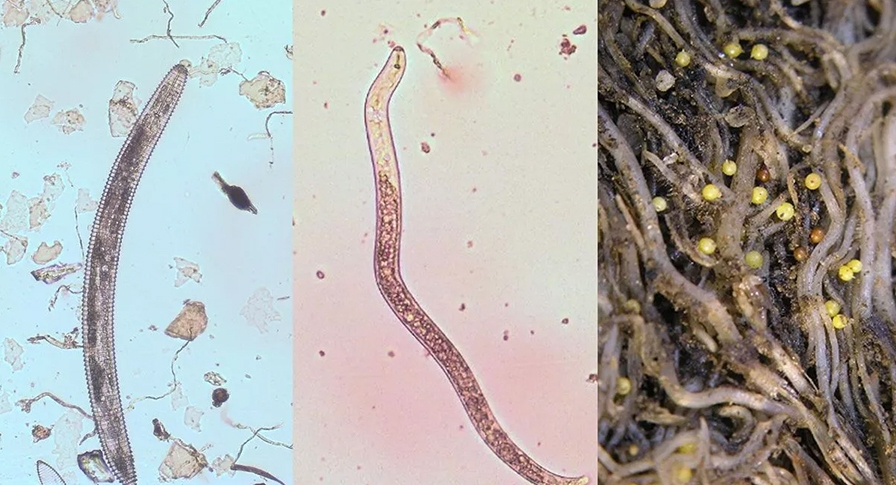
Plant-parasitic nematodes under microscope
HEALTHY PLANTS START WITH HEALTHY ROOTS
Roots do so much more than anchor a plant. A healthy, extensive root system helps plants efficiently access available water and nutrients, supports plant establishment, and provides the foundation for season-long performance.
Nematodes interfere with this process by feeding on the root system, ultimately disrupting plant growth and affecting crop quality and yields. Depending on the nematode species and crop, damage can reduce overall root mass and efficiency, as well as increase a plant’s susceptibility to environmental stress.
The biggest challenge is that once the damage happens, there is no reversing it. That’s why an effective nematode management program starts before planting.
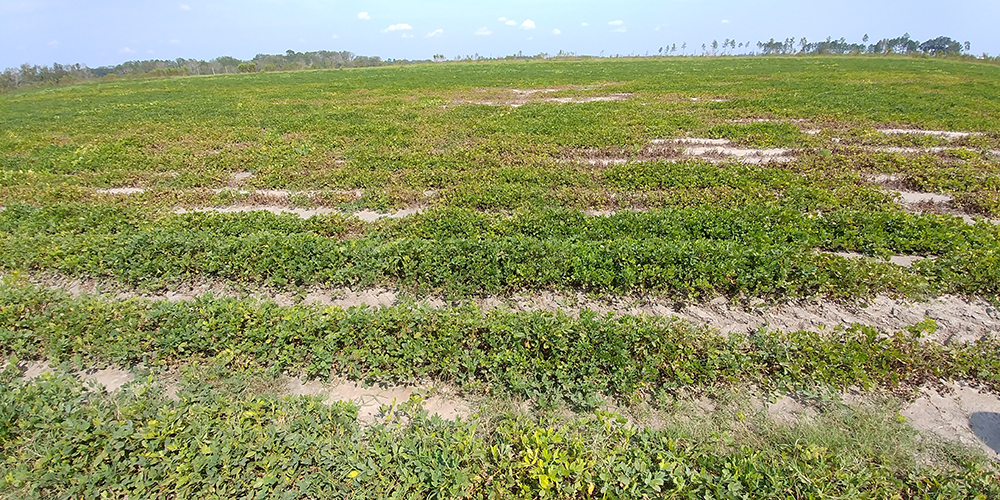
Yellowing and patchy field from nematode damage
KNOW WHAT’S BELOW BEFORE YOU PLANT
The first step to managing nematodes is to sample the soil.
Nematode pressure can vary significantly from field to field, and often within the same field. Understanding the species present, population levels, and field history can help growers make informed decisions about whether a treatment is warranted and which pre-plant management strategy makes the most sense.
Application conditions matter, too. Soil type (ex: clay, sandy, loam), moisture, and temperature can all influence the performance of a pre-plant fumigation program.
Untreated soil (left) and soil prepped with TELONE™ before planting (right)
MANAGE NEMATODES BEFORE CROPS GO IN
TELONE™ by Teleos soil fumigant is the industry standard pre-plant solution trusted by specialty crop growers for seventy years. TELONE™ manages the major species of plant-parasitic nematodes, including root-knot, lesion, dagger, stubby-root, ring, and cyst nematodes.
TELONE™ is injected into the soil as a liquid and converts to a gas, allowing it to move through the soil profile and reach nematodes where they live. TELONE™ reaches where others can’t. Application flexibility allows TELONE™ to be used in-row or broadcast, depending on the crop, field conditions, and production system.
By reducing nematode pressure before planting, TELONE™ creates a zone of protection where developing roots can establish with less interference from destructive nematodes during the critical early stages of crop growth.
MAKE EVERY INPUT WORK HARDER
The value of healthy roots extends beyond nematode management. A strong root system helps plants more efficiently access available water and nutrients. That foundation of healthy roots supports improved crop uniformity, quality, and marketable yield potential—important considerations at a time when growers are managing rising costs and looking closely at the return generated on every acre.
Pre-plant soil preparation with TELONE™ is an investment made before many of the season’s other inputs go into the field. Protecting root development from nematode damage from the beginning helps give those later investments the best opportunity to deliver value.
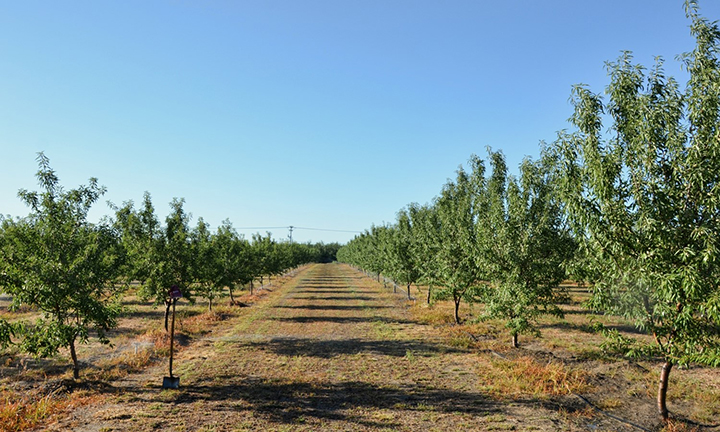
For perennial crops, the decision can be even more consequential. An orchard or vineyard may remain in production for decades—making pre-plant soil preparation one of the few chances a grower has to address nematode pressure throughout the future root zone before permanent plants are established.
WHAT HAPPENS BEFORE PLANTING MATTERS
Growers only get one chance to prepare the soil before planting.
Testing the soil, understanding the nematode pressure, and selecting an appropriate pre-plant management strategy can help establish strong root systems that ultimately support healthier plants, improved crop quality, and increased marketable yields that growers depend on.
TELONE™ gives growers peace of mind knowing that they’re starting with a strong foundation belowground—because there’s no coming back from a poor start.
Learn more about TELONE™ by Teleos soil fumigant and nematode management for your specialty crops at www.teleosag.com.
TELONE™ and Teleos Ag Solutions™ are registered trademarks of Teleos Ag Solutions, Inc. TELONE™ by Teleos is a federally Restricted Use Pesticide. Always read and follow label directions.