



Farmers Still Assessing Damages in Wake of Hurricane Isaias
 October 20, 2026
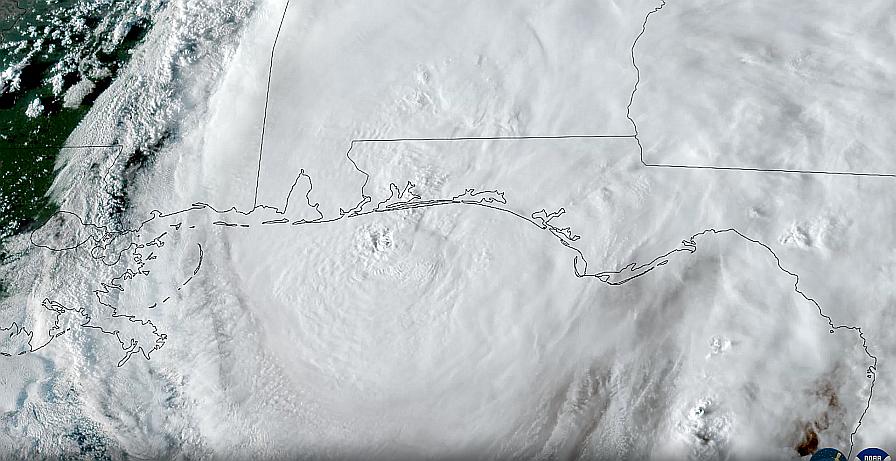
Imagery of Hurricane Isaias close to landfall on the Gulf Coast of Florida, via NOAA’s GOES East (GOES-19) satellite.
Photo: NOAA, CSU/CIRA
Up until this month, the 2026 Atlantic hurricane season was setting records for inactivity. The influence of a strong, developing El Niño climate phase had been putting the clamps on any significant tropical development in the Atlantic basin. Through early October, only a handful of named storms were ticked off the list. All with no real serious impact to life and property. Then along came Hurricane Isaias.
Hurricane Isaias officially made landfall in the Florida Panhandle near Destin during the early evening of Oct. 9. The system was recorded as a Category 2 at landfall, but had intensified into a major Category 3 less than a day before. Isaias dissipated rapidly upon landfall as it interacted with a powerful jet stream that ultimately sheared it apart. Given the quick-moving nature of the storm, impacts from flooding rain was limited. Pockets closer to the coastline were more affected by wind and surge damage. The cleanup process is well underway for folks who were in the direct path of Isaias as well as the farm operations in the area.
I reached out to the Florida Fruit & Vegetable Association to see what kind of feedback they were receiving from growers in the field after the storm. “Fortunately, there is not much at all to report,” says Christina Morton, FFVA’s Director of Communications. “While it certainly impacted other areas of agriculture, we are grateful our fruit and vegetable grower members were largely spared from Hurricane Isaias impacts.”
The storm’s path steered it away from the Sunshine State’s main citrus belt. This comes as a relief to growers and stakeholders as the season’s first crop estimate was recently released by USDA.
Though it appears most specialty crops in the area escaped major damage from Isaias, row crops are another story. Cotton growers in the western Panhandle were hit particularly hard as harvest was just getting underway. Some growers are reporting significant losses. Official damage estimates are still being compiled.
Where Growers Can Find Help
In the meantime, Florida Commissioner of Agriculture Wilton Simpson announced Florida farmers, ranchers, and growers impacted by Hurricane Isaias can apply for interest-free loans through the Agriculture and Aquaculture Producers Natural Disaster Recovery Loan Program. Eligible agriculture and aquaculture producers can apply for loans of up to $500,000 to restore, repair, or replace essential physical property, including fences, equipment, greenhouses, and other buildings, or to remove debris or restock aquaculture.
According to FDACS, in order to qualify, the damaged property must be located in Baker, Bay, Calhoun, Citrus, Columbia, Dixie, Escambia, Franklin, Gadsden, Gilchrist, Gulf, Hamilton, Hillsborough, Holmes, Jackson, Jefferson, Lafayette, Leon, Levy, Liberty, Madison, Okaloosa, Pasco, Pinellas, Santa Rosa, Suwannee, Taylor, Walton, Wakulla, or Washington counties. Impacted producers are encouraged to take photos of any property damage sustained and to save all receipts for recovery efforts and supplies. Specific details on the application process are available HERE.
The Florida Farm Bureau Federation has opened a hurricane relief fund for those affected as well. The organization also is assisting UF/IFAS in gathering information for its disaster assessment survey.
UF/IFAS’ Food and Resource Economics Department has commenced an Assessment Survey of Agricultural Losses resulting from Hurricane Isaias. The department’s Economic Impact Analysis Program (EIAP) will generate a report based on the feedback received. To participate in the EIAP survey, CLICK HERE.
 Loading ...
Subscribe Today For
