


What Makes a Startup Farm Last?
 November 11, 2026
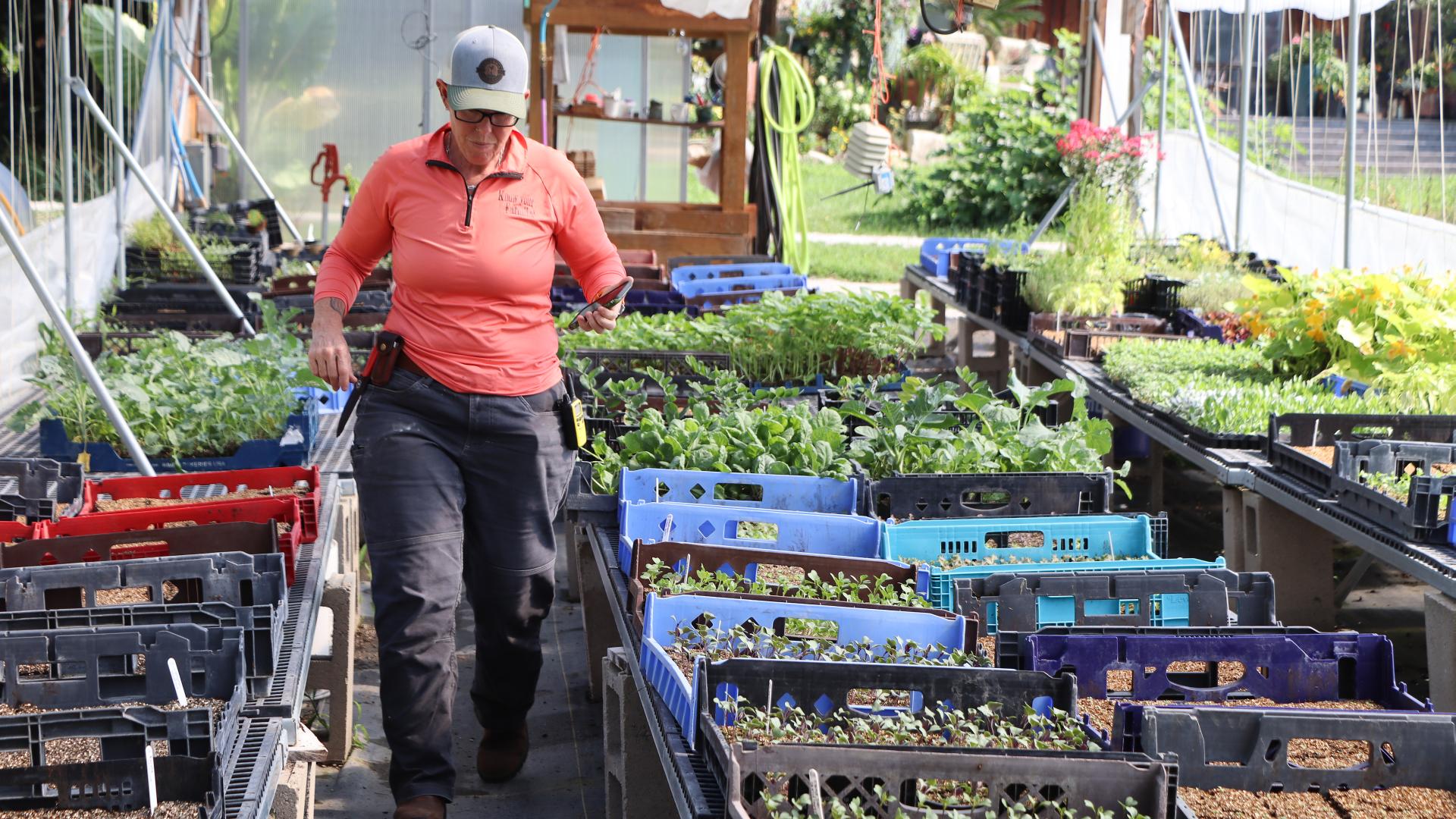
Liz Graznak, owner of Happy Hollow Farm in Missouri, has learned that hard work alone won’t keep a farm in business. Reliable employees, sound decisions, and strong relationships have helped her build staying power. Photo: Happy Hollow Farm
At 4:30 on Saturday mornings, Liz Graznak was accustomed to loading her market truck alone. It was another job on a long list for the Owner of Happy Hollow Farm, an organic vegetable and cut-flower operation near Columbia, MO. Then one afternoon, a few weeks after two H-2A employees arrived, Antonio asked who helped her load the truck on Saturday mornings.
Nobody, she told him. She did it herself.
Antonio wasn’t having it. He and Diego would help. That Saturday, both men were in the packing shed before Graznak arrived. Six years later, she says, they have never once failed to beat her there.
The memory still brings Graznak close to tears. After years of struggling to build a dependable workforce, she could finally imagine a future for her farm.
The Long Road to Staying in Business
Graznak bought the property that became Happy Hollow Farm in 2007 and began farming full time in 2010. Like many beginning organic growers, she was drawn to agriculture by idealism, enthusiasm, and a desire to produce good food.
She knew other young growers with similar ambitions. Sixteen years later, many of them are no longer farming.
“It’s fun, and it is interesting, and it is challenging, but it’s also physically really hard work,” she says.
Graznak had to develop skills far beyond crop production, from maintaining aging equipment to managing employees, marketing produce, and making financial decisions with little room for error.
One of her most important mentors was a neighboring farmer named JT Cassill, whose father once owned her property. He helped her work the ground, troubleshoot old equipment, and helped her find her place in the surrounding agricultural community.
Their backgrounds and political views differ considerably. But farming gave them common ground.
“He saw how hard of a worker I was,” Graznak says. “He saw that I was doing something that he is passionate about and done his whole life.”
Cassill, now in his 80s, still visits regularly. And Graznak has developed relationships with other growers who help her tackle unfamiliar problems.
“I have a number of people on speed dial,” she says. “Because we all have problems.”
The calls go both ways. Over time, she’s become a resource for other growers, too.
Years later, another connection with fellow growers would help Graznak confront a crisis that threatened the farm’s future.
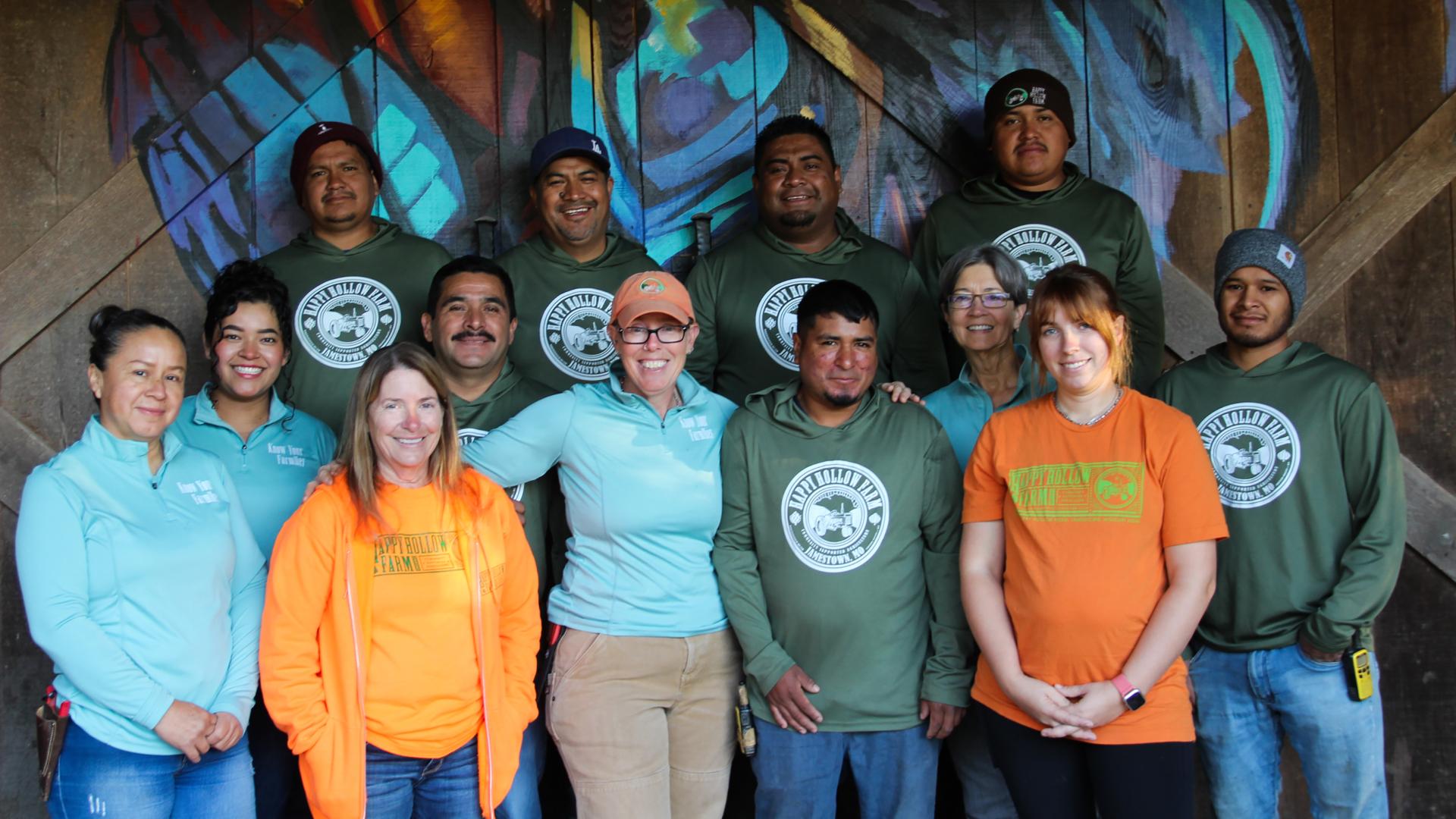
Liz Graznak credits her production team with helping Happy Hollow Farm grow. The farm market team is not pictured. [Left to right] Front row: Rosa, Alleli, Kitts, Heriberto, Liz, Luis, Lisa, Mallory, Miguel. Back row: Abel, Antonio, Fabian, Diego.
Photo: Happy Hollow Farm
When the Labor Model Broke Down
For years, Graznak relied primarily on local employees, many of them young people interested in organic agriculture but unfamiliar with the demands of commercial production.
Some moved on after a year or two, just as they were becoming experienced. Others discovered that the physical demands weren’t something they wanted to sustain. The turnover left Graznak repeatedly recruiting and training replacements rather than building a seasoned crew.
The problem came to a head during the pandemic.
Demand for locally grown produce surged in 2020, and Graznak expanded her full-time workforce from five employees to 11. The following year, seven remained. All had a year’s experience, and she believed they could maintain production without expanding further.
“We’re not going to try and grow more,” she recalls thinking. “We’re just going to try and keep doing what we’ve been doing.”
But the workload proved too much even for an experienced team. By midsummer, employees began leaving, putting more pressure on the remaining crew and Graznak herself.
After years of trying to solve the same labor problems, she was ready to quit farming. Once again, other growers helped her find a way forward.
At Featherstone Farm in Minnesota, retired grower Jack Hedeen and farm manager Abby helped Graznak navigate her first H-2A application and connect with Antonio and Diego.
The two men arrived that fall. Within two weeks, Graznak began reconsidering her decision to leave farming.
“If I have two employees that care this much and are dedicated enough and work this hard, then maybe I don’t want to quit. And maybe I don’t have to quit,” she recalls.
H-2A brought new challenges, including communicating across a language barrier. But Graznak finally had the foundation of a dependable workforce.
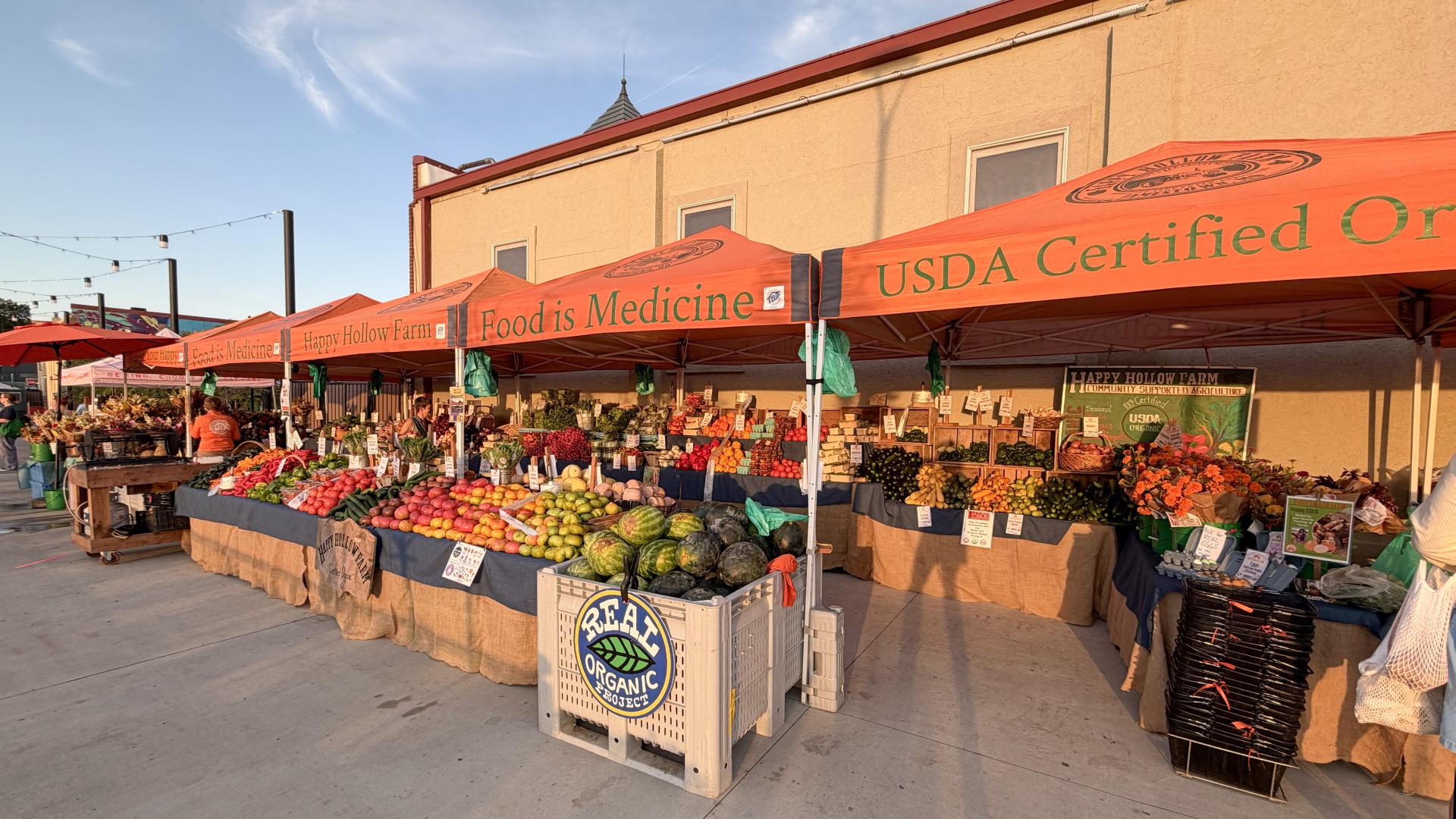
Direct retail sales account for about 65% of the farm’s sales.
Photo: Happy Hollow Farm
Growth Brings New Challenges
Before H-2A, Happy Hollow Farm was almost entirely a high-tunnel operation. With dependable labor, Graznak expanded into outdoor field production, increasing the acreage she managed approximately fourfold over five years.
Today, she oversees about 20 acres of vegetable and cut-flower production, including rented land across the road from her original property. But dependable labor didn’t make expansion simple.
More production required equipment, larger trucks, infrastructure, and financing. It also demanded business skills that couldn’t be learned in the field.
Asked which was harder — growing four times as much produce or building a business capable of handling it — Graznak answered immediately.
“Building a business. The growing part i’s pretty easy,” she explains.
One of her strengths has been direct marketing. She sells at two large Saturday farmers markets, where she emphasizes abundant, colorful displays and a wide variety of crops.
“I want to have, like, a grocery store, pretty much, on my table, because I don’t want my customers to have to go anywhere else,” she says.
Strong market sales have helped offset the loss of some nonprofit and institutional buyers. Does quadrupling production quadruple profits?
Graznak laughs. “That’s hilarious.”
Growth has moved the business toward consistent profitability, but it has also brought substantial debt. Trucks, tractors, and infrastructure investments have required financing, often replacing older loans with larger ones.
Graznak says the farm finished last year out of the red and was on track to do so again when interviewed in October 2026. Even so, a heavy snowstorm that destroys several high tunnels could wipe out much of that progress.
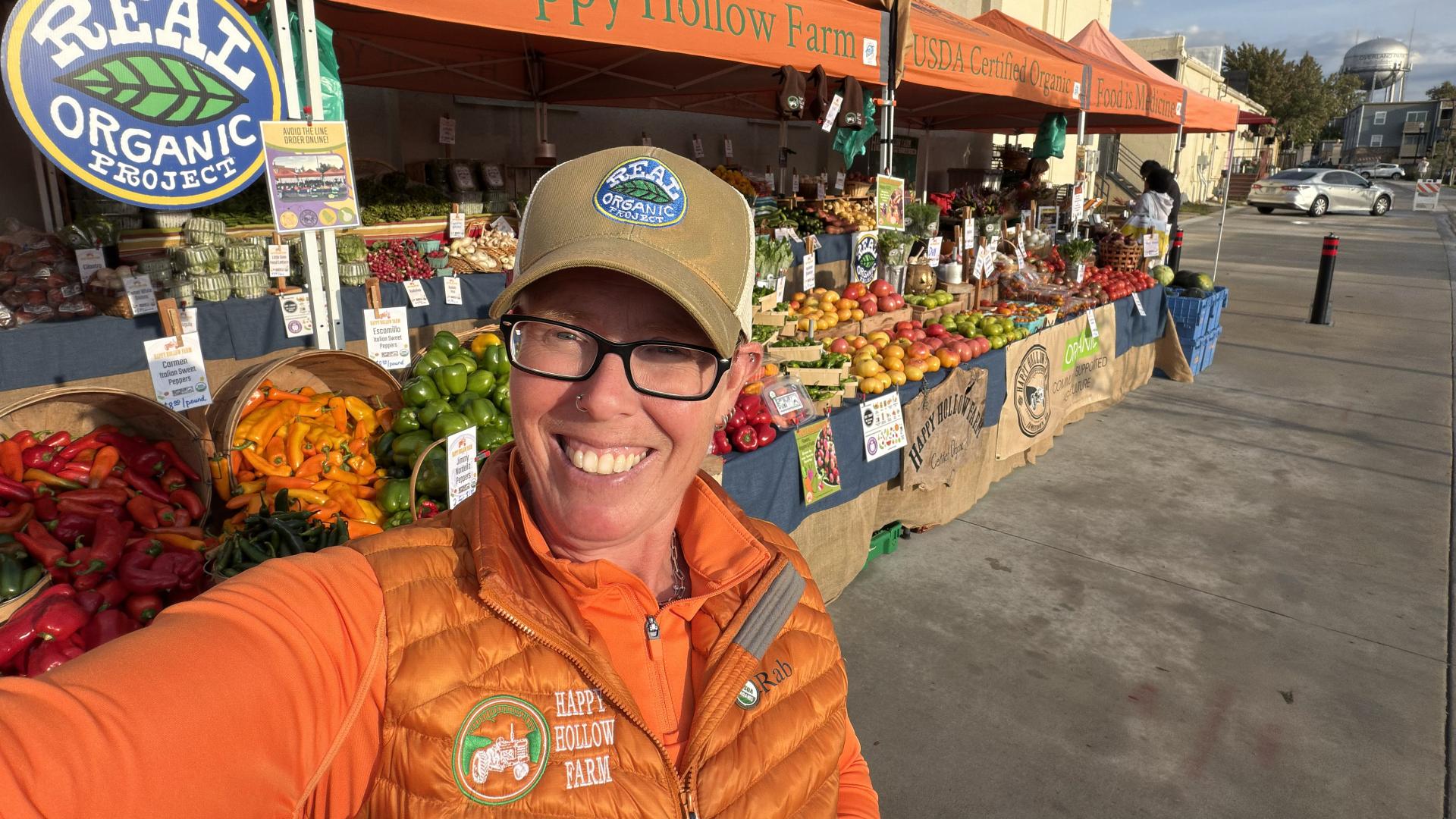
Farmers markets are a cornerstone of Happy Hollow Farm’s business.
Photo: Happy Hollow Farm
More Than a Successful Startup
Sixteen years after she began farming full-time, Graznak is still building Happy Hollow Farm.
Yes, her determination, her growing expertise mattered but so has experienced neighbors and fellow growers sharing what they’ve learned. As have employees who recognize that the farm’s success is tied to their own.
For an industry concerned about bringing new people into agriculture, Graznak’s experience raises another question: What will help those growers remain in business long enough to become established?
Starting a farm takes courage and commitment. Keeping it going requires knowledge, sound business decisions, dependable people, and relationships that grow stronger over time.
Sixteen years in, Graznak is still finding the answer herself.
American Vegetable Grower’s GROW STRONGER initiative brings you positive stories from progressive growers filled with innovative solutions to help you grow a stronger future.
At a Glance: Happy Hollow Farm
- Owner: Liz Graznak
- Location: Jamestown, MO (near Columbia)
- Established: 2007; farming full time since 2010
- Size: 20 acres, including nearly 2 acres under high and low tunnels
- Crops: Diverse vegetable crops and cut flowers; nearly every vegetable except sweet corn
- Markets: Retail sales (65%), CSA (25%), wholesale (10%)
- Growing practices: Certified organic
Subscribe Today For
