


One Vegetable Grower Shares Her Secret to Farm Labor Success
 February 5, 2025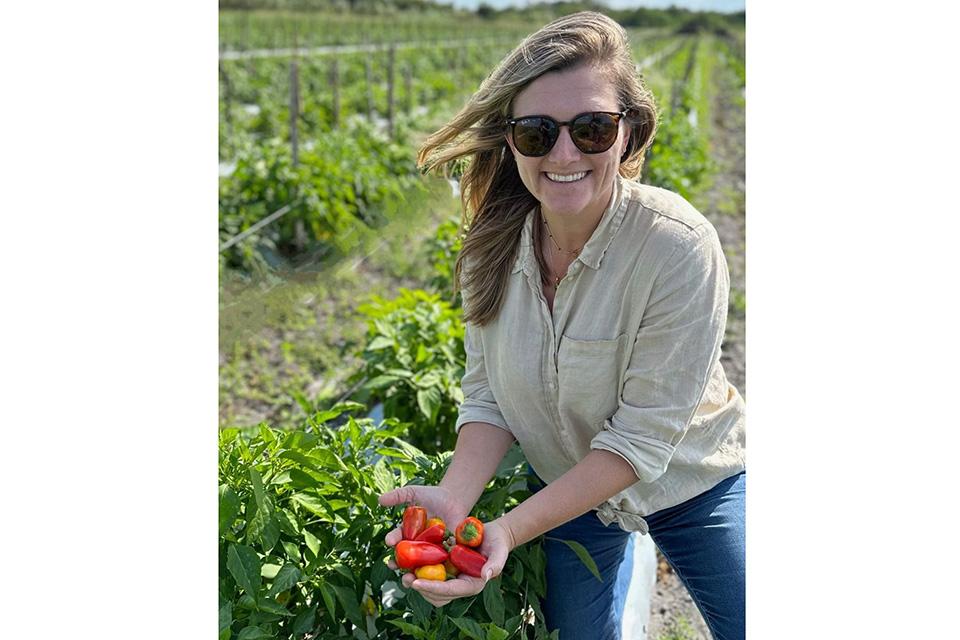
Anaïs Beddard, Vice President and Co-Owner of Lady Moon Farms, says if you offer talented employees the right support system, they’ll do a much better job than contracted labor. Photo courtesy of Lady Moon Farms
Anaïs Beddard’s parents bought a 10-acre farmette as newlyweds with a dream of growing healthy food for their family. Always organic, that small farm did its job, giving the family the ideal setting for rearing children. It also laid the foundation for a thriving business that focuses on producing the highest quality vegetables while honoring mother nature. Today, Lady Moon Farms a 2,500-acre operation with production in two states, Pennsylvania (headquarters) and Florida.
With a strong finance background, the now adult Beddard has played a pivotal role in ensuring the operation’s continued success. Her business acumen, dedication to employees’ wellbeing, and commitment to maintaining the integrity in organic farming has earned her the 2024 Grower Achievement Award, East Region.
She was a founding member of the Real Organic Project and served on its Executive Board for several years. She remains on the advisory board and continues to fight for the original principles of organic farming.
Before a grower can be considered for the Grower Achievement Award, vegetable industry peers must nominate them. One of Beddard’s two nominators noted how she shares much of the farm’s profits with her employees in major bonuses. In the past five years, she has paid more than $1 million in bonuses. While she uses H-2A and domestic workers, they are all hired directly. There are no FLCs (Farm Labor Contractors).
She is also on the Executive Board of The Foundation for Farmworkers, an organization who’s stated purpose is: generating funds to provide services and support for farmworker families to be free from fear of family separation, to recover from disaster, and to pursue higher education..
Let’s take a closer look at how she manages to hold on to reliable labor in this tough era.
It Begins with Respect
Talking to Beddard, she doesn’t talk about respect. Rather she demonstrates it in how she describes her workforce.
“We’ve always recognized that our employees are the only reason we’re able to do what we do,” she says. “It’s the hardest job in the world, and they show up every single day. I think you can easily forget what’s making your farm successful and for us it is our people.”
She estimates a large majority, about 70%, have worked with Lady Moon for over five years and many are approaching their 20-year anniversary.
“It’s not your average job,” Beddard says. “You’re not going to work in an office. The vegetables don’t stop growing if it’s raining. The weeds need pulled, the transplants need planted, the tomatoes need packed. But there are certain benefits we can provide to make it a better environment.”
Lady Moon Farms is one of the few U.S. farms that offers paid vacation to its employees (just under 50% of average vegetable farms do). It also offers different incentive programs, some based on efficiency goals and others based on employees’ longevity with the business. The Beddards believe that when the business profits, its workers should be rewarded as well.
“We set a threshold of how many hours we can use for the season based on our sales targets. Then if those goals are met, we’ll pay out a bonus to each worker for every hour worked,” Beddard says.
Labor is the farm’s No. 1 expense, so using it efficiently is important to its long-term success, she says.
“I find that the most benefit to an employee is going to be more money in their paycheck,” Beddard says. “It’s nice to have extra things, but at the end of the day, an extra $100 a week is going to make a big difference for that family.”
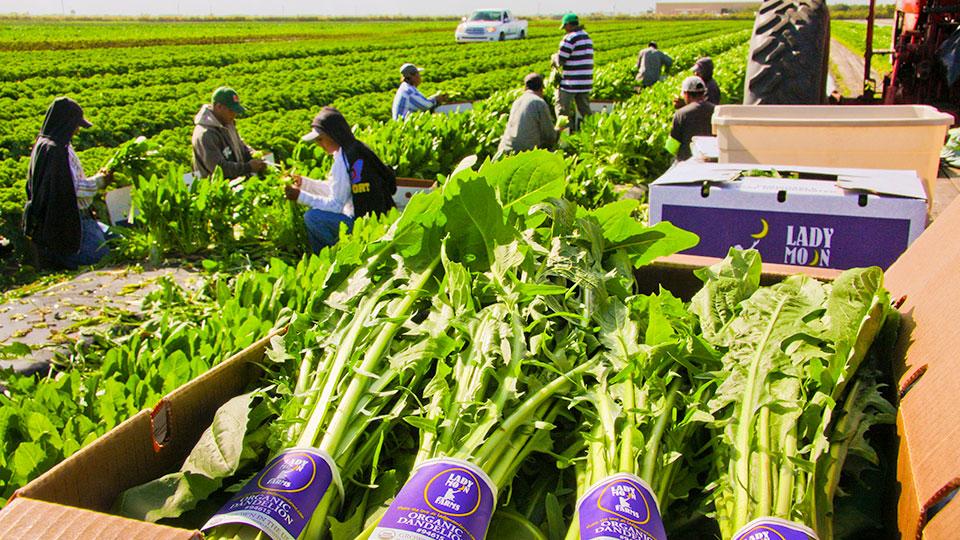
Lady Moon Farms’ management is homegrown. “The main guys who are running our farms all started out as packers or field hands,” Anaïs Beddard says.
Photo courtesy of Lady Moon Farms
Support Internal Talent
Importantly, management comes from within. Two of Beddard’s directors of farming started out as field workers over 20 years ago and now have taken over for a retiring general manager, each taking on parts of her responsibilities.
Promoting from within can be challenging as there can be a lack of formal education and technological skills. But she recognizes that formal education have little to do with intelligence and work ethic.
“If we can provide them the right tools, they’ll do a much better job than someone you would bring in from the outside,” she says. “Because they’ve been here. They understand our processes. They are incredibly hard-working.”
American Vegetable Grower’s GROW STRONGER initiative brings you positive stories from progressive growers filled with innovative solutions to help you grow a stronger future.
Beddard mentioned a shipping manager, Pablo.
“He has a photographic memory, super intelligent. If he had half the education I had, he would be working for NASA,” she says.
The key is to give these talented workers the opportunity to grow and provide relevant information that allows them to do their job better.
“We have one employee, Odalis, a Floridian who was a tractor driver and is now a food safety specialist. With the use of our new custom farm software, he is building out a live database of plantings and harvest data. This will allow us to do deep dives on what crops are profitable and which ones are losing money. It’s important that we grow our efficiencies as the costs of production have increased significantly.”
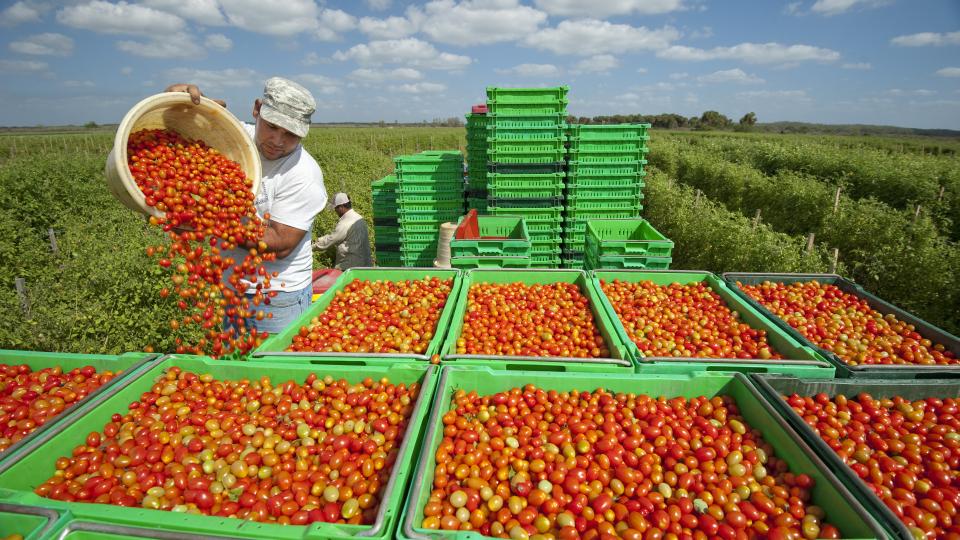
Photo courtesy of Lady Moon Farms
Even H-2A Workers Have Ties
Lady Moon uses the H-2A program; however all workers are still direct employees. The H-2A is being able to bring in workers with ties to her permanent staff.
program is critical to the farm’s success as domestic labor is no longer available consistently. One of the unintended benefits of the H-2A program is being able to bring in workers with ties to her permanent staff. She has developed a recruitment system that gets recommendations from existing workers which limits abuse of recruiting abroad.
“We’re giving the opportunity to people who have connections, family members, cousins, brothers. In some instances, someone comes in on the H-2A program and they haven’t seen their brother for 10 years. So that’s been really nice to see,” Beddard says.
“We’re also starting to see children of our existing employee base come to work for the farm. It’s not just my family with generational legacy.”
“I feel incredibly grateful that I have this opportunity,” Beddard says. “I’ve found that every farm I visited most people just want to help and share information, and it’s not a closed off industry at all. I feel really grateful for that. And I hope that I’m able to shepherd this farm into the third generation. It would special to see my boys running the operation one day.”
Subscribe Today For
