



Best Practices for How To Handle Rapid Apple-Tree Decline
 April 10, 2025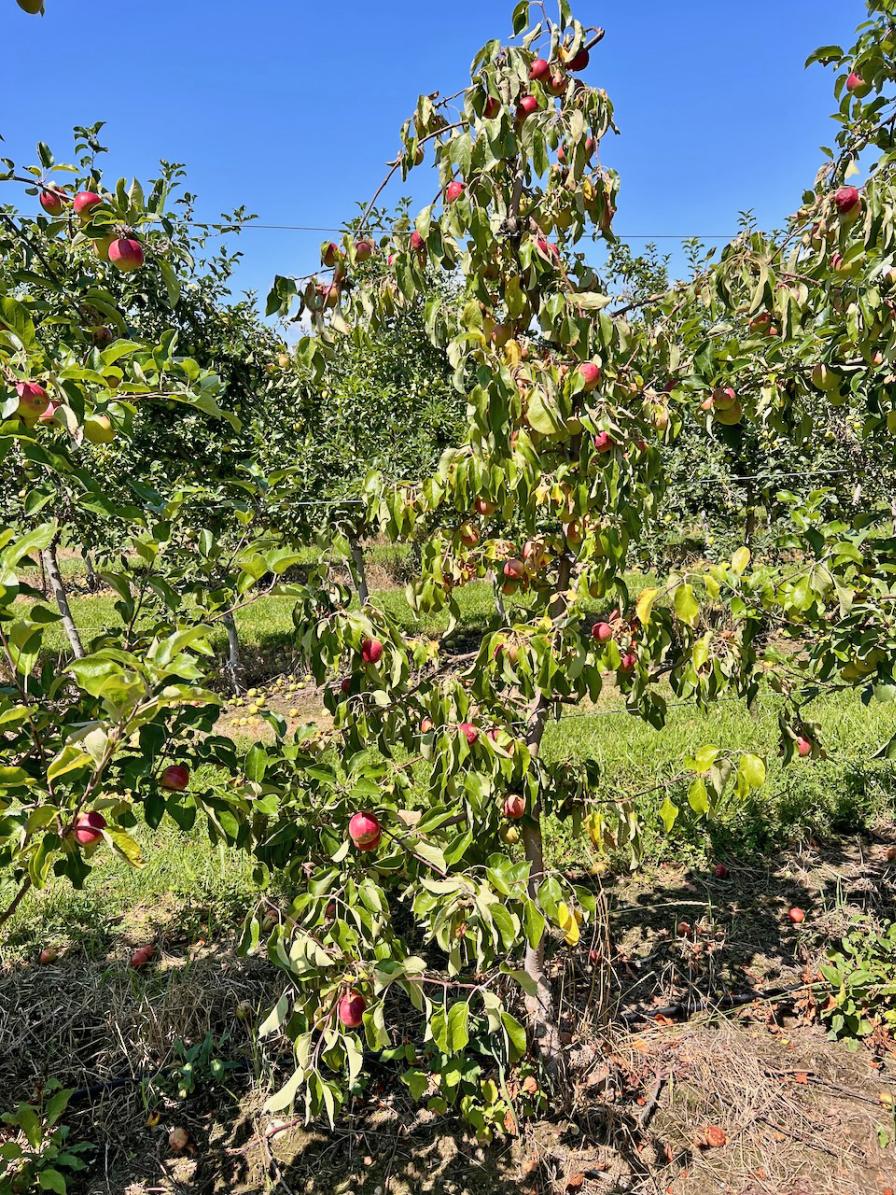
This tree is exhibiting symptoms (yellowing, collapsing, and ultimately dying) associated with rapid apple-tree decline. Photo by Jon M. Clements
Apple orchards throughout the Northeast witnessed a spate of rapid apple-tree decline (RAtD) in the past few years. It was particularly onerous in 2023 in Massachusetts. In orchard blocks that otherwise were healthy and productive, too many trees were turning yellow and ultimately collapsing and dying.
Upon close inspection, it was evident that often a significant “sloughing” off the bark all the way down to the cambial layer was observed, mostly on the exposed shank of the rootstock (see photo below). Among other trunk cankers, this failure in the rootstock shank bark was most frequently observed.
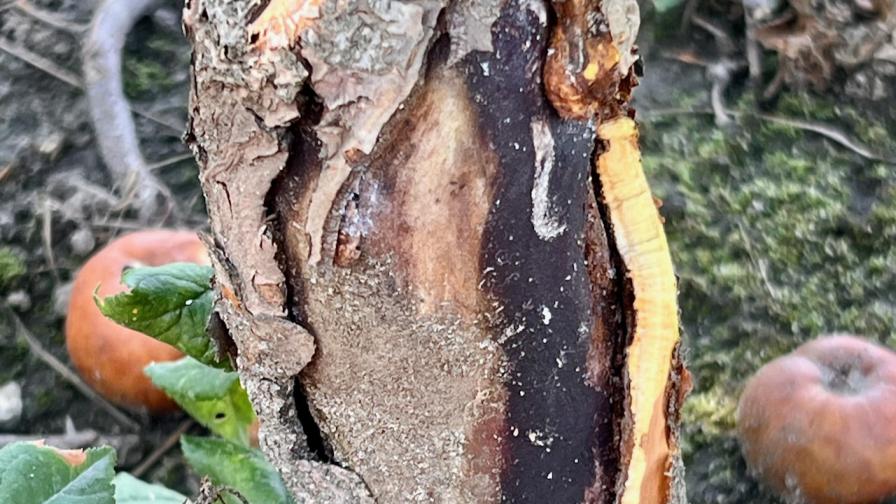
Photo by Jon M. Clements
RAtD has been reported throughout the Northeast and is a generalized symptom of what has been hypothesized to be the result of one or more causations: fire blight infection of the rootstock, cold injury, herbicide injury, alternating periods of drought and too wet, viruses, and/or general apple tree stress. Because the cause of RAtD can be hard to pin down, a strategy needs to be in place to help manage the risk of RAtD in Northeast apple orchards. Thus, suggested best management practices to reduce the risk of RAtD include:
- Plant only on your best sites. This is usually reserved for stone fruit; now, however, growers should be thinking of new plantings of apples on only their best sites, too. For example, if you even think it might be too wet (soil), it is too wet! Don’t do it!
- Consider planting on berms. Again a recommendation for stone fruit, but berms can be a more favorable environment for apple roots, too. Less wet feet during periods of excess rain. Yes, this can present some management challenges, such as mowing, etc. But get those roots a bit “higher” in the ground.
- Paint trunks white. Soon after planting and maintain throughout the life of the orchard if practical. White latex paint can prevent sun scald to trunks and deter rodents and borers.
- Plant deeper — but not too deep of course. It used to be “just roots in the ground,” which could leave a long portion of rootstock shank above ground. That might be more susceptible to cold damage. Leave just 2 or 3 inches of rootstock shank above ground.
- Rootstock choice — makes a difference. M.9 and some of the Geneva rootstocks have all exhibited RAtD. Cornell University research has shown some hardiness differences in Geneva rootstocks, but the verdict is still out on that. G.41, even though it has other modest faults, appears to be particularly resistant to winter temperature swings. M.9 is not the most cold-hardy rootstock out there and is susceptible to fire blight. B.9 and B.10 have field resistance to fire blight and less bitter pit.
- Plant certified virus-free scion and rootstock. With the slowdown in planting, maybe nurseries have an opportunity to up their game and provide virus-free trees for sale across the board?
- Herbicides — be careful with herbicides. Systemic herbicides (glyphosate, glufosinate-ammonium) in particular. Avoid hitting the tree trunk and root suckers with those. (Paraquat too!) Shield tree trunks if you insist on overlapping contact herbicide sprays. The white paint may help here, too.
- Fire blight. It must be managed aggressively if using M.9 rootstock in particular. Geneva rootstocks are resistant. The B.’s may be field resistant. Even with these rootstocks, it’s important to manage fire blight aggressively in the scion/variety.
- Borer infestation. Black stem borer has been observed in trees under stress and under the sloughing bark of rootstock shanks (see photo below). This is not good and may be contributing to RAtD. Consider an insecticide — whole orchard or trunk directed —effective on borers.
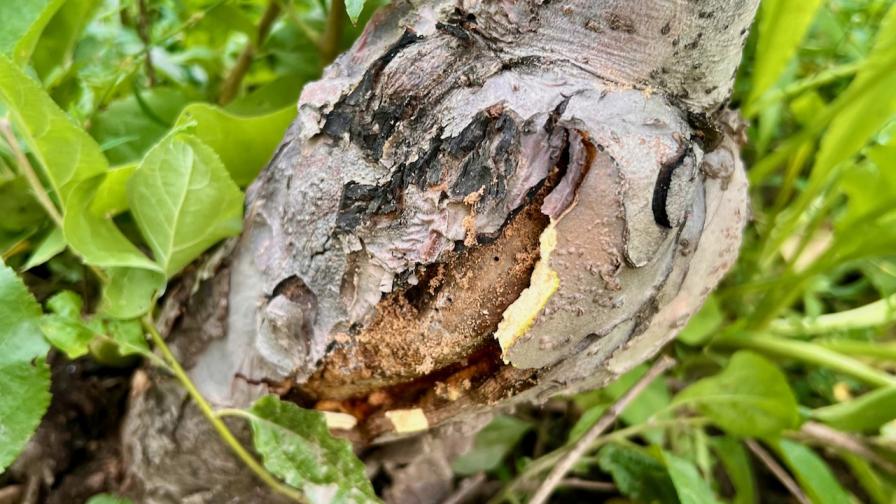
Photo by Jon M. Clements
- Irrigation. Probably a no-brainer here. Drought stress is likely to exacerbate RAtD. Monitor soil moisture and use the Apple Irrigation Model in NEWA (Network for Environment and Weather Applications).
- Limit tree stress. Over-cropping trees in early years may put stress on the trees and make them more likely to succumb to other stressors, such as cold injury, drought, etc. Grow trees through the second leaf, then start modest cropping in the third and fourth leaf. Monitor nutrition status but avoid over-fertilization with nitrogen, which may promote later hardening off.
- Soil health. Yes, it is a buzzword lately. It has some merit. Avoid compaction. Incorporate organic matter; cover crops are ideal. Check pH (should be 6.5 to 7). Test for soilborne pathogens? Nematodes, phytophthora, southern blight, replant disease. Fumigate? If you have any or all of the above, and if it is available to you. It’s more relevant the farther south you go and on sandy soil.
The good news is that the progression of RAtD in Massachusetts (and hopefully elsewhere) in 2024 seems to have slowed. Still, these best management practices are recommended for any new apple planting in 2025 and beyond.
Subscribe Today For
