


Bumper Crops But Bruised Bottom Lines for Apple Growers
 April 20, 2026
 This year, the annual State of the Fruit and Nut Industry survey conducted by American Fruit Grower/Western Fruit Grower asks all growers (540 total responses) to answer why they are optimistic, neutral, or pessimistic about the outlook of their particular crop over the next three years. To expound on the topic, we turn to our apple-growing readers, based on their survey-high 170 responses to this question, ahead of blueberry (122) and peach (115). Some of their opinions will apply to farmers of all types; others will pertain more so to apple growers.
We start here with the most cynical and end on a positive note:
“VERY PESSIMISTIC”
Overproduction: Not surprisingly, after three straight years of above-average production, including a record harvest in 2023, this is the most repeated concern among the most concerned. Direct quotes from apple growers include:
“Supply has been outpacing demand for multiple years” (WA)
“We grow way too many apples in Washington” (WA)
“Too much fruit in the market (and) too many varieties” (WA)
“People are not taking out acreage” (NY)
Low prices and weak returns: With a glut comes low prices. Our readers believe those prices are below viable levels, not just temporarily but persistently.
“Record low wholesale prices” (WI)
“Very low apple pricing” (NY)
“Not sustainable returns for fresh-packed fruit” (OR)
Rising costs: Considering labor and inputs, the pressure is stark: Costs up + prices down = margin collapse.
“Skyrocketing cost of labor, fuel, ag chemicals” (WA)
“Labor costs, inputs too high” (NY)
“Cost of inputs constantly increasing” (ME)
Market failures: Growers feel demand-side support is weak globally and domestically, with policy (tariffs) worsening the situation.
“Tariffs are killing exports” (ME)
“Export markets aren’t there” (WA)
“Domestic consumption isn’t increasing” (WA)
“Markets stalled” (NY)
Industry structure: Resentment exists toward external capital (investors and private equity) keeping production artificially high and preventing market correction.
“Too much investor money distorts supply and demand” (WA)
“Outside money willing to replant” (WA)
“PE money not willing to reduce production” (WA)
Supply chain frustration: Some growers blame downstream inefficiencies, including packing organizations and their marketing efforts, for poor returns.
“Packing sheds doing a bad job” (WA)
“Sales staff cannot market the fruit” (WA)
OPTIMISTIC (“VERY” AND “SOMEWHAT”)
Strong and stable demand: Growers see apples as a reliable, non-trendy staple with steady baseline demand, reinforced by health and local-food trends.
“Sales continue to grow” (IA)
“Apples are a staple” (NY)
“Demand for locally grown fruit remains strong” (IL)
“People eating healthier and local” (VA)
“Sales continue to be good on fresh market apples and peaches” (PA)
Local and direct-to-consumer momentum: Clear optimism exists around short supply chains and U-pick marketing. Some growers are shifting away from wholesale toward higher-margin direct sales.
“Demand for local produce” (NH)
“Interest in pick your own” (MA)
“Increased crowds for our pick your own apples” (NC)
“Changing my production to direct market” (PA)
“We hope to increase traffic to the orchard” (IL)
Growth from new plantings and varieties: Better varieties are translating to better consumer appeal while weaker competitors are leading to market correction.
“Additional trees planted a few years ago will come into full production” (OR)
“Newer varieties offering better eating experience” (NY)
“Old varieties dropping out; marginal growers dropping out” (NY)
Diversification: Growers are hedging risk through value-added products and alternative apple uses, such as cider.
“Cider is growing while overall alcohol consumption is decreasing” (WI)
“Honey, apple butter, lavender” (CA)
Even the optimistic growers cite many of the widespread concerns above while adding the surprisingly absent issue of inclement weather — “can’t get any worse than last year’s wet, rainy, cold blossom season” (WI).
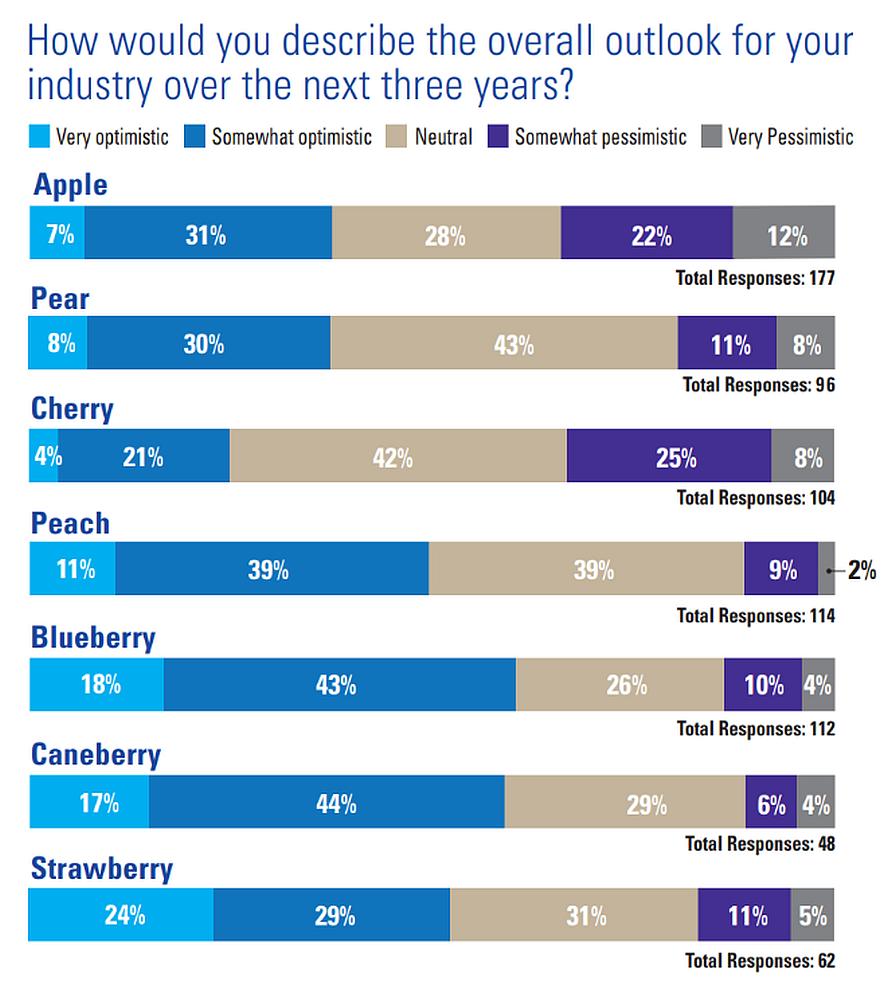
Click here to see more findings from the 2026 State of the Fruit and Nut Industry survey.
Subscribe Today For
