



What To Know About the Magic of the Biloxi Blueberry
 February 2, 2026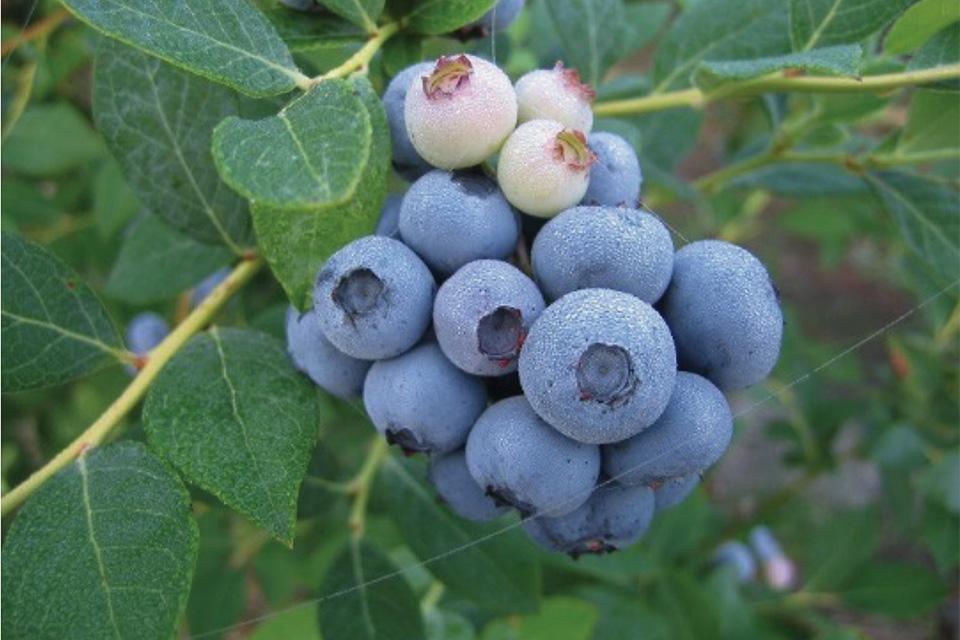
Biloxi blueberries.
Photo by John R. Clark
I remember the first time I saw Biloxi blueberry outside the U.S. It was sometime in the early to mid 2000s near the city of Los Reyes, Michoacan, Mexico. It was growing in a test plot with a few other varieties, and oddly it was the only one bearing fruit. How unusual I thought, as there were few if any blueberries being grown in Mexico at the time. Why would a plant developed in a mid-chill environment in Mississippi fruit in a sub-tropical location with little to no chill? Little did I know that it would become the foundation for an expansive Mexican, and later Peruvian, blueberry planting adventure. Although it has lost much of its momentum now in new plantings, its story is unique.
Biloxi originated at the USDA-ARS research location in Poplarville, MS, and developed by a group of outstanding USDA scientists, including Arlen Draper, Steve Stringer, Jim Spiers, and Creighton Gupton. The parents of Biloxi are Sharpeblue x US 329, and the original seedling was selected in 1986. It was released in 1998. It was recommended for planting where other low-chill blueberry varieties were grown. A primary value of Biloxi for southern U.S. growers was its ripening prior to rabbiteye blueberry varieties, the primary type of blueberry grown in the region.
Mixing Things Up
I spent many years in blueberry breeding, and one of the highlights of these years was working with Dr. Arlen Draper. Although Arlen officially retired from USDA in 1989, he remained active as a consultant in breeding in Mississippi with his close friend and colleague Jim Spiers. When Arlen took the USDA blueberry breeding job in 1964 at Beltsville, MD (replacing Jim Moore who decided to move home to Arkansas develop a fruit breeding program), he recognized very quickly that the breeding material, or germplasm as it is more technically called, was not very diverse.
Highbush blueberries, with the exception of some rabbiteye varieties grown in the South, and native lowbush blueberries grown primarily in Maine, were what “blueberries” were at the time. There was no such thing as a low-chill blueberry, which make up a huge part of blueberry production in the world today. The germplasm that existed was primarily the northern highbush blueberry known as Vaccinium corymbosum, and was mostly derived from the original selections gathered by Frederick Coville, who many consider the father of cultivated blueberries. Arlen knew this narrow genetic base was potentially going to be a problem, due to limited diversity can lead to dead ends in breeding improvement, plus inbreeding depression (resulting from crossing among closely related parents) could reduce progress also. He struck out to diversify the USDA germplasm by incorporating other blueberry species in the breeding program.
Now Back to Biloxi
I contacted the long-retired Arlen a few years ago to tell him about the huge success of Biloxi in sub-tropical locations, and to ask what species were in the pedigree of Biloxi. Although we were talking on the phone, I could tell he was smiling when he said, “goodness John, that was a long time ago and I can’t recall that detail!” I smiled too, happy to hear his voice and recognize what an odd question this was to ask someone who had been retired 30 years!
Later I was able to find a document with the pedigree of Biloxi. There are four Vaccinium species in its background. The important V. darrowi (the source of low-chilling in Biloxi and all other reduced-chill blueberry varieties), the standard V. corymbosum (including as a parent the hugely successful Bluecrop), V. ashei (the rabbiteye blueberry) and V. atrococcum. This last species had not been incorporated in a variety at that time. I was familiar with V atrococcum as it had been a parent in many seedlings, I had evaluated in my University of Arkansas breeding career and knew it offered very strong plant health and vigor plus unique flavor profile. If one eats a berry of the home-garden variety ‘Ka-Bluey’, this unique flavor can be tasted.
I assume that this unique blend of species, not ever before combined, was key to Biloxi’s adaptation to diverse climates, much different than where it was developed. And this all started with Arlen’s interest in diversifying the germplasm in blueberry breeding. Maybe this was a little designed magic, the success of which all breeders dream of.
In my next American Fruit Grower column, I will discuss further thoughts on berry genetic diversity and share some ideas we need to keep in mind as berry breeding continues to undergo major shifts among private and public breeders.
Let the berry good times roll!
Subscribe Today For
