



A Key Winegrape Pest
 January 21, 2011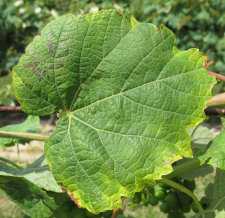
In the past few years, Michigan winegrape growers have been dealing with an increased presence of the potato leafhopper. While this pest has a broad host range of more than 100 crop and non-crop plants, winegrapes can be a popular target for them. Feeding by the potato leafhopper causes stunted vine growth, yellowing, and leaf cupping.
Potato leafhopper seems to prefer new growth. It lays its eggs inside the leaves, and can have multiple generations per season (there are approximately three to four weeks per generation). The pest overwinters in southern states, and will migrate into the Great Lakes region on wind currents. Populations can increase rapidly after spring rains.
Scouting for potato leafhopper begins in the spring, and should continue through the summer. In the spring, growers can put out yellow sticky traps, checking regularly for adults. In the early summer, check under the leaves on new shoots (about 100 leaves per vineyard block should be checked). In mid-summer, keep an eye out for leaf yellowing and curling.
Vine, Cultivar Response
Recently, a team of researchers at Michigan State University looked at cultivar susceptibility to potato leafhopper, as well as response from potted, young, and mature vines. Potted vines were exposed to natural leafhopper populations, and the degree of leaf yellowing was recorded.
Based on the average number of yellow leaves per potted vine, Chardonnay and Pinot Gris were the most susceptible varieties, along with Cayuga White and Pinot Noir. Less susceptible varieties included Riesling and Vidal Blanc, while Vignoles, Concord, and Niagara demonstrated some resistance.
When it came to vine response, researchers evaluated potted vines with no crops, young vineyards, and mature vineyards. Potted cultivars with varying levels of susceptibility were bagged with 0, 5, 10, and 20 leafhoppers inside for 12 days in 2009 and 2010. Leaf yellowing symptoms were measured the day after the bags were removed, and shoot growth was measured later in the season.
As expected, in the potted vines, Pinot Gris netted the most yellow leaves per vine, while Vignoles proved to be resistant. The average number of yellow leaves increased significantly in Pinot Gris between 2009 and 2010.
Measurements of tree shoot growth yielded similar results, although it is interesting to note that intermediate varieties such as Riesling actually demonstrated more vine growth in 2010 than resistant cultivars.
•ºMore information on vine response to potato leafhopper in young and mature vineyards can be found.
Management Strategies
Growers should be prepared to plan ahead for the possibility of potato leafhopper. Regular scouting in the spring, especially following weather fronts from the south, is critical. If potato leafhopper is present in your vineyard, your response should be based on variety susceptibility, vine age, crop load, and other potential stress factors. Also, consider the vine’s ability to recover, and the effect on fruit quality.
Subscribe Today For
