



Watch For Light Brown Apple Moth
 June 1, 2007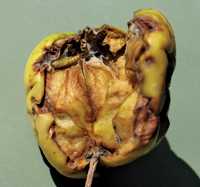
“In and of itself, the brown apple moth isn’t a terribly severe pest; there are others I would consider much more serious,” says Walt Bentley, the integrated pest management adviser at the University of California’s Kearney Agricultural Center. “The real issue involves the quarantines, both in and out of the state, that cause a problem.”
The light brown apple moth, a native of Australia, is similar to such pests as the obliquebanded leafroller and the fruit tree leafroller, says Bentley. While both pests can pose problems, growers do have pesticides at their disposal that give them control. The problem with the LBAM is that because it is new to the U.S., regulators may well impose additional quarantines to prevent its spread.
Not only might growers in certain areas be prohibited from shipping their crops to other countries, but also other parts of the U.S. That in itself poses problems for California growers, who, because they produce more than half the nation’s fruit, are dependent on both domestic and international exports. But the threat is even more insidious. “For instance,” says Bentley, “if a small grape grower was in a county where the moth was found and the county was quarantined, he might not be able to move his grapes to a winery in a county without the moth.”
Not Just California
Since it was first identified in February by a retired University of California entomologist, who found the pest in the back yard of his Berkeley home, the LBAM has been found in eight Northern California counties. As of late April, the state Department of Food and Agriculture (CDFA) had instituted a quarantine covering 183 square miles, though an expansion was expected, as the pest has been found as far south as Monterey County.
Quarantine regulations prohibit the movement of all nursery stock and all host fruits and vegetables and plant parts within or from the quarantine region unless it is certified as free from the pest by agricultural officials. But no matter how carefully the pest is regulated, it is going to be difficult to control. According to the California Strawberry Commission, risk assessments have determined that the LBAM has a high likelihood of becoming established not just in California, but in the rest of the U.S., and the consequences of its establishment for U.S. agricultural and natural ecosystems were judged to be severe. “Based on the known infested climatic zones of origin, and the distribution of similar climatic zones in the U.S.,” states the commission, “USDA-APHIS estimates that approximately 80% of the continental U.S. may be suitable for LBAM.”
Wide Host Range
What makes the LBAM a formidable foe is that it has such a broad range of host plants, with more than 250 plant species known to be susceptible to attack by the pest. The major domestic hosts of concern include ornamental plants, oak trees, and numerous fruit crops, including peaches, plums, nectarines, cherries, apricots, pears, grapes, and citrus. Though native to Australia, it is also commonly found in New Zealand, Ireland, the United Kingdom, and Hawaii. Adult moths can fly only up to 1,000 meters to find a suitable host. Because of the short flight distance, the greatest threat for spreading is human-assisted moving of plants.
LBAM destroys, stunts, or deforms young seedlings, spoils the appearance of ornamental plants, and injures deciduous tree fruit, citrus, and grapes, according to the CDFA. It can be effectively managed by Bacillus thuringiensis (Bt), methomyl (Lannate, DuPont Crop Protection), spinosad (Entrust, Dow AgroSciences), and other insecticides used to control lepidopteran pests. But while easily controlled, the threat of quarantine remains. The USDA and CDFA have assembled a technical working group comprised of international experts on LBAM to discuss mitigation strategies to prevent its further spread.
Subscribe Today For
