



Smart Tech
Ways More Fruit Growers Are Bringing Automation to the Table
 May 28, 2026
Labor shortages and tightening regulations are pushing nurseries and orchards to look beyond bigger tractors or faster sprayers. The next leap is not a single machine; it is redesigning production systems so autonomous tools can move, think, and “talk” their way through the operation.
When the International Fruit Tree Association (IFTA) gathered for its annual conference in Fresno, CA, one panel stood out for how quickly the conversation moved beyond new gadgets and toward rethinking entire operations. Growers and nursery managers from California, the Pacific Northwest, the Midwest, and New Zealand compared notes on what happens when autonomy stops being a trial and starts reshaping the nursery itself. But for one California nursery, that shift is already underway.
FROM “MOVE THE TRAILER” TO “KEEP THE SYSTEM FLOWING”
At Sierra Gold Nurseries in Yuba City, CA, labor costs have climbed more than 40% in six years, while regulatory changes have sidelined some traditional utility vehicles. Against that backdrop, operations lead Josh Puckett began experimenting with small autonomous carts to keep plants moving.
Initially, he viewed autonomy as a labor replacement question — how many drivers could a robot replace? The bigger gains emerged elsewhere.
Once autonomous units took over hauling, the team stopped worrying about perfectly filled trailers or balancing loads. What mattered was keeping machines in motion. The result, Puckett explained, was smoother, more predictable flow through potting, sorting, shipping, and harvest-assist tasks.
Rather than becoming “one more machine,” autonomy pushed the nursery to think in systems terms: Where are the bottlenecks? How can conveyor logic extend beyond the packing shed? How do you make every task easier to feed, and easier to empty?
AUTONOMY AS AN EXTENSION OF THE LINE
The nursery had already invested in lean-style efficiency with clearly defined sorting, shipping, and potting lines. Autonomous carts became the link between those islands of efficiency.
Instead of drivers moving trailers between workstations, the platforms now function as a continuation of the conveyor itself, shuttling plants, soil, and cuttings between work areas and into the field.
Once the carts proved reliable on gravel and uneven ground, the question shifted from whether autonomy worked to how the rest of the operation should change to support it. That quickly led to infrastructure and software.
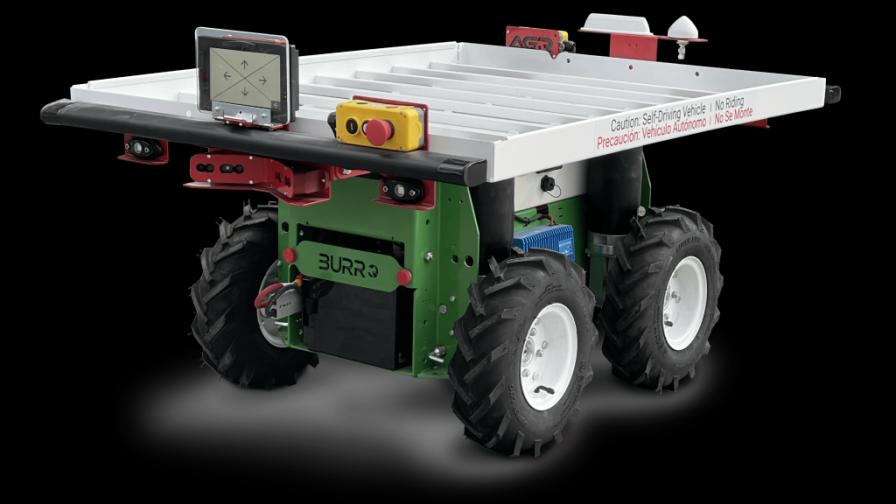
The Burro is an autonomous agricultural robot designed to help farmers carry heavy loads and assist with fieldwork.
Photo: Burro
WHEN THE SITE HAS TO ADAPT
Autonomy did not just change who drives. It changed the ground they drive on. Because machines follow precise paths, they began carving ruts into travel lanes. The nursery installed expanded metal in high-traffic areas and reconsidered road and pad design.
The team also faced unfamiliar questions:
- Where should charging stations sit so units dock without blocking traffic?
- How do you separate pedestrian and vehicle zones when no driver is watching?
- How far must Wi-Fi extend across the yard?
- What monitoring is needed for constantly moving equipment?
The nursery is now working with technology partners on application programming interfaces (APIs) that allow autonomous units to communicate with conveyors and trailers, advancing loads automatically and signaling when trailers are ready to move. Integration with ERP and inventory systems is also underway, so plant movements and job status are captured automatically.
In Puckett’s words, the technology is becoming as embedded in daily routines as office software.
THE HUMAN SIDE: FAILING FORWARD
Autonomy also has reshaped staffing. Rather than relying primarily on general labor, the nursery is gradually shifting toward employees who can manage and troubleshoot automated systems.
Puckett is candid that not every experiment succeeds. He estimates as many failures as successes, adding that adoption depends largely on whether the team wants a technology to succeed. But with autonomous transport, acceptance came quickly. Workers now argue over who gets to use the machines, while legacy utility vehicles see less use.
Other panelists described similar lessons with automation ranging from UV-based disease tools to robotic bird deterrents and sensor-guided sprayers. The common takeaway: the biggest gains come when growers adjust systems — tree architecture, spacing, and workflow timing — to fit the technology, not only the other way around.
BALANCING PAYBACK AND POSSIBILITY
Growers on the panel typically target a one- to two-year payback for ready-to-use technologies while investing smaller amounts in experimental “moonshot” projects like early harvest robotics.
Autonomous platforms fall between those extremes. Labor and fuel savings help justify adoption, but the larger payoff may be steadier throughput, better use of skilled supervisors, tighter data integration, and safer operations.
For nurseries and fruit growers in the West, the message was clear: Autonomy is not just another machine to park in the shed. It is a new way of designing the nursery itself.

For more Smart Tech topics, click here.
Subscribe Today For
