



How Simple Tools Make a Big Impact at Working Theory Farm
At Working Theory Farm in Hillsboro, OR, Campers Rumph, Director of Farm Operations, and her team empower youth through the shared work of farming while growing food for partner organizations that distribute it to families in need.
Through vegetable production and livestock raising on the farm’s no-till operation, the organization provides alternative education and employment opportunities for youth — many of whom face barriers within traditional systems, including incarceration — while teaching personal responsibility, teamwork, and professional skills.
Working Theory Farm cultivates approximately 4.5 acres using no-till, regenerative, low-tech, hand-scale practices alongside its crew of youth employees. The farm’s systems are intentionally designed to minimize soil disturbance while remaining accessible and adaptable for larger crews of young workers who are just beginning to develop agricultural skills.
Silage Tarps
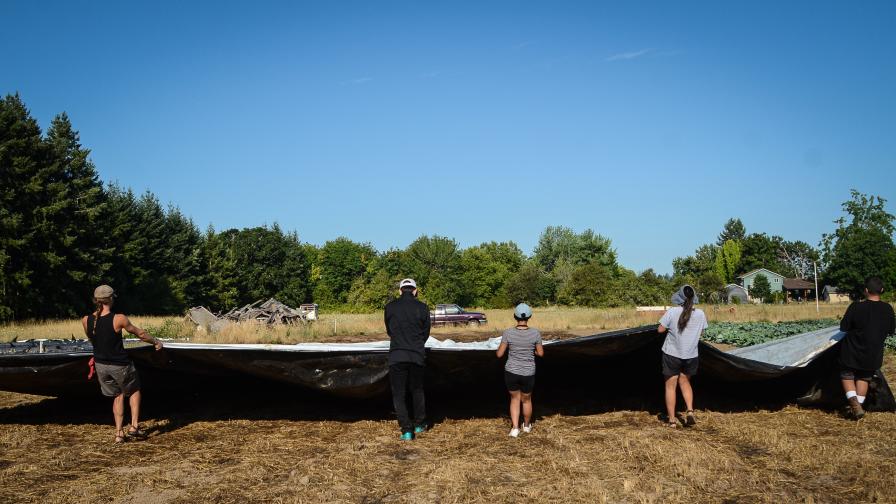
Photo: Working Theory Farm
Silage tarps are the backbone of farm’s no-till system. After mowing a cover crop, the farm covers beds with tarps for four to eight weeks to terminate vegetation, suppress weeds, and prepare planting areas without tillage. The farm uses 50-by-100-foot black-and-white silage tarps from Farmer’s Friend.
Row Cover
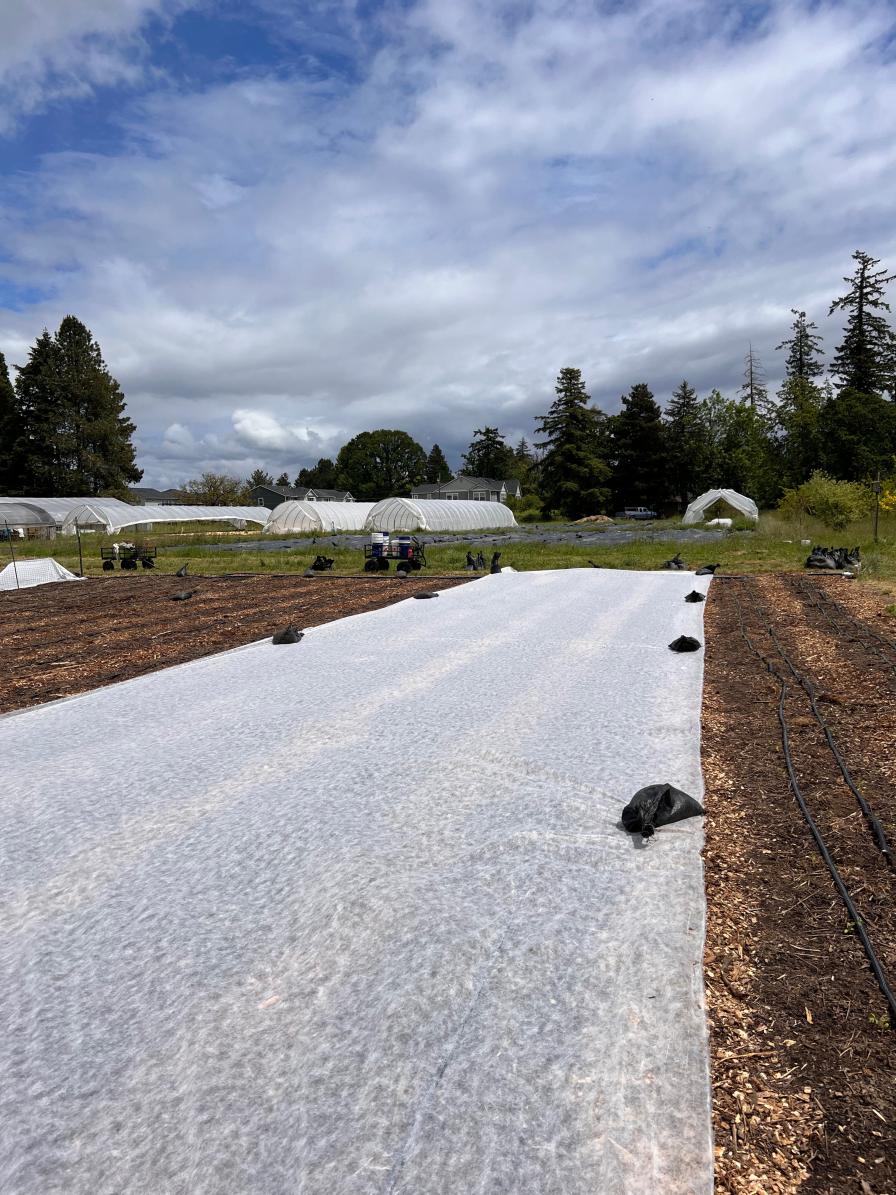
Photo: Working Theory Farm
Row cover serves two primary purposes: pest management and season extension. Rather than relying on pesticides, the operation uses a combination of trap crops, farm-produced microbial inoculants, and physical barriers to manage insect pressure. “We think of it as staying healthy using probiotics instead of treating an illness with antibiotics, Rumph says. Row cover also helps protect crops during shoulder seasons, extending production windows. Various weights of row cover are sourced as needed, with preference given to local greenhouse suppliers.
Sandbags
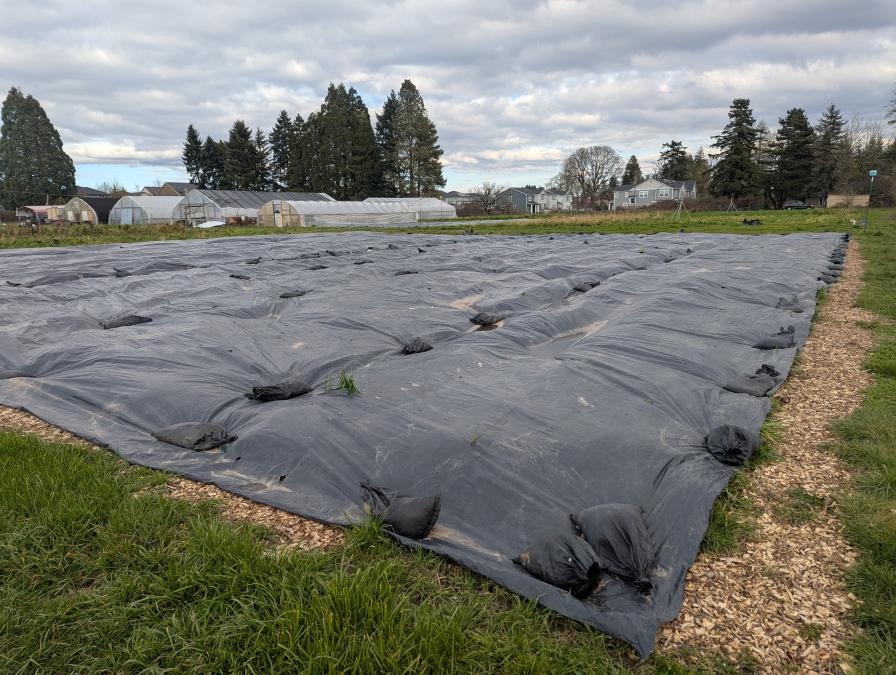
Photo: Working Theory Farm
Sandbags are a simple but essential tool for securing silage tarps and row cover. After experimenting with other methods, the farm found a sandbag system to be the most dependable solution for keeping materials in place throughout the season.
Dibblers
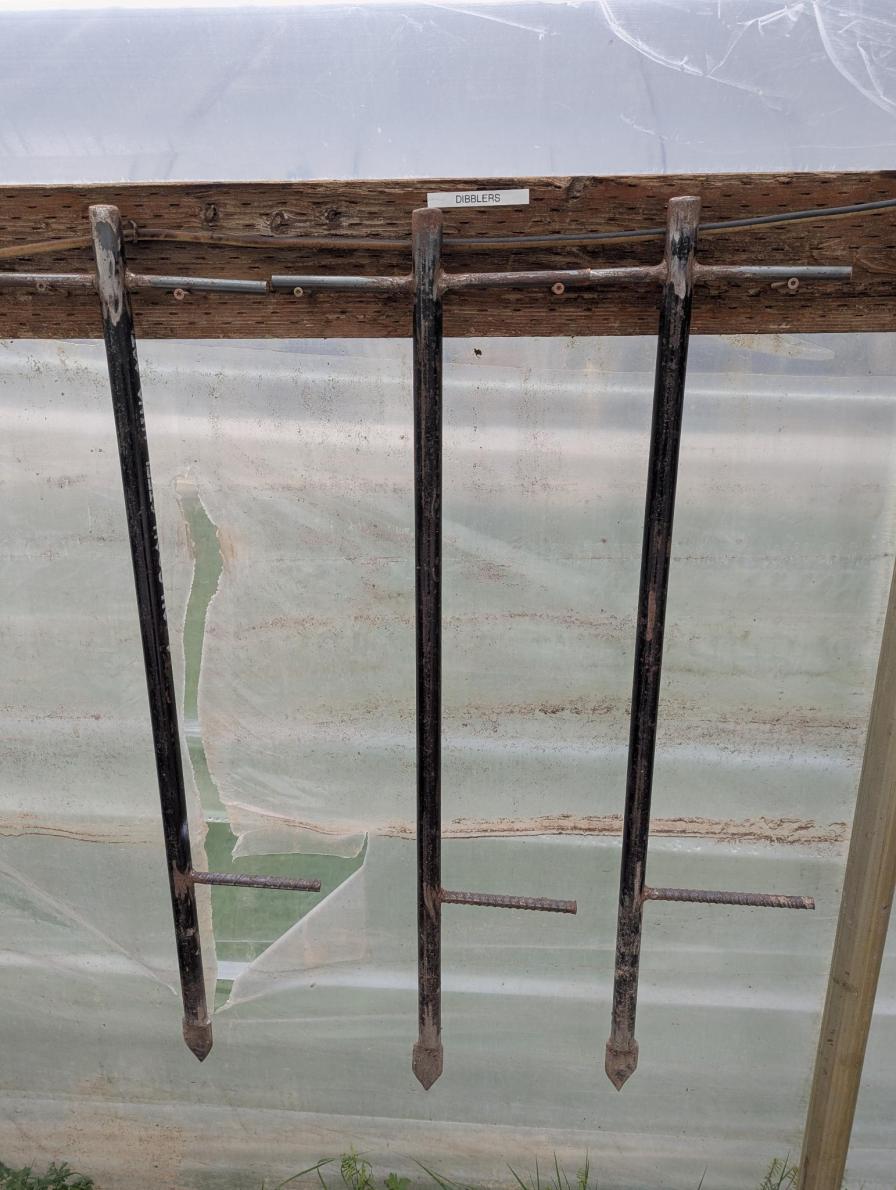
Photo: Working Theory Farm
As part of its no-till system, Working Theory Farm leaves crop roots in the ground when transitioning beds to help preserve soil structure and microbial activity. Because the remaining root systems can make mechanical transplanting more difficult, the farm relies on custom-fabricated dibblers to create transplanting holes. “The dibblers were custom fabricated at a local metal shop and are designed to be strong, versatile and ergonomic,” Rumph says.
DR Power Pro Max 34
A powerful yet easy-to-operate mower helps the farm manage both vegetable crops and cover crops before tarping or transitioning beds. The mower is capable of handling dense crop residue, such as finished cauliflower, while remaining small and maneuverable enough for use in tight spaces. It also serves as a teaching tool, providing youth employees with hands-on experience in basic equipment maintenance and repairs.
Click here to see more installments of American Vegetable Grower’s “Kick the Tires” series.

Subscribe Today For
