



Getting the Most Out of Growing Tomatoes in High Tunnels
 February 16, 2026
Growers in New England and many other regions have embraced in-ground high tunnel tomatoes. High tunnels not only protect against weather extremes and extend the season for this high-value crop, yields are much higher than field production. Growing in soil also provides a buffer against short-term missteps in nutrient and water management, and it fits with organic production.
But these systems are not monolithic — and neither are the results. A University of Vermont Extension-led survey of 47 farms growing trellised, drip-irrigated slicer tomatoes in soil puts numbers behind what many growers already suspect: fertility and disease pressure are critical to manage. Less obvious are the suite of infrastructure and management choices associated with the highest-yielding tunnels.
Grower Concerns
When asked to name their top concerns, growers pointed to soil fertility (51% of respondents) and plant diseases (45%). That aligns with what high tunnel veterans’ experience: tunnels intensify production, but they also intensify the consequences of missed details in fertility, humidity control, rotation, and sanitation.
Top 10 Yielding Tunnels
On many farms, there’s room to improve tunnel yields without changing crops, markets, or overall farm strategy — just by tightening the production system. The 10 highest-yielding tunnels averaged 3.15 lb./ft², roughly double the average of other tunnels.
Several practices were used more often in those top-performing tunnels: automated roll-up sides (automated ventilation), air heating systems, grafted plants, and horizontal air flow (HAF) circulation fans. High-yield tunnels also had more drip lines, more frequent use of surface mulch in the row, and relied more on soil tests specifically calibrated for high tunnels.
These differences offer clues about where investments pay off. None of these are magic, but together they point to a theme: high-yield tunnels are better at staying in the crop’s comfort zone — especially around temperature, humidity and soil management.
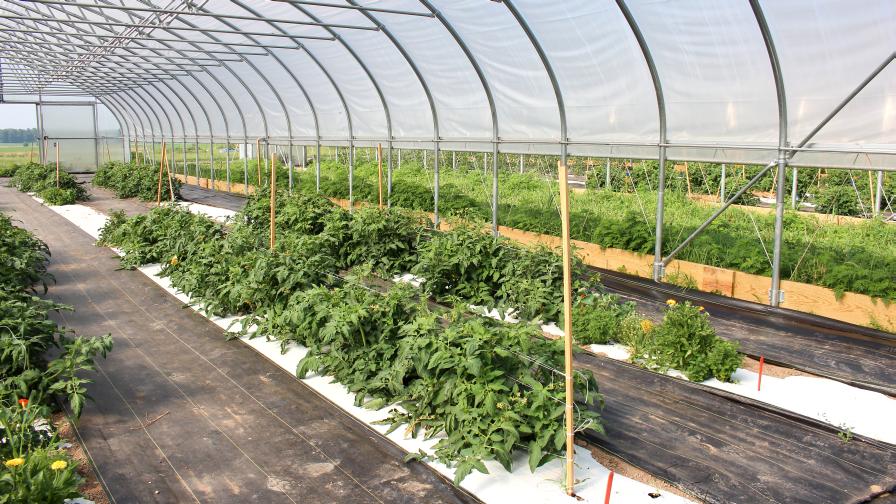
Intel from 47 New England high tunnel growers shed light on which practices most impact yield and price earned per square foot.
Photo: Carol Miller
Practical Takeaways
If you’re trying to move from good to great, the study suggests prioritizing changes that reduce avoidable stress and make the tunnel more controllable:
- Make ventilation more responsive. If you rely on manual sidewalls, automation may prevent midday heat spikes and humidity hang-time feeding foliar disease.
- Use air movement strategically. HAF fans are a relatively modest investment compared with losses from gray mold, leaf mold, or chronic mildew pressure. They also help distribute CO2 even on still days.
- Apply heat with intent. Even if you don’t aim to plant ultra-early, heat can maintain vigor during cold snaps. Root zone heat is important when planting early to avoid setting transplants into cold soil.
- Use grafting where rotation is limited. Grafting can help maintain performance in the face of soil-borne issues and long-term fertility challenges.
- Stop guessing yield. A striking finding: many growers weren’t measuring yield reliably. Without a baseline, it’s hard to know whether changes (new rootstock, new ventilation strategy, extra drip lines, different mulch) are paying off.
Bottom Line
This survey doesn’t offer a single recipe for success. What it does provide are benchmarks and a clearer signals about which practices show up in the highest-yielding tunnels. If fertility and disease are your top headaches, the practical path forward may be less about adding another input and more about upgrading the tunnel’s ability to consistently deliver the conditions tomatoes need to perform at a high level.
Tunnel Tomato Benchmarks
The survey captured a picture of what many New England in-ground tomato tunnels look like today
- At least two-thirds of tunnels were managed with organic practices (many certified).
- Most tunnels followed tomatoes with winter greens, which can be great for cash flow but may compress the window for soil-building and disease “reset” practices.
- Ventilation is usually passive, using manual roll-up sides and large endwalls. Ridge vents were less common.
- Fertigation and sprays to manage plant pathogens are the norm.
- Roughly half of growers used grafted plants.
Common cultivars included ‘Geronimo’ and ‘Rebelski’ for slicers. ‘Maxifort’ was the dominant rootstock for grafting.
Yield and Revenue
Growers reported total yields ranging from just under 1 lb./square foot to over 5 lbs./ft², but the most growers were in the middle of that range. Average marketable yield was 1.78 lb./ft². Retail prices typically ranged between $4 and $5 per pound, averaging $4.56.
With the most common tunnel size measuring 30 by 96 feet, the average tunnel grossed $23,376 annually from tomatoes.
Subscribe Today For
