



Smart Tech
What Ruggedize Means for Farmers: 5 Takeaways from the Tech Event
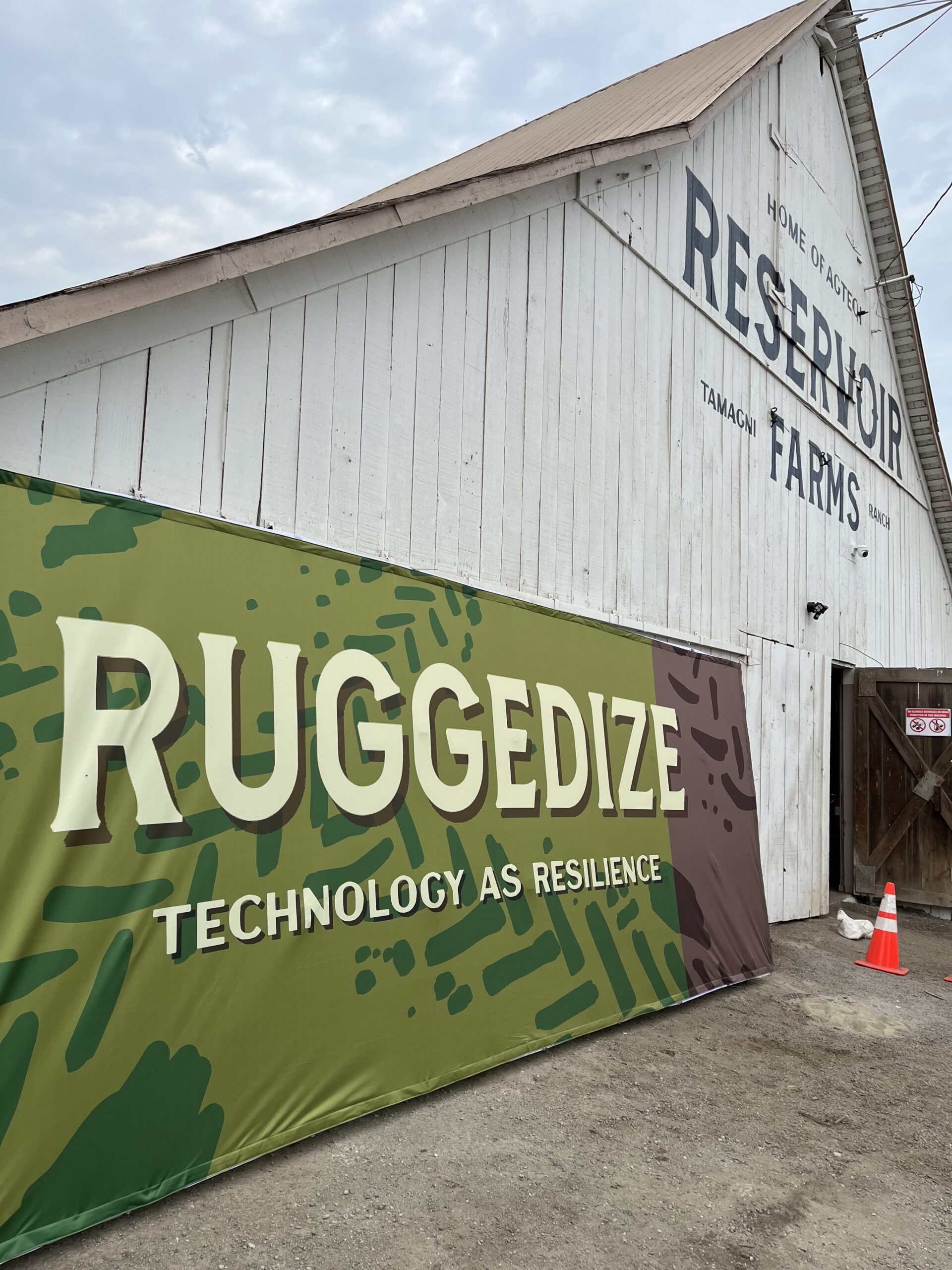
A large banner greeted attendees for the inaugural Ruggedize event at Reservoir Farms in Salinas, CA.
Photo: Crystal Nay
At the end of August, Reservoir Farms hosted its first tech event, Ruggedize, focused on ag robotics and physical AI. I was there in Salinas, CA, to take it all in. Here are my five takeaways from the ag tech event.

1. It wasn’t a grower event, but that was the point.
Despite its emphasis on toughening tech equipment so it can handle the challenges of agriculture, Ruggedize was built and marketed as a deep-tech event, bringing together people working on robotics, AI, autonomy and other tech that could eventually transform the way we farm.
A small number of growers did make the trip, and their presence underscored an important divide: The people building the technology and the people who ultimately have to depend on it don’t always have the same priorities.
2. Growers want stability, but the current tech race can’t promise that yet.
Of the few growers, some travelled a great distance to see the tech that’s coming, but also to voice concerns, such as those around data ownership. These advancements evolve quickly and compound. Keeping up the pace without knowing where the tech will ultimately land presents its own farming challenge.
Growers aren’t asking for the newest or most sophisticated technology, but they are asking that it work consistently, season after season. When will that stability in tech happen so that the end users can stick with it and learn and grow with it? No one really knows when that slowdown will happen.
3. Reliability matters more than innovation.
A point driven home by John Deere and reiterated by presenters who followed, this message is one that needs frequent reinforcement. Growers need reliable technology more than novel technology, and dependable machines are worth their weight in gold. Innovative machines failing in the field can turn into a cascade of operational problems.
Reliability is the ultimate prerequisite, and right behind it is ROI. It’s no longer about whether a machine can do something impressive, but whether it can do it every day, in the field, under agricultural conditions, and at a price that makes sense. As tech catches up to agriculture (as odd as that may sound), the ag tech industry is beginning to learn this on a fundamental level.
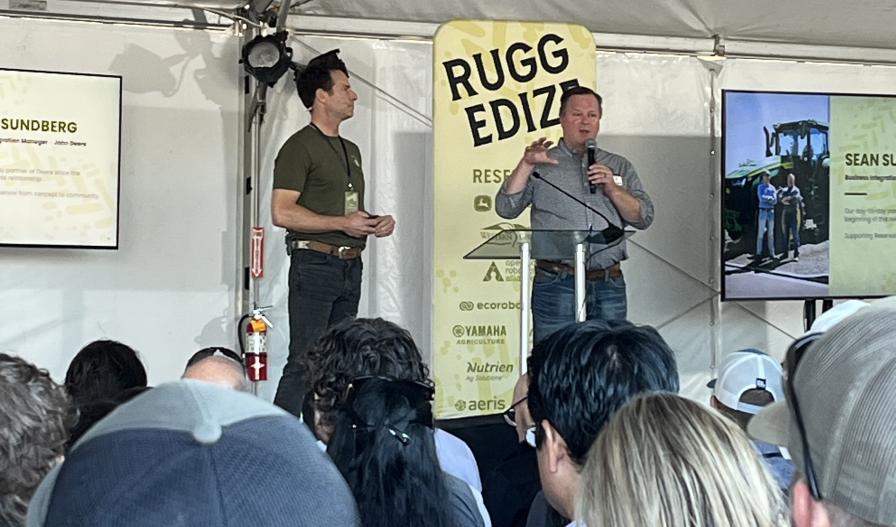
Reservoir Farms CEO Danny Bernstein and John Deere Business Integration Manager Sean Sundberg took center stage at the recent Ruggedize event in Salinas, CA.
Photo: Crystal Nay
4. Solve it for ag, and you’ve solved it for everything else.
This speaks particularly to autonomy and the incredible strides this technology had made. It’s also a testament to the value of farmland as a proving ground.
Agriculture throws nearly every possible variable at a machine: variety in plants, weather changes, variable terrain, inconsistent lighting, and a whole lot of dust. Technology that can reliably perceive and operate in those conditions will have applications beyond agriculture.
While ag is a valuable test bed, technologies like this won’t ultimately end here.
If ag helps to solve some of the hardest problems in autonomy, perception, and robotics, there are plenty of industries waiting to adopt these solutions. Ag might be the reason now, but it won’t always hold the spotlight.
5. An entire technology ecosystem is forming around agriculture, and agriculture needs to make sure it has a seat at the table.
Agriculture is increasingly becoming a customer for tech developed by companies whose primary businesses lie outside of it. AI, computer vision, semiconductors, cloud computing, robotics, etc. are converging on the farm in a way that can radically change how food is produced. And ag doesn’t necessarily have to be the center of this conversation.
Ruggedize serves as a case study for this, and specialty agriculture is becoming a technology application instead of owner of the ecosystem. How? Some of the startups flooding this market may be the companies that end up in field, but the stack consists of tools from Nvidia, Google DeepMind, AWS, Canon, open-source network operating systems, and more. There’s tremendous opportunity in having the world’s leading tech companies turn toward specialty crops.
Is it recommended growers attend this event in the future? Tickets are pricey, there’s very limited agronomic discussion, and so far no equipment demos. While grower input should be valued at nearly every step, it’s very much a tech-focused event. At this stage, so growers and ag businesses can be more than eventual users of the tech, they need to continue to help define the problems, economics, operating requirements, and ultimately the success.

For more Smart Tech topics, click here.
Subscribe Today For
