



Producer-Driven Research Is Reshaping Crop Production - Growing Produce
  • Crops
    • Back
    • Vegetables
      • Back
      • Cucurbits
      • Leafy Vegetables
      • Potatoes
      • Sweet Corn
      • Tomatoes
      • More Vegetables
      • Grower Achievement Award
    • Fruits
      • Back
      • Apples & Pears
      • Berries
      • Grapes
      • Stone Fruit
      • Apple Grower of the Year
    • Nuts
    • Citrus
      • Back
      • Oranges
      • Grapefruit & Specialty
      • Insect & Disease Update
      • Varieties & Rootstocks
      • Citrus Achievement Award
  • Brands
    • Back
    • American Fruit Grower
    • American Vegetable Grower
    • Western Fruit Grower
  • Events
    • Back
    • Webinars
    • Bio Solutions Conference
    • Fruit and Vegetable Grower Connect
    • Greenhouse Connect
    • CEAg World Conference and Expo
  • Topics
  • Resource Center
  • Subscribe Now
  • Mobile Social Icons
  • Crops
    • Vegetables
    • Fruits
    • Nuts
    • Citrus
    • Back
    • Subscribe
    Back All Vegetables >

    • All Vegetables
    • Cucurbits
    • Leafy Vegetables
    • Potatoes
    • Sweet Corn
    • Tomatoes
    • More Vegetables
    • Grower Achievement Award
    Back All Fruits >

    • All Fruits
    • Apples & Pears
    • Berries
    • Grapes
    • Stone Fruit
    • Apple Grower of the Year
    Back All Citrus >

    • All Citrus
    • Oranges
    • Grapefruit & Specialty
    • Insect & Disease Update
    • Varieties & Rootstocks
    • Citrus Achievement Award
  • Brands
    • Back
  • Events
    • Back
  • Resource Center
  • Subscribe
  • Advertise
  • Subscribe
  • Advertise
  • Subscribe
Muhammad Abdullah, Folio3 Agtech

Muhammad Abdullah, Folio3 Agtech

The Hidden Margin Leak Between Projected and Actual Harvest Dates

Thomas Skernivitz

Thomas Skernivitz

Biofertilizers 101: What Fruit Growers Need To Know

Anthony P. Keinath

Anthony P. Keinath

Powdery Mildew: A Crop Protection Problem That Needs Attention

Carol Miller

Carol Miller

Video: Why Viral Resistance Is the Next Big Hurdle in Melon Breeding

SPECIAL REPORT DOWNLOAD: Your Guide To Pesticide Resistance
Sponsor Content

Presented By Noble Research Institute

Producer-Driven Research Is Reshaping Crop Production
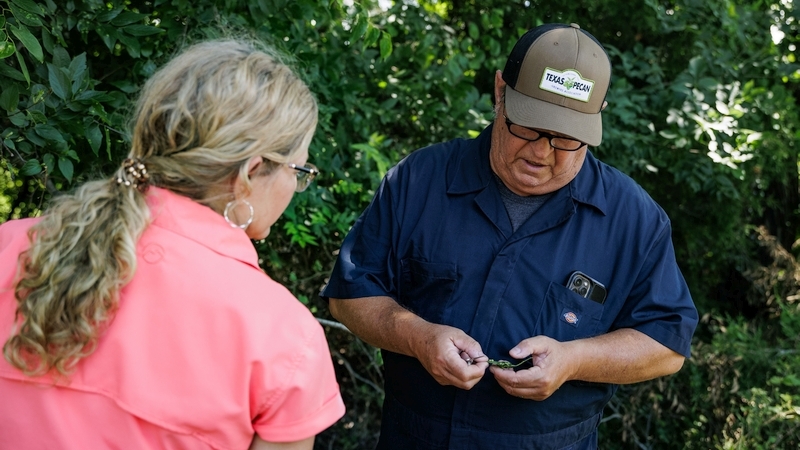
(Staff Photos by Rob Mattson/Noble Research Institute) Renowned Texas pecan producer and bat house builder Troy Swift (navy blue jumpsuit and hat) talks with Noble employees Shawn Norton (pink shirt, hat), Lauren Jones (blue shirt), Mike Proctor (long beard) and Kim Cooper (pink shirt), Wednesday morning, May 29, 2024, at Noble Research Institute’s Conrad-McMillan Pecan Farm in McMillan, Oklahoma.

Research in agriculture works best when it reflects real-world conditions rather than controlled plots that rarely match what growers face. Across the pecan industry, producer-driven research has shifted from a nice idea to a practical requirement. The partnership between growers like Troy Swift, owner of Swift River Pecans LLC, and scientists like Dr. Lauren Jones, senior research associate at Noble Research Institute, shows how this model works and why more of the industry is moving toward it.

Swift began collaborating with Noble as part of his transition to regenerative agriculture. The partnership offers structure and verification. “It’s a good way for a grower like me to explore new ideas and new methods of agriculture and then have somebody with no skin in the game come along with the right testing and the right methods of evaluation,” he explains.

Data That Helps Growers Make Real Decisions

Swift has seen measurable improvements in soil health and yield stability. His operation has continued to set record harvests. Alternate bearing remains a concern, but data trends give him confidence. “I am starting to believe, by looking at the trees and the data, that this method of farming is working,” he says.
(Staff Photos by Rob Mattson/Noble Research Institute) Nikki Charlton, Ph.D., Lauren Jones, Ph.D., Stephen Swaffar, Shaun Norton, Lane Scogin and Laura Putman work to gather soil samples from the south Texas orchard of cooperator Michael Willard, DVM as part of ongoing research, Wednesday morning, March 22, 2023, near Seguin, Texas.

Noble’s involvement also strengthens his orchard goals. In addition to building soil health, Swift’s other priority is to improve pecan quality. He credits Noble for reinforcing his management decisions. “Noble’s timely collection of samples, analysis of the data, and willingness to discuss the results improve my ability to implement soil health management techniques with confidence,” he explains.

This shift highlights the increasing value of producer-driven research. It provides growers with actionable information, eliminating guesswork. Real-time insights enable earlier adjustments to nutrition planning, orchard floor management, and irrigation.

Research Built Around Producer Input

Dr. Jones and her team design their research around producer priorities from the outset. She emphasizes that projects are shaped by grower input. “We ask producers questions and design the entire research project based on what they need and what we can do for them,” she explains. Her goal is relevance. Everything must reflect real production conditions, with constant feedback built into the process.

That feedback loop guides the research as it develops. Jones shares data with growers as soon as results come in. Producers then suggest how they want the information organized or graphed, so it remains useful. “It is co-ownership of the data,” she explains. “All the information I give back to them is based on what they find useful. I incorporate their feedback and make it usable for them all the time.”

Trust, Transparency, and Long-Term Collaboration

This collaboration builds trust and long-term relationships. Jones talks with growers frequently, and visits orchards throughout the season. She sees the partnership as a strength because it aligns research goals with producer needs. “We succeed when the producers succeed — that’s what makes this a real partnership,” she notes.

Scale is another advantage. Noble Research Institute works with 23 producer orchards and three Noble orchards across Texas and Oklahoma. According to Jones, this gives the team a rare opportunity to examine how management choices perform across a wide range of conditions. It also ensures that results translate beyond any single orchard.
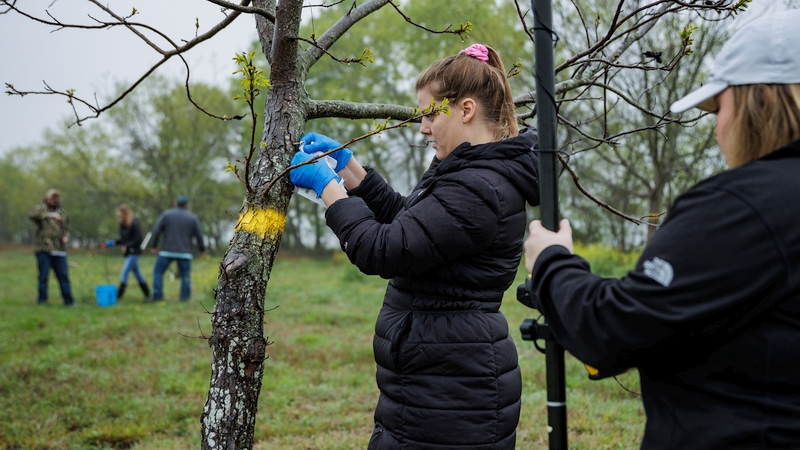
(Staff Photos by Rob Mattson/Noble Research Institute) Nikki Charlton, Ph.D., Lauren Jones, Ph.D., Stephen Swaffar, Shaun Norton, Lane Scogin and Laura Putman work to gather soil samples from south Texas orchards of cooperators as part of ongoing research, Tuesday morning, March 21, 2023, near San Marcos, Texas.

Expanding Expertise Through Producer Networks

These partnerships go beyond data; they broaden access to expertise. Working closely with industry growers has connected the research team with other scientists at universities whose work overlaps with producer properties. That network enhances the quality of the work and provides a broader perspective than any one group could achieve alone.

A Model That Keeps Science Grounded

Real-time data, unbiased sampling, and direct communication drive decisions that matter. Swift sees strong yields, healthier soil, and clearer management plans. Jones sees research that reflects actual production rather than experimental plots. The industry gains practical, tested, and scalable evidence.

Producer-driven research is not a trend. It is a system that keeps science grounded. It strengthens relationships, improves data quality, and drives innovation that growers actually use.

More from this sponsor

Stop Treating Orchard Symptoms. Fix the Root Cause.

Stop Treating Orchard Symptoms. Fix the Root Cause.

Sponsor Noble Research Institute

Treating orchard problems at the surface won’t deliver lasting results. Discover how addressing root causes can boost soil health, crop resilience, and long-term yield. Learn how smarter management starts below ground.

Silvopasture Finds New Ground in Modern Orchards

Silvopasture Finds New Ground in Modern Orchards

Sponsor Noble Research Institute

Discover how integrating livestock into orchards can boost profits, cut costs, and strengthen soil health. See why silvopasture is helping growers build more resilient operations.

Building Better Orchards From the Ground Up

Building Better Orchards From the Ground Up

Sponsor Noble Research Institute

Healthy orchards start underground. Discover how simple soil‑focused changes can cut costs, boost resilience, and transform long‑term productivity.

Latest Stories

Cool Cucumber Varieties You Will Want To Grow Now

Posted by Carol Miller|June 3, 2026

Why the U.S. Apple Industry Is at a Crossroads

By Melinda Taschetta-Millane|June 2, 2026

The Hidden Margin Leak Between Projected and Actual Harvest Dates

By Muhammad Abdullah, Folio3 Agtech|June 2, 2026

New Round of USDA Aid for Specialty Crops Good News for California Walnuts

By California Walnut Commission|June 1, 2026

GrowingProduce GrowingProduce The leader in profits, production and education for produce

© 2026 Meister Media Worldwide

  • About
  • Contact
  • Advertise
  • Subscribe Now
  • Terms of Use
  • Privacy Policy
  • Reprint Permissions
  • Meister Media Worldwide
  • Meister Custom Business Solutions